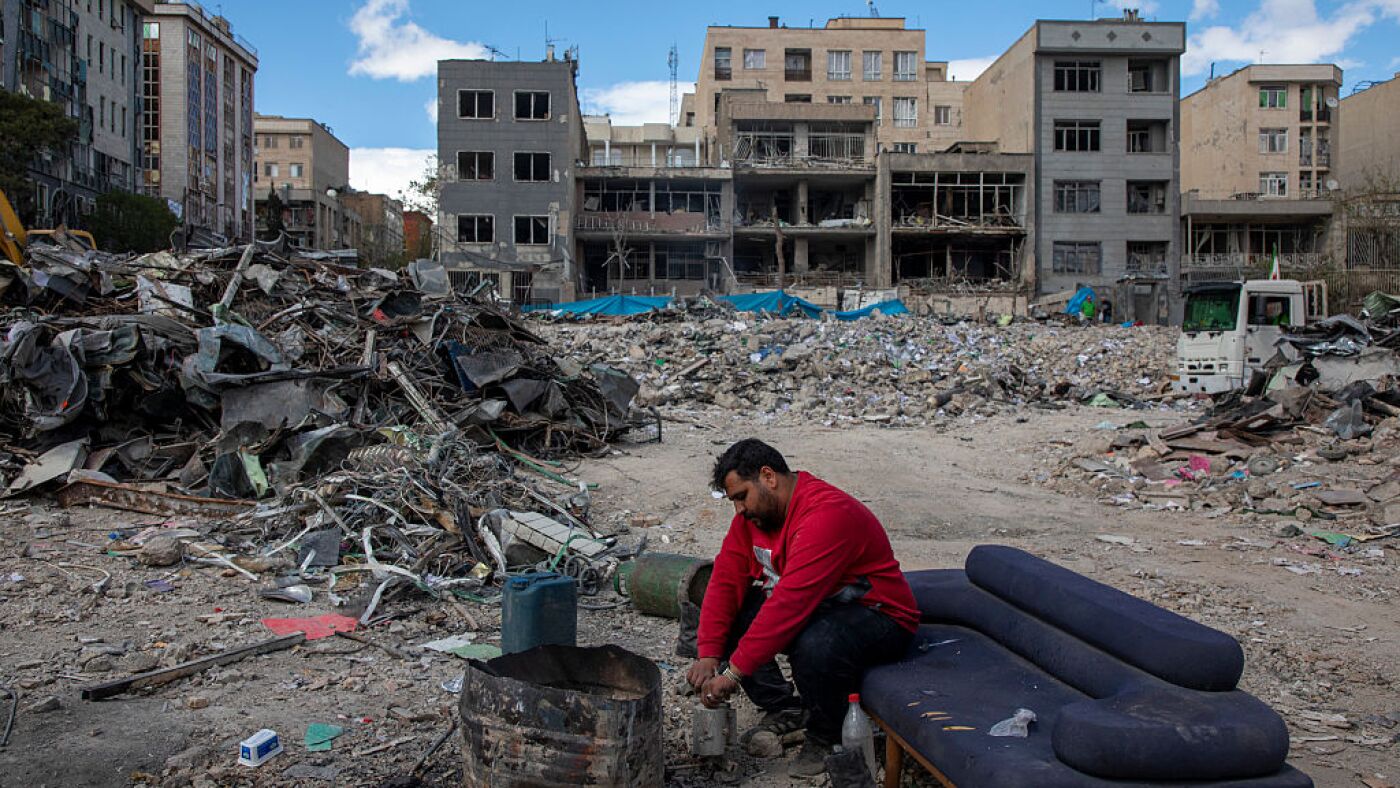
Tensions Escalate as U.S. and Israel Intensify Military Actions Against Iran
In a dramatic turn of events, the United States and Israel have escalated their military operations against Iran, targeting strategic locations amidst growing tensions. These developments come as President Trump issued a stern ultimatum, demanding a deal to reopen the Strait of Hormuz by 8 p.m. ET, threatening severe consequences otherwise.
President Trump has explicitly warned of catastrophic outcomes, stating on his social media platform, “A whole civilization will die tonight, never to be brought back again. I don’t want that to happen, but it probably will.” His rhetoric has significantly increased in recent weeks, threatening the destruction of key Iranian infrastructure such as bridges and power plants. Experts have pointed out that such actions could constitute war crimes under international law.
On Tuesday, U.S. forces struck military targets on Kharg Island, a critical hub for Iran’s oil exports, according to an anonymous U.S. official. However, the targets reportedly did not include oil infrastructure but were instead sites previously hit.
Meanwhile, Iran has rejected U.S. demands, proposing its own 10-point plan, which includes a cessation of attacks, lifting of sanctions, and reopening the Strait of Hormuz with a $2 million fee per vessel, as reported by The New York Times.
Iran’s President Masoud Pezeshkian has rallied support, declaring on social media that over 14 million Iranians are prepared to defend their homeland. “I too have been, am, and will be sacrificing my life for Iran,” he wrote.
International Reactions and Ongoing Negotiations
In Islamabad, Iran’s envoy Reza Amiri Mughadam acknowledged the critical phase of Pakistan’s mediation efforts, emphasizing Tehran’s demand for a complete cessation of hostilities with guarantees against future aggression. He also issued a cautionary note to Gulf countries, implying potential consequences should the U.S. withdraw from the region.
Simultaneously, the United Nations Security Council is expected to introduce a resolution advocating for the reopening of the Strait of Hormuz, spearheaded by Bahrain.
Military Strikes and Retaliation
Israel has also intensified its military actions, targeting petrochemical facilities and missile sites in Iran. The Israeli military issued a public advisory warning Iranians to avoid train travel. In response, Iran launched missiles targeting central Israel, Saudi Arabia, and Bahrain, resulting in the temporary closure of the King Fahd bridge.
Saudi Arabia’s defense ministry reported assessing damage from intercepted missiles and drones, while UAE authorities confirmed engaging airborne threats.
Contributing to this report were Daniel Estrin from Tel Aviv, Diaa Hadid from Mumbai, and Tina Kraja and Alex Leff from Washington, D.C.
This article was originally written by www.npr.org