https://npr.brightspotcdn.com/dims3/default/strip/false/crop/5566×3711+0+0/resize/800/quality/85/format/jpeg/?url=http%3A%2F%2Fnpr-brightspotcdn.s3.amazonaws.com%2Fd4%2F4f%2F48d9909a467886d585c8fd96e7dd%2Fgettyimages-2157829281.jpg 800w,
https://npr.brightspotcdn.com/dims3/default/strip/false/crop/5566×3711+0+0/resize/900/quality/85/format/jpeg/?url=http%3A%2F%2Fnpr-brightspotcdn.s3.amazonaws.com%2Fd4%2F4f%2F48d9909a467886d585c8fd96e7dd%2Fgettyimages-2157829281.jpg 900w,
https://npr.brightspotcdn.com/dims3/default/strip/false/crop/5566×3711+0+0/resize/1200/quality/85/format/jpeg/?url=http%3A%2F%2Fnpr-brightspotcdn.s3.amazonaws.com%2Fd4%2F4f%2F48d9909a467886d585c8fd96e7dd%2Fgettyimages-2157829281.jpg 1200w,
https://npr.brightspotcdn.com/dims3/default/strip/false/crop/5566×3711+0+0/resize/1600/quality/85/format/jpeg/?url=http%3A%2F%2Fnpr-brightspotcdn.s3.amazonaws.com%2Fd4%2F4f%2F48d9909a467886d585c8fd96e7dd%2Fgettyimages-2157829281.jpg 1600w,
https://npr.brightspotcdn.com/dims3/default/strip/false/crop/5566×3711+0+0/resize/1800/quality/85/format/jpeg/?url=http%3A%2F%2Fnpr-brightspotcdn.s3.amazonaws.com%2Fd4%2F4f%2F48d9909a467886d585c8fd96e7dd%2Fgettyimages-2157829281.jpg 1800w”
type=”image/jpeg”/>

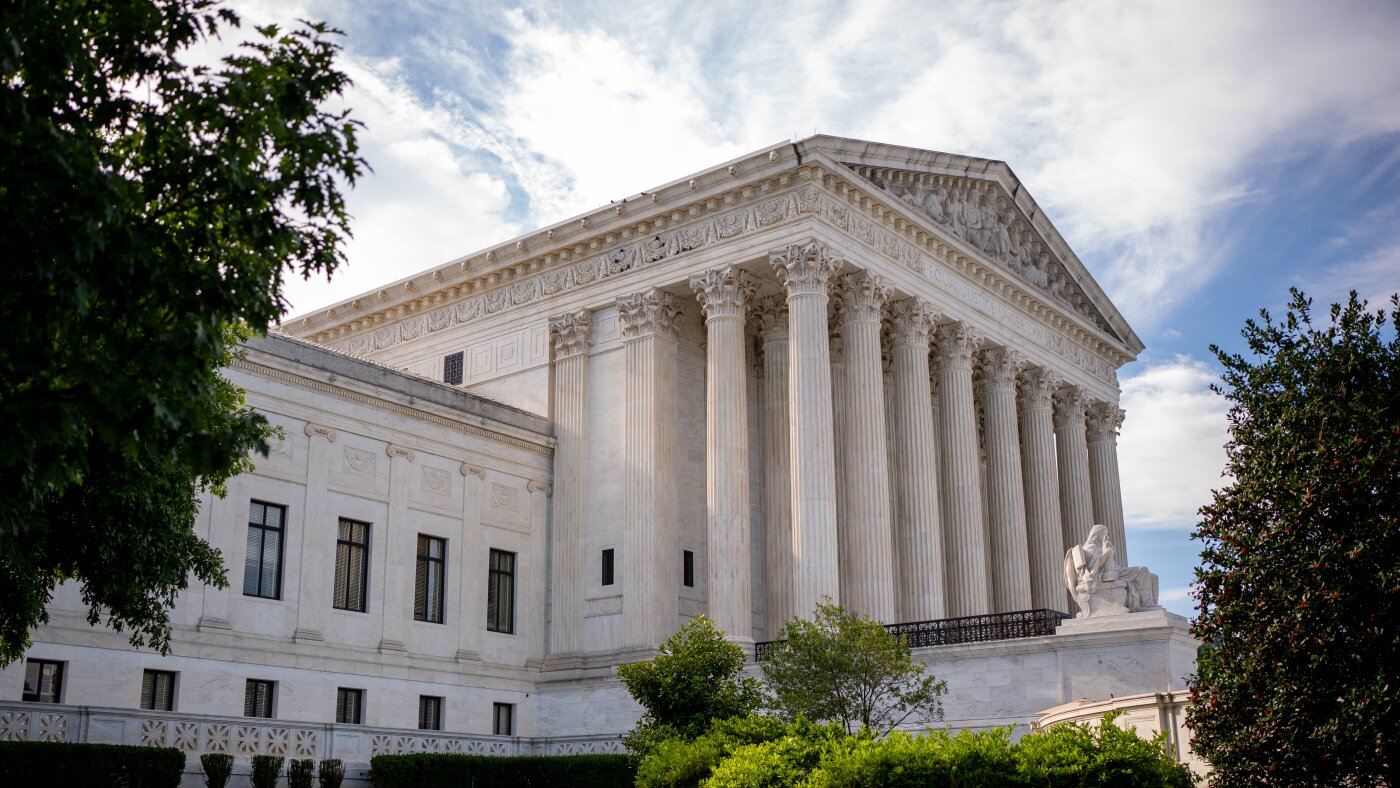
The Supreme Court Andrew Harnik/Getty Images
As the Supreme Court deliberates on pivotal cases, President Trump could soon carry out large-scale deportations of individuals who have legally resided in the U.S. for many years. Central to this issue is the Temporary Protected Status (TPS) program, designed to protect those who cannot safely return to their home countries due to extraordinary conditions.
Established by Congress in 1990, TPS allows eligible individuals to live and work in the United States when their home countries face crises such as natural disasters or armed conflicts. However, the Trump administration is seeking to dismantle this program, marking a departure from the stance of previous administrations.
Currently, TPS is extended to people from nations like Haiti, which suffered a catastrophic earthquake in 2010, and Syria, amid ongoing civil strife. Despite persisting dangers in these countries, the Trump administration argues that TPS should not serve as a long-term solution for those affected.
Understanding TPS
Unlike other immigration policies, TPS is available only to those who have been residing in the U.S. legally since their country’s most recent TPS designation. These individuals undergo rigorous vetting, including biometrics, background checks, and database screenings, as explained by Ahilan Arulanantham, representing Syrian TPS holders in the Supreme Court case. A single misdemeanor could disqualify them.
TPS holders must renew their status every 18 months, undergoing the same process repeatedly.
The Role of the Courts
The administration claims that the 1990 TPS statute precludes court reviews of these decisions altogether. This view is supported by 21 Republican attorneys general, who argue that TPS was never meant to become a long-term amnesty.
In contrast, legal representatives for Haitian and Syrian TPS recipients argue that the prohibition on judicial review pertains only to a specific section of the law. They assert the administration has not adhered to the proper TPS and Administrative Procedure Act (APA) guidelines.
The APA sets procedures for federal regulations and ensures agency actions are subject to judicial review to avoid arbitrary decisions.
Criticism of DHS Findings
Then-Secretary of Homeland Security Kristi Noem cited no extraordinary conditions in Haiti to justify ending TPS, aligning with a Trump executive order. Similarly, she pointed to issues with vetting Syrian nationals, referencing two criminal investigations involving Syrians not under TPS.
Despite these claims, the administration points out that the Supreme Court has typically deferred to the executive branch on immigration matters, considering them vital to national security and public safety.
Lawyers for the TPS beneficiaries argue that the administration’s findings were superficial, lacking the mandated thorough consultation with the U.S. State Department.
A Racial Discrimination Claim
The Haitians have also raised allegations of racial discrimination by the Trump administration, citing derogatory remarks made by Trump about Haitians. However, the Supreme Court has declined to consider such language in past cases, labeling it as political.
While initial lower court rulings favored the Haitians and Syrians regarding TPS, the Supreme Court has criticized lower courts for overreaching in immigration matters, and the conservative majority has generally sided with the administration in prior cases.
This article was originally written by www.npr.org