Allegations of Fraud Shake Southern Poverty Law Center Amid Internal Struggles
The Southern Poverty Law Center (SPLC), known for its historic battles against extremism, finds itself at the center of a legal storm. Federal prosecutors have accused the organization of criminal fraud, claiming it misrepresented financial dealings and misled donors about its true activities.

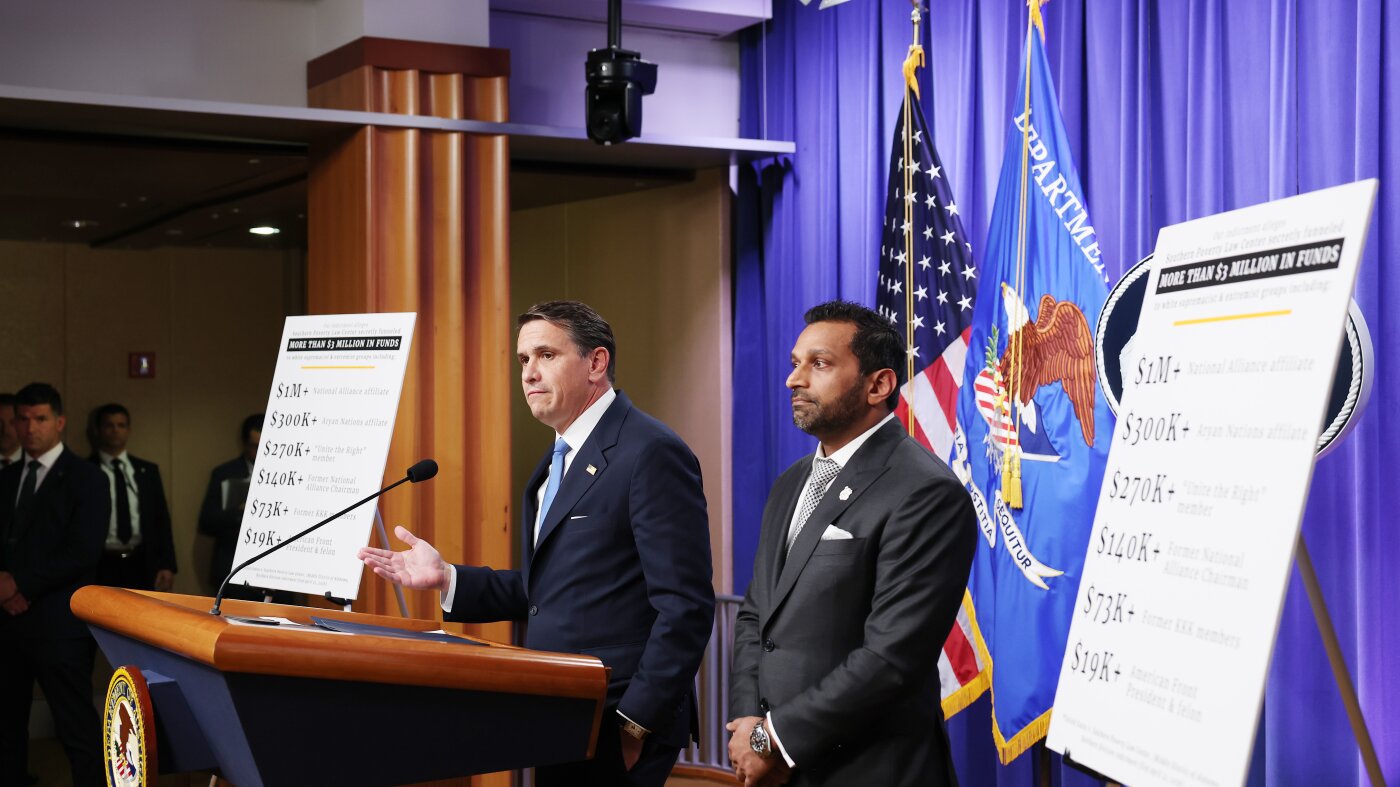
Acting U.S. Attorney General Todd Blanche speaks alongside Federal Bureau of Investigation Director Kash Patel at a news conference last month to announce charges against the Southern Poverty Law Center, alleging the group funneled over $3 million into the pockets of white supremacist and extremist groups. Anna Moneymaker/Getty Images
Founded in 1971, the SPLC has been a prominent force in civil rights advocacy, but the recent indictment marks a critical challenge in its history. Prosecutors assert that the SPLC mismanaged accounts meant for paying informants, instead channeling funds to extremist groups while misleading donors about its anti-extremism mission.
Despite the serious nature of these allegations, the SPLC has firmly rejected them, describing the claims as false and emphasizing its longstanding commitment to fighting white supremacy and promoting racial democracy.
Internal Struggles
The indictment arrives as the SPLC grapples with internal issues. Since 2019, the organization has faced several leadership changes amid allegations of misconduct and discrimination. The departure of key figures, including co-founder Morris Dees, followed by internal reviews and staff unionization, have highlighted ongoing challenges within the SPLC.
Former employees have described the workplace environment as chaotic, impacting the organization’s ability to effectively publish and promote its work. Michael Edison Hayden, a former senior investigative reporter, mentioned difficulties in the publication process, while Jason Wilson, another former employee, noted instability and morale issues.
Political Landscape Challenges
The SPLC and similar organizations are also contending with a shifting political environment. Historically fringe beliefs, like the “great replacement” theory, have gained traction within mainstream politics, complicating the SPLC’s mission of combating extremism.
Some analysts suggest that the growing prominence of far-right ideologies has left organizations like the SPLC struggling to adapt. Internal sources acknowledge that the rise of extremist narratives within political discourse poses a new kind of challenge.
As these political shifts continue, the SPLC’s ability to respond and maintain its historical mission will be closely watched by both supporters and critics.