A Tumultuous Redistricting Battle: Voters Face Confusion Amidst Legal Challenges
In an election landscape rife with upheaval, voters are expressing confusion as recent legal rulings have cast doubt on redistricting efforts. The Virginia Supreme Court recently nullified a voter-approved congressional map, echoing similar disruptions in Louisiana and Alabama, where elections have been postponed after absentee ballots were already distributed.

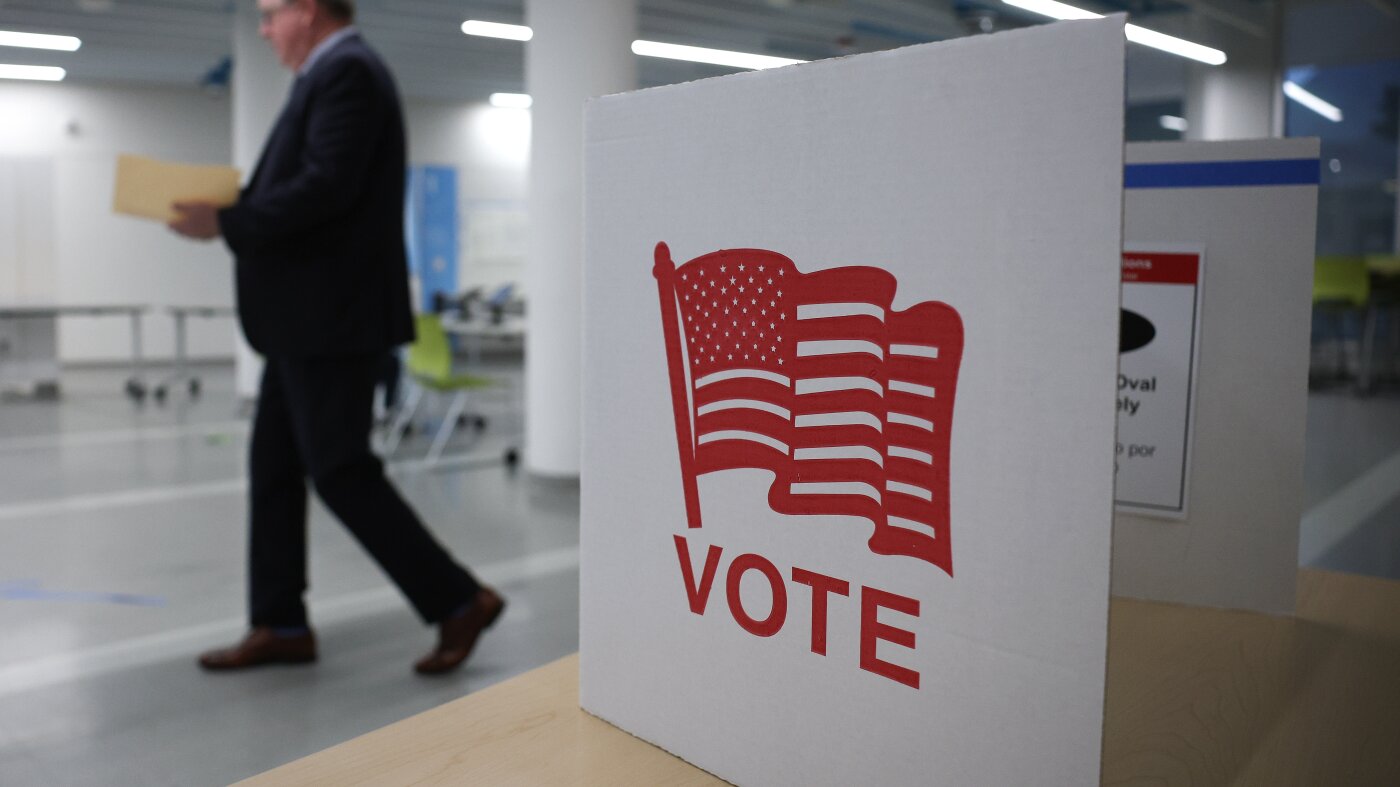
Voters cast their ballots on April 21 in Arlington, Va. The Virginia Supreme Court has nullified the April referendum on redistricting. Win McNamee/Getty Images
Chris Piper, a seasoned election official in Virginia, has found the recent redistricting chaos unprecedented. “I’ve never seen anything like it,” he remarked, noting that the primary impact on voters is confusion about voting locations and district representation.
Redistricting Chaos in Key States
The redistricting struggle, ignited by President Trump last year, has been further complicated by the U.S. Supreme Court’s decision to weaken the Voting Rights Act. This has prompted states like Louisiana to redraw district lines favoring the GOP. Louisiana Governor Jeff Landry postponed House primaries to accommodate new maps, affecting tens of thousands of absentee voters who had already cast their votes.
In response, organizations like the ACLU have filed legal challenges, arguing that last-minute rule changes disenfranchise voters. “What we are hearing is that your vote doesn’t matter, your vote doesn’t count,” said Sarah Whittington from the ACLU of Louisiana.
Virginia’s Controversial Map Overturn
Virginia’s redistricting map, aimed at securing more Democratic seats, was overturned by the state’s Supreme Court for procedural errors. This decision disregarded the will of over three million Virginians who participated in the referendum. Chris Melody Fields Figueredo of the Ballot Initiative Strategy Center criticized the court’s decision, expressing concern over the erosion of public trust in governmental processes.
Implications for Voter Representation
Nick Troiano of Unite America warns that the ongoing redistricting battles are reducing the competitiveness of congressional races, with nearly 93% now considered uncompetitive. Such changes may render general elections inconsequential for most voters, as outcomes are often predetermined.
Karen Brinson Bell, former election official in North Carolina, emphasized that competitive races typically boost voter turnout. However, the current political climate may lead to voter disengagement in the upcoming 2026 midterms.
Despite the challenges, Whittington of the ACLU urges voters to persist in making their voices heard, warning against apathy and advocating for continued participation in the democratic process.