Church of Scotland Confronts Its Past with Apology for Slavery Ties
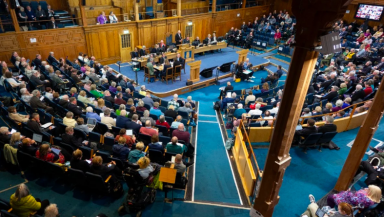
The Church of Scotland has publicly acknowledged its historical connections to chattel slavery, expressing deep regret for the pain caused and vowing to explore reparative measures. This formal apology was adopted during the Church’s General Assembly in Edinburgh, highlighting the institution’s direct and indirect benefits from the slavery trade, as well as some members’ past theological defenses of the practice.
In a statement of repentance, the Church committed to “changing course and bearing fruit worthy of repentance.” A new working group is set to be established to collaborate with communities still affected by the legacy of slavery, aiming to propose actionable steps forward.
The apology was presented by the Very Rev Sally Foster-Fulton, who described it as a “humbling moment” and an essential opportunity for the Church to express remorse. She emphasized that the lingering effects of slavery continue to shape societal structures and inequalities.
“Naming that is not about blame, but about faithfulness – about recognizing that healing begins where truth is spoken,” she stated during the Assembly.
The Church’s statement expressed profound sorrow for the “extraordinary suffering” caused by its past actions and inactions, acknowledging that slavery’s impact still influences racial inequalities today.
Delegates from Africa and the Caribbean participated in the Assembly’s debate and reacted to the apology with support and a call for tangible actions. Rose Wedderburn of the United Church in Jamaica and the Cayman Islands commended the Church for its “courage” in confronting its past.
“While the process has understandably evoked deep emotions – the effort invested in truth-telling and honest engagement is worthwhile,” she remarked, hoping for continued progress in understanding and reconciliation.
Rev Dr Victor Okoe from Abbey Trinity Presbyterian Church in Ghana expressed hope that the Church would remain committed to implementing its apology, while His Eminence Dr Ekpenyong Akpanika from the Presbyterian Church of Nigeria emphasized that true reconciliation demands more than just words.
The apology and subsequent report were informed by consultations with church members, ministers, and individuals of African heritage, along with international engagements, including a pilgrimage to Jamaica and discussions with Caribbean partner churches.
The Church’s General Assembly has tasked the new working group with engaging affected communities to determine suitable responses and actions, marking a step towards addressing historical injustices.
This article was originally written by www.christiantoday.com