In a dramatic standoff, police in Ocean County, New Jersey, used a small drone to resolve a tense situation involving an armed suspect. This innovative use of technology underscores the growing role of drones in law enforcement, amidst ongoing debates over security and sourcing.
The Incident
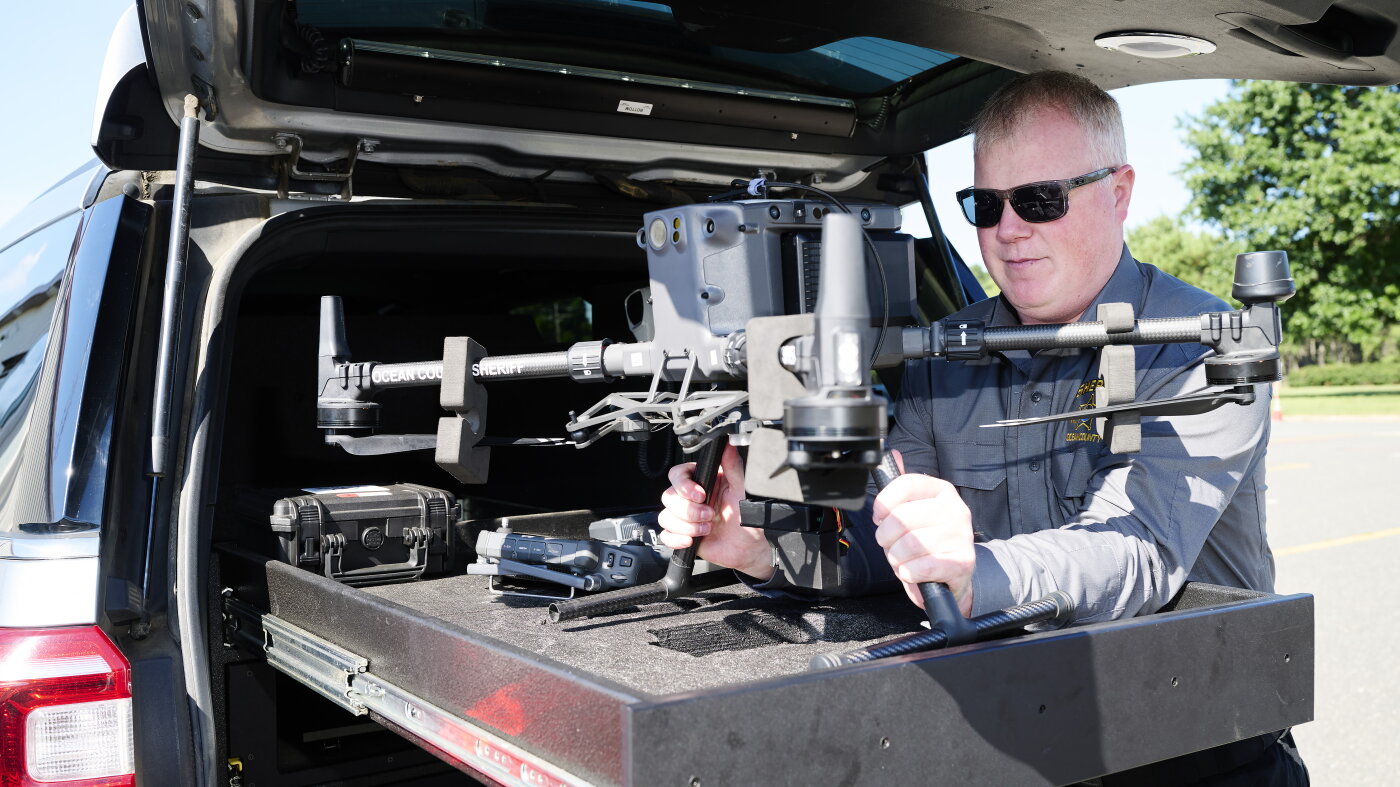
For several hours, gunfire echoed as bullets flew through a neighborhood, damaging homes and vehicles. Inside one of the houses, a man suspected of murdering his ex-girlfriend was barricaded with his current partner. As the SWAT team prepared to intervene, Kevin Fennessy of the Ocean County Sheriff’s Office opted for a different approach by deploying a small camera-equipped drone.
Positioned safely outside, Fennessy guided the drone through a broken window, providing a live feed of the interior to the officers. The footage revealed a house riddled with bullet holes. Upon entering a back bedroom, the drone captured the suspect’s body, confirming he had committed suicide. The drone’s presence allowed officers to deploy flash bangs, prompting the woman to surrender unharmed.
Reflecting on the event from three years ago, Fennessy acknowledges, “No one’s hurt. Everyone’s safe. Forty-one times they shot out the house at us. But at the end of the day, we were able to clear the house.”
The Role of Drones in Law Enforcement
Ocean County is among approximately 6,000 U.S. law enforcement agencies utilizing drones for various operations, including search and rescue, and tactical responses, as estimated by the Law Enforcement Drone Association (LEDA). LEDA provides guidance and certification for police drone programs.
The department’s drone fleet, entirely sourced from DJI, a Chinese company, is part of a broader trend, with 80% to 90% of law enforcement drones in the U.S. being DJI products. Despite concerns about reliance on Chinese technology, DJI remains a leading player due to its quality and affordability.
Fennessy highlights cost-effectiveness as a priority, stating, “We have to be cost-effective. And to do that, get the best product that’s available to us,” echoing the sentiments of Ocean County Sheriff Michael Mastronardy.
Cost Considerations
Funding for drones can come from various sources, such as grants or departmental budgets. Ocean County finances its 25-drone fleet through asset forfeiture profits and its municipal budget. The cost breakdown for one of their drones includes:
- DJI Matrice 300 RTK: $13,699
- Two batteries: $1,400
- Infrared thermal camera: $11,499
- Remote controller: $1,600
- Flotation device: $130.99
- Payload release system: $1,099
Totaling $29,427.99, these investments are justified by their utility in monitoring large crowds during peak tourist seasons and responding to emergencies, such as dropping flotation devices to swimmers in distress.
Challenges and Controversies
The Trump administration has taken steps to bolster U.S. drone manufacturers by imposing tariffs and limiting foreign drone imports, sparking debates. Critics argue the American drone industry is currently unable to meet demand or compete with the low-cost, high-quality options from China.
Jon Beal, LEDA’s head, acknowledges the benefits of Chinese drones in saving lives while supporting efforts to enhance the U.S. drone industry. However, he cautions against measures that could disrupt effective drone programs.
Further complicating matters, the Federal Communications Commission (FCC) is considering classifying certain drones as military-grade, potentially banning many Chinese models. This would impact law enforcement’s ability to utilize features like thermal imaging for search and rescue missions.
The FCC has already restricted sales of some foreign drones, citing national security concerns. Despite measures to secure the supply chain, DJI disputes allegations of privacy violations and unauthorized data sharing with the Chinese government, supported by third-party cybersecurity assessments.
Future Directions
Keith Miao, CEO of Birdstop, acknowledges China’s dominance in early drone technology but sees potential for U.S. manufacturers to lead in future innovations. He suggests that current federal actions could incentivize domestic production, but acknowledges the challenges faced by U.S. manufacturers in sourcing essential materials.
To aid law enforcement in transitioning to American-made drones, the National Sheriffs’ Association has urged the FCC to reconsider its proposed reclassifications. They advocate for exemptions allowing continued use of foreign drones until the domestic market strengthens.
Ultimately, the financial burden of switching to more expensive American drones may fall on taxpayers, unless additional federal funding becomes available. Fennessy expresses a need for government support in this transition, emphasizing the importance of maintaining operational capabilities.
This article was originally written by www.npr.org