
Political Rift in Michigan: Haley Stevens Backs Republican Senate Candidate
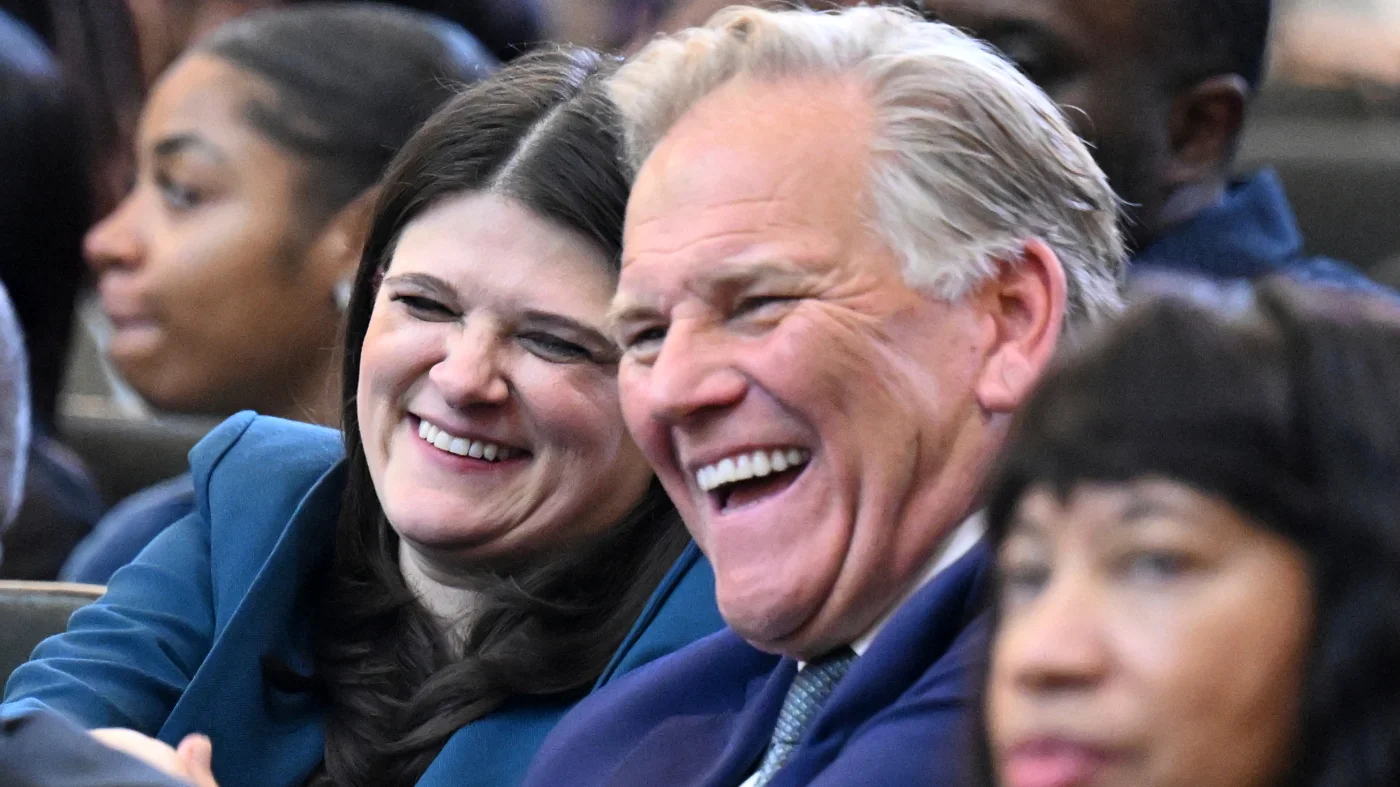
In an unexpected political maneuver, Democratic Representative Haley Stevens has thrown her support behind Republican Senate hopeful Mike Rogers in Michigan, just days before voters head to the polls. Her endorsement comes after a public fallout with Democratic candidate Abdul El-Sayed, whom she previously opposed in the primaries.
Stevens announced her decision via a social media video, stating, “As you may have seen, our Democratic nominee for U.S. Senate, Abdul, said I was no longer welcome in his campaign and that I should stay away, and he’s right. And that’s why I am endorsing Mike Rogers for the U.S. Senate today.” The video followed her surprise appearance with Rogers at a church service in Detroit.
El-Sayed, responding to the endorsement outside a Detroit church event, downplayed Stevens’ move. “None of this matters,” he remarked, emphasizing that voters are more concerned with pressing issues such as education, food security, and healthcare.
The endorsement underscores a deepening divide within Michigan’s Democratic Party, exacerbated by Stevens’ prior criticisms of El-Sayed’s alliances. Stevens had previously expressed concerns over El-Sayed’s association with Hasan Piker, a controversial figure. During the primaries, Piker made comments suggesting Jewish support for Israel could lead to violence, prompting El-Sayed to distance himself from the controversy without disavowing Piker entirely.
This internal discord was further highlighted when Stevens’ fiancé voiced support for Rogers, coinciding with an advertisement from Cenk Uygur of Young Turks, which blamed Israel for rising grocery prices in the U.S. Stevens demanded El-Sayed denounce the ad, which he criticized but claimed no connection to.
Originally, Stevens was slated to attend a Democratic unity event with El-Sayed and Rep. James Clyburn but set conditions for her participation, demanding an apology from El-Sayed over what she deemed inflammatory rhetoric. The event proceeded without her.
Stevens’ choice to support Rogers has drawn significant backlash from Democratic leaders. Senate Minority Leader Chuck Schumer described it as a “despicable betrayal,” while Michigan Democratic Party Chair Curtis Hertel accused Stevens of abandoning her principles by aligning with Rogers, who he said has opposed working-class interests and supported a “national abortion ban.”
The fallout from Stevens’ endorsement has been immediate. Her communications director has reportedly left the position, and several former campaign staffers have criticized her decision publicly. This political rift highlights ongoing tensions within the Democratic Party concerning Israel and related discourse, an issue expected to persist into future election cycles.



Comments are closed.