Unrelenting Heat Dome Casts Its Shadow Over Eastern U.S.
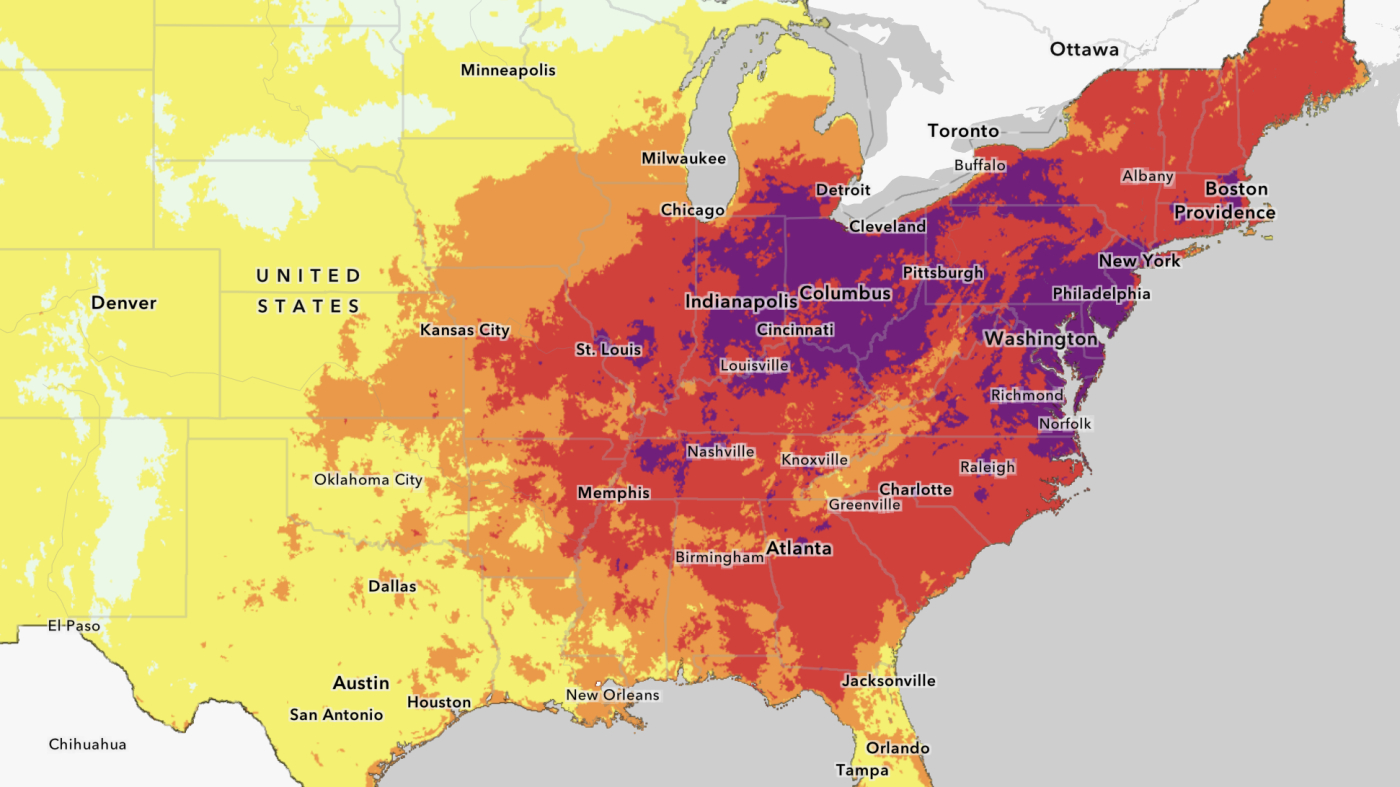
The eastern United States finds itself in the grip of an oppressive heat dome, prompting forecasters to issue warnings for residents to brace for extreme temperatures. This meteorological phenomenon occurs when high pressure traps warm air at the surface, reducing cloud cover and rainfall.
The National Weather Service has issued heat warnings and advisories stretching from the Lower Mississippi Valley across the Midwest to the East Coast, impacting nearly 160 million people.
On Tuesday, Boston experienced a scorching 100-degree day, while various parts of Pennsylvania saw temperatures rise above 95 degrees, with heat indices expected to exceed 100 degrees in cities like Philadelphia, Lancaster, and Pittsburgh. Central North Carolina was forecasted to reach heat index values up to 115 degrees.
Understanding the Heat Dome
According to Alex Lamers from the National Weather Service, a heat dome acts much like “a lid on a pot,” trapping heat in the atmosphere. Lamers explained, “If you’ve made grilled cheese in a pan and you put a lid on there, it melts the cheese faster because the lid helps trap the heat.” This high-pressure system allows heat to accumulate over several days.
The persistence of such high-pressure areas is often related to the jet stream’s path. Currently, the jet stream is running sharply northeast, facilitating the heat dome’s presence in the eastern U.S.
Lamers noted that when high pressure dominates a region, it often leads to dry weather, which can intensify the heat, creating a feedback loop.
Record-Breaking Temperatures and Climate Concerns
The past few years have seen record-breaking temperatures across the U.S., a trend scientists attribute to human-induced climate change. The years 2023 and 2024 were recorded as the hottest years globally.
Health Alerts with Rising Temperatures
Residents in the Midwest and Northeast are experiencing a sense of déjà vu, as a similar heat dome brought record temperatures to the region around the same time last year. The current heatwave is expected to last throughout the week in the Midwest, though relief may come to the Northeast and Mid-Atlantic as a cold front approaches.
Experts warn that children and individuals with pre-existing health conditions are particularly vulnerable to this extreme heat. The National Weather Service cautions, “This level of heat can be dangerous to anyone without adequate cooling and/or hydration.”
Pediatrician Dr. Jess Weisz from Children’s National Hospital advises those spending time outdoors to take frequent breaks, stay hydrated, and use sun protection, including sunscreen and hats (Morning Edition).
Heat Domes: A Nationwide Phenomenon
Heat domes have not been exclusive to the eastern U.S. In June last year, the Western U.S. faced temperatures 20 to 30 degrees above normal. Additionally, a heat dome in 2023 enveloped the Great Plains, South, and Midwest, setting records from New Orleans to Chicago. Arizona’s Maricopa County reported over 600 heat-related deaths in 2024, while Phoenix endured a 113-day streak of triple-digit temperatures.
The Northwest was not spared either, as a heat dome in 2021 led to numerous fatalities in Oregon and Washington during the early summer (Climate Hubs).
May 2025 marked the second warmest May recorded globally, with temperatures significantly above average on every continent, according to the National Integrated Heat Health Information System.
This article was originally written by www.npr.org