Congress Faces Contentious Debate Over Funding Cuts to Public Broadcasting and Foreign Aid
As the Trump administration pushes forward with proposed cuts to federal funding, a heated debate has emerged on Capitol Hill, drawing attention from both sides of the political spectrum. Lawmakers are scrutinizing the administration’s proposal to slash budgets for public broadcasting and international aid programs, a move that has sparked significant controversy.

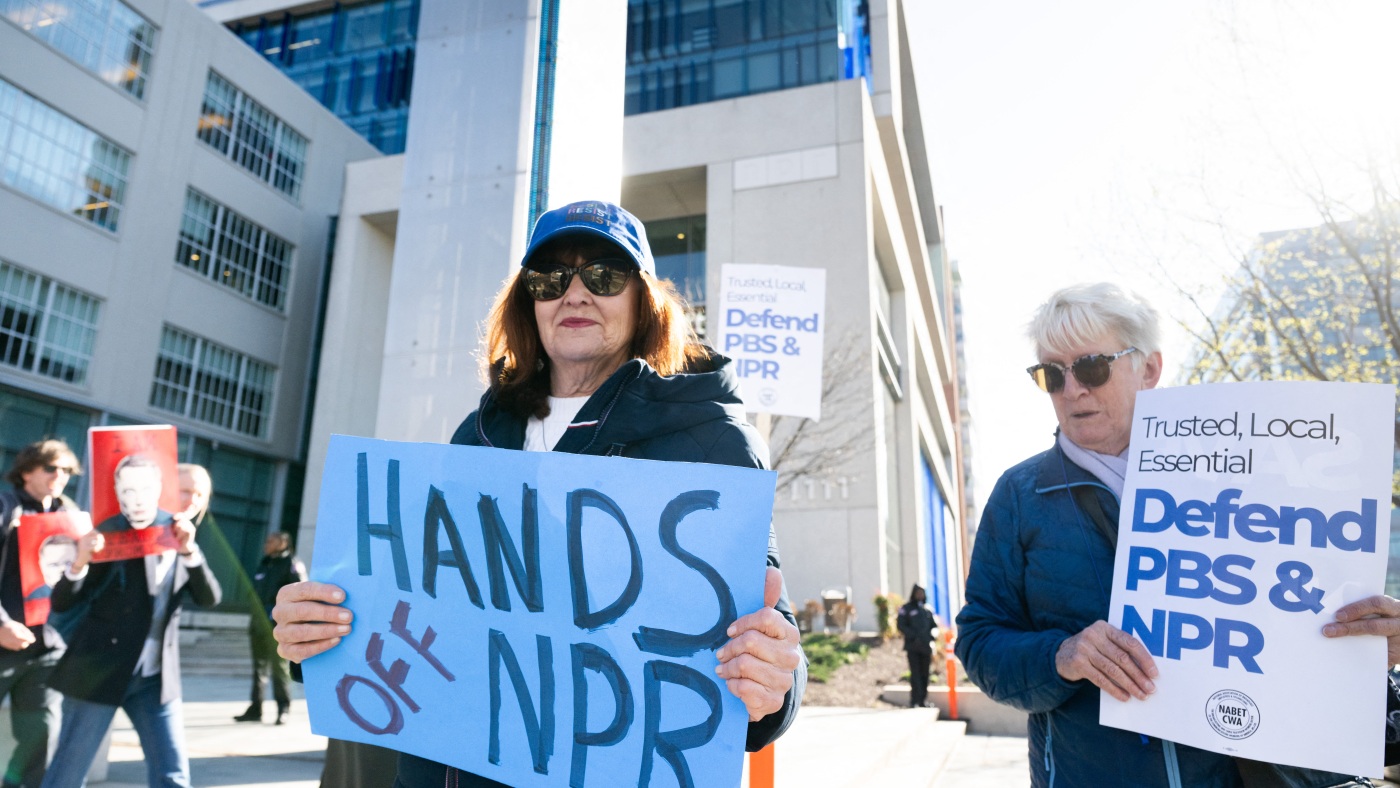
People participate in a rally to call on Congress to protect funding for PBS and NPR outside the NPR headquarters in Washington, DC, on March 26, 2025. Saul Loeb/AFP via Getty Images
President Trump’s recent proposal to Congress aims to cut down on federal allocations for the Corporation for Public Broadcasting (CPB) and foreign aid programs, which he argues “subsidizes a public media system that is politically biased” and labels certain foreign aid efforts as “antithetical to American interests.”
Senate Appropriations Committee Pushback
During a Senate committee hearing, Republican Sen. Susan Collins expressed concern over the potential impact on local programming and emergency communication, emphasizing that 70% of federal funding for CPB is directed towards these areas. While acknowledging criticisms of NPR’s perceived partisan bias, she suggested more precise methods to address such issues than eliminating all funding.
Russell Vought, Director of the Office of Management and Budget, assured the committee that essential emergency broadcasting services would remain funded. He highlighted that the proposed rescission would not impact the current fiscal year, providing local stations with “ample time to adjust.”
Alaska Republican Lisa Murkowski, opposing the cuts, secured a promise from Vought to collaborate on ensuring continued support for rural stations. Vought maintained that the Republican focus has been on reevaluating public funding for content.
Impact on Foreign Aid and Public Broadcasting
The administration’s proposal includes $9.4 billion in cuts, targeting international programs that address public health and disaster relief. Notably, the package proposes nearly $1.1 billion in funding reductions for CPB for 2026 and 2027. This funding is crucial for local public TV and radio stations, with PBS and NPR relying on CPB for portions of their revenue.
The House narrowly passed the rescission measure, 214 to 212, following a debate where many Republicans accused public broadcasters of bias against conservative viewpoints.
Legality and Bipartisan Concerns
Sen. Patty Murray of Washington questioned the legality of the White House’s request, noting that both chambers of Congress must approve such measures within 45 days under the 1974 Impoundment Control Act. Murray argued that the cuts would severely impact rural communities and undermine educational programming for children.
Despite the administration’s stance, the proposal faces skepticism from several Republicans. Sen. Mitch McConnell expressed concerns over the potential diplomatic repercussions of cutting foreign aid programs, emphasizing the strategic relationships the U.S. has cultivated.
This article was originally written by www.npr.org