U.S. Solar Industry Faces Uncertainty Amid Policy Changes
The U.S. solar industry stands at a critical juncture as proposed legislative changes threaten to reverse the momentum gained since the passage of the Inflation Reduction Act. This law, which was instrumental in boosting domestic solar manufacturing, is now at risk as Congress considers rolling back crucial tax incentives.
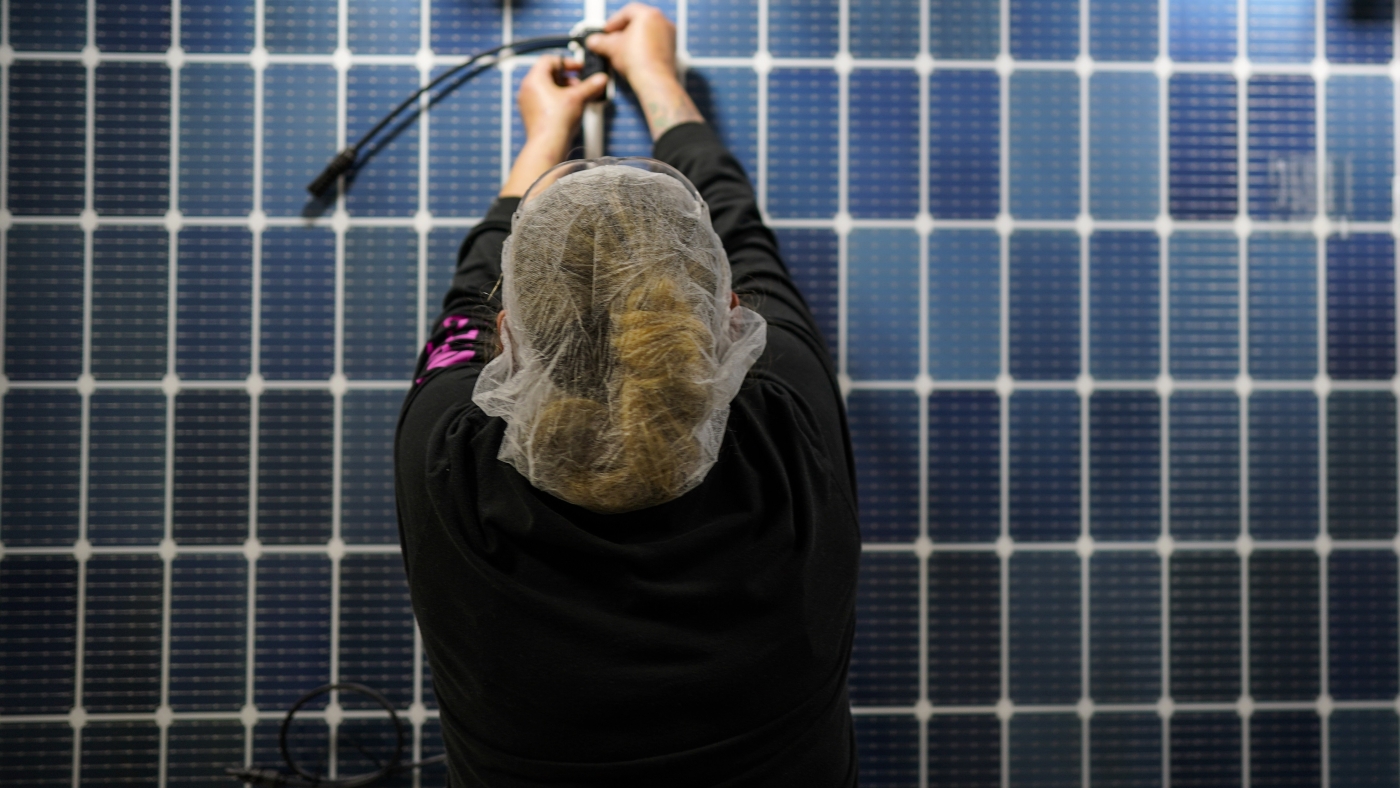
In Indianapolis, Mick McDaniel founded a solar panel manufacturing company in response to the Inflation Reduction Act, which was signed into law by then-President Joe Biden. The act was aimed at encouraging clean energy through tax incentives. According to the Solar Energy Industries Association (SEIA), investments totaling tens of billions of dollars have been committed to solar factories in the U.S., potentially creating nearly 60,000 manufacturing jobs.
However, these investments face an uncertain future as Congressional Republicans, as part of a major tax-and-spending bill, are moving to roll back clean-energy tax credits. These credits incentivize solar developers to purchase American-made products, including solar panels and components.
“What I see two years out is low-cost will once again drive demand in this market,” stated McDaniel, general manager of Bila Solar. He acknowledged the challenges for U.S.-based manufacturers who face higher costs compared to imports from China or Southeast Asia.
The Impact of Policy Changes on Solar Manufacturing
Since the enactment of the Inflation Reduction Act in 2022, the SEIA reports that $9.1 billion has been invested in operational U.S. solar factories, with an additional $36.7 billion directed towards facilities under development. This year, domestic factories are expected to supply most of the country’s solar panel demand.
Nevertheless, the potential removal of tax credits poses a significant threat to the sector. A White House spokesperson, Taylor Rogers, criticized the Biden administration’s climate initiatives as costly, stating, “Rather than using taxpayer dollars to subsidize uneconomic energy sources to meet vague climate change goals, President Trump is unleashing energy sources that are economical and will drive down bills for everyday families.”
Historical Context and Industry Reactions
Efforts to bolster U.S. solar manufacturing date back to previous administrations. In 2018, President Trump imposed tariffs on imported solar cells and panels to shield domestic companies, as noted by the U.S. International Trade Commission. However, industry experts highlight that while tariffs provided some protection, the incentives from the Inflation Reduction Act were crucial for generating demand for U.S.-made solar products.
Doug Lewin, an energy consultant, warned that without tax credits, companies might opt for cheaper foreign panels, leaving U.S. manufacturers vulnerable. “If the tax credits disappear too soon, companies building solar plants will ‘buy the cheaper foreign panels to get that cost down as much as you possibly can,’ leaving the American manufacturer of solar modules just stranded,” he explained.
Future Prospects and Legislative Developments
The Senate Finance Committee recently released legislative text proposing to phase out tax credits for solar plants starting next year, rather than the current schedule of 2032 or when greenhouse gas emissions reach 25% of 2022 levels.
Craig Lawrence, a partner at Energy Transition Ventures, acknowledged the potential challenges but expressed optimism, saying, “I expect to see a couple of painful years in the U.S. solar industry, period. But I ultimately think it bounces back.”
Advocacy for Sustainable Policy Implementation
Heather Reams, president of Citizens for Responsible Energy Solutions, emphasized the importance of clean energy projects for meeting rising power demands. Reams’ group has urged lawmakers to delay phasing out tax credits until after 2027 to ensure market stability.
As the deadline for Congress to finalize the tax-and-spending bill approaches, the solar industry and its advocates are striving to influence the outcome and preserve the incentives crucial for sustaining U.S. solar manufacturing.
This article was originally written by www.npr.org