This story first appeared in Dogwood
The upcoming gubernatorial race in Virginia is drawing attention due to the contrasting views on women’s health issues between the candidates.
Lt. Gov. Winsome Earle-Sears, the Republican candidate, has sparked controversy with her statements on abortion, describing it as “Black genocide.” She has criticized Black mothers for not being sufficiently pro-life and has been accused of spreading misinformation about abortions occurring up to the moment of birth and even suggesting that babies are “murdered after birth” according to reports.
Earle-Sears backed Governor Glenn Youngkin’s failed proposal for a 15-week abortion ban, which was rejected by voters in 2023. In a 2022 radio interview, Earle-Sears emphasized that women should make choices before becoming pregnant.
Notably, Earle-Sears does not support exceptions for abortion in cases of rape or incest.
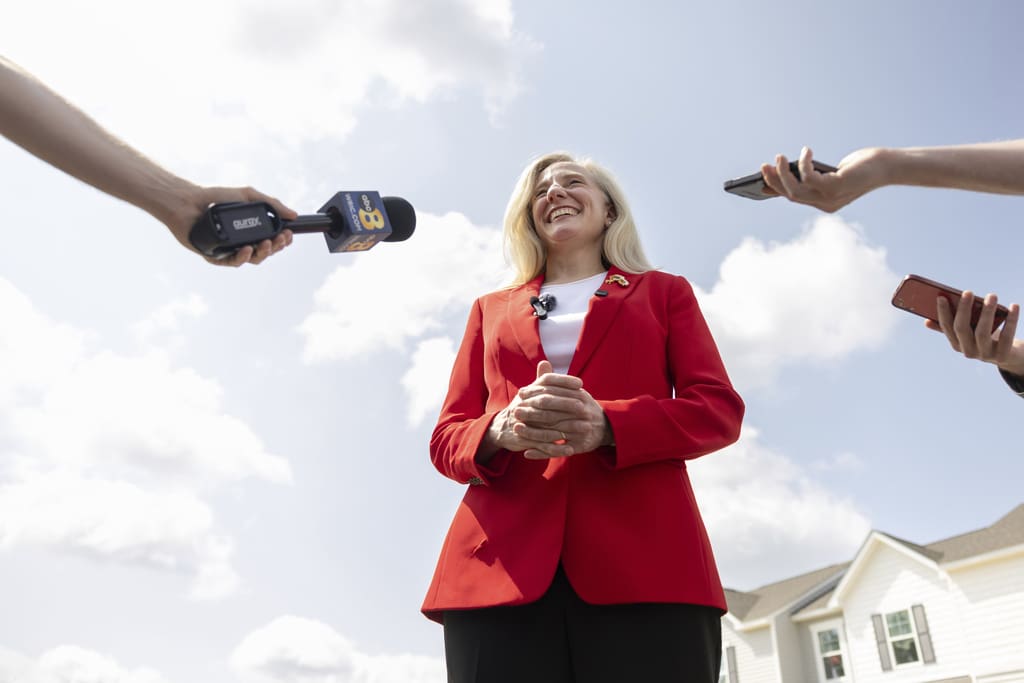
In contrast, Democratic nominee Abigail Spanberger has committed to defending reproductive rights for all Virginia women and pregnant individuals.
Virginia: A Beacon for Reproductive Rights in the South
Currently, Virginia permits abortion through the end of the second trimester, which is approximately 27 weeks and six days of gestation. Abortions after this period are allowed in medical emergencies.
Spanberger, a former congresswoman, advocates for women’s rights to make healthcare decisions with their doctors. “I’m a mother, I have three daughters and fundamentally I do not believe that as an individual or a lawmaker I have a right to tell other women what choices they should make,” she said in a Dogwood interview.
Spanberger highlighted the widespread concern she encountered from Virginians following the Supreme Court’s decisions impacting abortion rights.
Governor Youngkin, whose term concludes this year, has twice vetoed the Right to Contraception Act. Earle-Sears has also opposed this legislation.
The proposed act aimed to safeguard access to contraceptives and related information. Spanberger has promised to sign the act into law if she wins the governorship, stating, “In 2025 every Virginian ought to have the right to purchase any contraception that they need or want. It shouldn’t be up to politicians,” she told constituents.
Youngkin’s stance on contraception reflects his broader efforts to limit reproductive rights. His attempt to rally support for a 15-week abortion ban was a significant miscalculation, as voters rejected the proposal.
Spanberger, who transitioned into politics from a CIA career, was not surprised by the rejection, attributing Democratic control of the General Assembly to commitments to protect abortion rights. “Protecting rights and protecting privacy is extraordinarily popular in Virginia and across the country,” she remarked.
The Virginia legislature has advanced a constitutional amendment to enshrine reproductive rights, including abortion and contraceptive access. Spanberger affirmed this move, stating, “Virginians deserve the certainty of knowing that their rights are protected in the Virginia Constitution.”
Earle-Sears, however, expressed moral opposition to the amendment, emphasizing a lack of protection for the unborn.
Should Democrats maintain control of the legislature, the amendment will need reaffirmation in 2026 before a public vote. A Virginia Commonwealth University poll indicates that 62% of Virginians favor this constitutional protection.
Amidst Southern states enacting stricter abortion laws, Virginia saw a 16% increase in abortions, with significant numbers of patients coming from neighboring states.
Spanberger noted the critical nature of Virginia’s stance, “We are the last state in the South not to have imposed more restrictive laws in place after the Dobbs decision.” She emphasized the global attention on restrictive measures elsewhere and their impacts on women’s health.
—
Read More Kitchen Table News