Supreme Court Maintains Status Quo on Voting Rights Act Enforcement

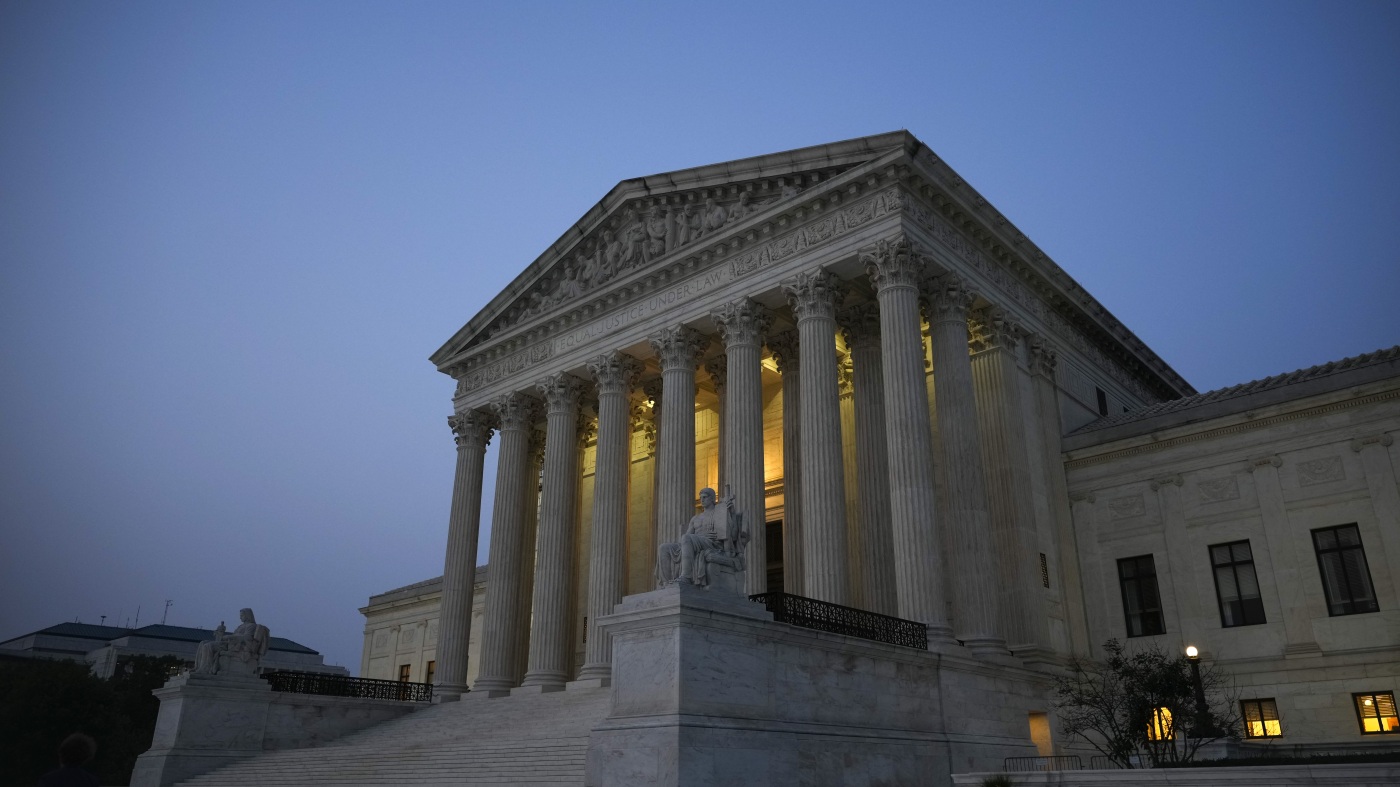
The U.S. Supreme Court Drew Angerer/Getty Images
The U.S. Supreme Court has opted to maintain the current state of affairs regarding the enforcement of the Voting Rights Act, allowing voters to continue challenging violations under this crucial piece of legislation. This comes amidst a significant case from North Dakota, focusing on Section 2 of the Act, which prohibits racial discrimination in voting.
Section 2 of the Voting Rights Act, enacted in 1965, was designed to abolish discriminatory practices like literacy tests and poll taxes, prevalent in the South post-Civil War, which disenfranchised many African American voters. The Supreme Court’s recent decision arrives as it prepares to revisit a similar case from Louisiana, with the possibility of examining additional questions related to the constitutionality of Section 2.
In Louisiana, the court will reexamine arguments about whether Section 2’s reliance on race for redistricting is constitutional. This case is particularly relevant due to Louisiana’s efforts to balance creating a majority-minority district while protecting key Republican congressional seats, including that of the House Speaker, Mike Johnson.
The North Dakota case followed a 2021 redistricting plan by the Republican-led legislature, challenged by two Native American tribes claiming it diluted their voting power, violating the Act. A federal court supported the tribes, halting the map’s enforcement and forcing the state to adopt a new map, leading to the election of Native American representatives.
North Dakota’s Secretary of State contested the ruling, arguing against the right of individuals to sue over Voting Rights Act violations. However, the Supreme Court’s intervention supports the tribes’ position, allowing them to maintain their elected representatives, albeit temporarily.
While Justice Clarence Thomas, alongside Justices Samuel Alito and Neil Gorsuch, dissented, the decision highlights ongoing debates about the Act’s scope. The Supreme Court’s conservative majority has historically restricted the Act’s impact, including a 2013 decision removing pre-clearance requirements for states with histories of discrimination and recent challenges to enforcement under Section 2.
This article was originally written by www.npr.org