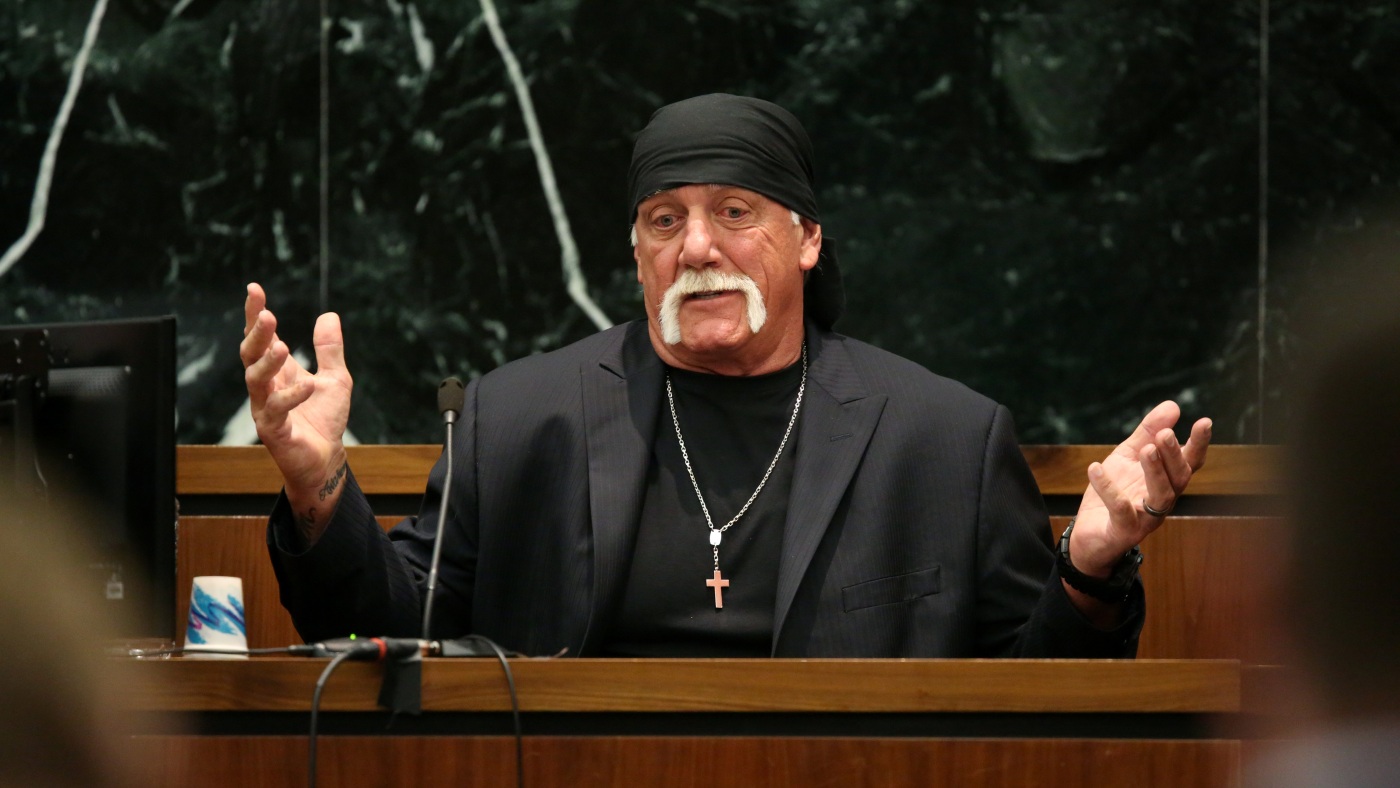
Hulk Hogan’s Legal Battle: A Landmark Case in Privacy Rights
Terry Bollea, famously known as Hulk Hogan, was not only a wrestling icon but also a central figure in a groundbreaking legal battle surrounding privacy and freedom of the press. His legal victory against Gawker Media in 2016 remains a pivotal moment in media law, especially in the digital age where privacy concerns are constantly evolving.
Hogan’s lawsuit against Gawker stemmed from the unauthorized release of a video depicting a private sexual encounter. The publication of this video on Gawker’s platform, accompanied by a provocative headline, sparked a heated debate about the boundaries of the First Amendment in relation to privacy rights.
Hogan, who passed away at 71, successfully argued that the video constituted an invasion of his privacy. This argument resonated with a Florida jury, which awarded him $140 million in damages, a move that ultimately led to the collapse of Gawker Media.
Amy Gajda, a law professor at Brooklyn Law School, highlighted how the internet has reshaped the landscape of privacy and media ethics. “Before the internet, the main publishers were mainstream news outlets, which adhered to ethical standards that often prevented the publication of deeply personal information,” Gajda explained.
She noted that the digital age has blurred these lines, leaving questions about what content should remain private. While traditional media often self-censored, the internet has challenged these ethical boundaries.
Rodney Smolla, president of the Vermont Law and Graduate School, described the Hogan case as a “turning point” in media law. Although it did not establish new legal precedents, it underscored the need for responsible journalism and respect for individual privacy.
“Normally, Freedom of the Press supersedes privacy concerns,” Smolla stated. “However, Gawker’s decision to publish explicit footage transcended acceptable limits of press freedom.”
Gajda further emphasized that Hogan’s case educated the public on their privacy rights, particularly in the context of revenge porn. Many people mistakenly believed that sharing intimate images forfeited their control over those images, a misconception that Hogan’s lawsuit helped dispel.
Smolla also pointed out the case’s impact on responsible media, which now face increased pressure to adhere to journalistic standards. “It was a warning shot,” he remarked, reinforcing the idea that even celebrities have rights to privacy that must be respected.
This article was originally written by www.npr.org