Insights Emerge from Hearings on Tragic Midair Collision Near Washington, D.C.
Amidst the backdrop of one of the most catastrophic aviation incidents in recent U.S. history, federal investigators have shared new information from a series of hearings. The tragic collision last January involving an American Airlines regional jet and an Army Black Hawk helicopter just outside Washington, D.C., resulted in the loss of 67 lives.
Altitude Discrepancy in Army Helicopter’s Instruments
During a routine training mission on the night of January 29, the Army Black Hawk helicopter, with a three-member crew, was traversing the Potomac River southward near Ronald Reagan Washington National Airport. Simultaneously, a Wichita-departing PSA Airlines flight was nearing its landing.
The disastrous collision took place at 8:48 p.m. ET, with both aircraft plummeting into the icy river. Investigations revealed the impact occurred at 278 feet, exceeding the Black Hawk’s mandated 200-foot altitude limit for that segment of the route. Anomalies in the helicopter’s barometric altimeter were noted, suggesting it might have been displaying incorrect altitude readings, a discrepancy not uncommon according to Army sources.
U.S. Army Chief Warrant Officer Kylene Lewis remarked, “In my experience, a difference of 80 feet or so between the radar altitude and the barometric altitude would not be cause for alarm.” These altimeters, which rely on air pressure, can differ from radar altimeters that measure the distance to the ground.
Queries raised about the accuracy of these altimeters led NTSB member J. Todd Inman to challenge, “I think it should be zero.” The Army is now contemplating updates to flight manuals to address potential altitude reading inconsistencies.
Pressure on Air Traffic Controllers at DCA
Operational demands at the bustling Ronald Reagan Washington National Airport often required air traffic controllers to “make it work,” sometimes by utilizing additional runways for incoming flights. This was the case on the night of the collision.
Clark Allen, a former DCA tower operations manager, when questioned about safety compromises, stated, “You’re pushing the line.” Despite a national shortage of air traffic controllers, FAA’s acting deputy chief operating officer Nick Fuller indicated that staffing at DCA was comparable to similar facilities.
Typically, separate controllers handle helicopter and fixed-wing aircraft traffic at DCA. However, on the incident night, one controller managed both, a common practice at the airport.
Concerns Over Helicopter Route Ignored by FAA
Before the accident, FAA staff had flagged concerns about the proximity of an Army helicopter route to commercial landing paths. The 12th Aviation Battalion’s Bravo Company, based at Fort Belvoir, frequently conducted training missions in the area.
Efforts to reroute or partially eliminate the helicopter path, known as Route 4, were hindered by security and continuity of government operations considerations, as explained by Allen.
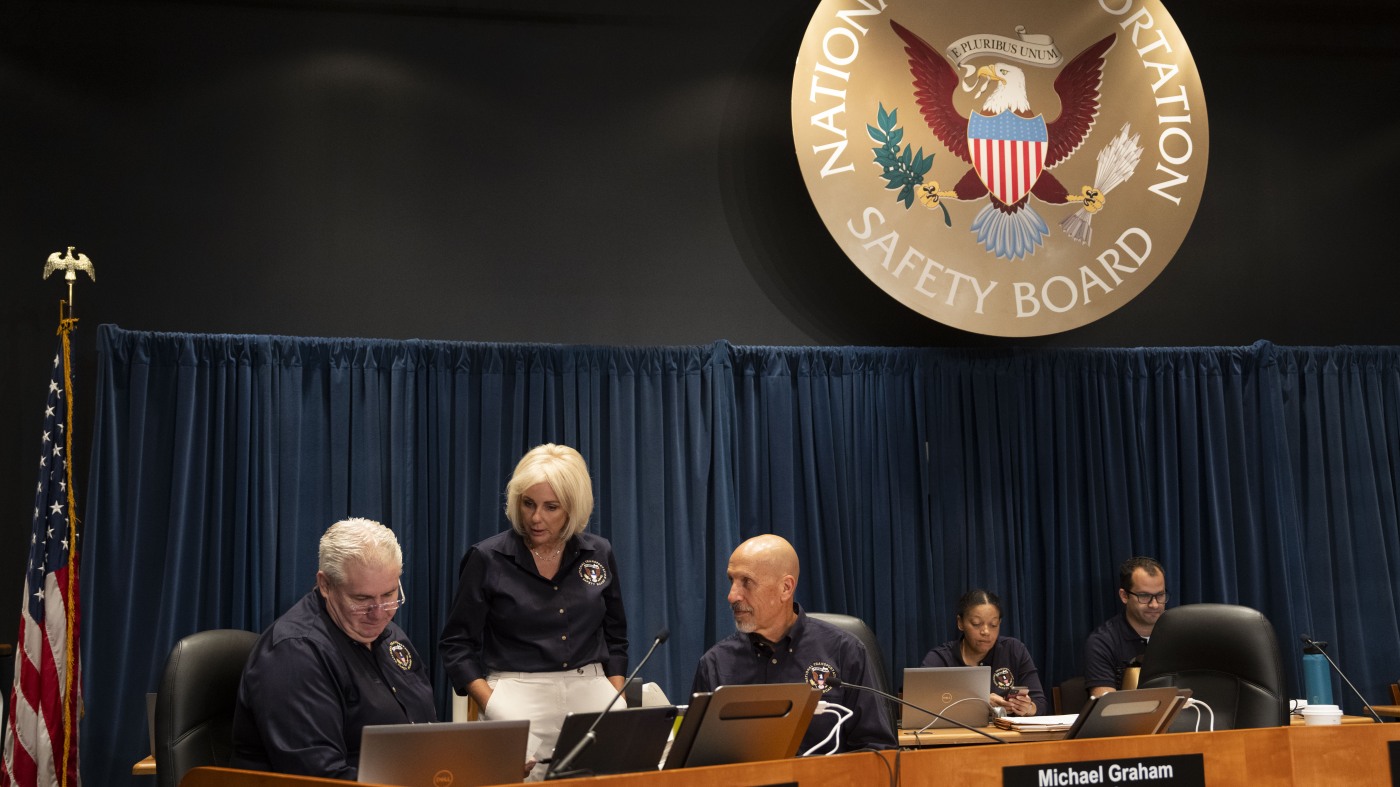
NTSB Chair Jennifer Homendy criticized the FAA’s inaction: “Are you kidding me? Sixty-seven people are dead! How do you explain that? Our bureaucratic process? Fix it. Do better.”
In response, Transportation Secretary Sean Duffy has since restricted nonessential helicopter operations around DCA and ended mixed traffic between helicopters and fixed-wing aircraft, aligning with NTSB recommendations.
“`
This article was originally written by www.npr.org