Commerce Secretary Acknowledges Challenges in Proposed “New” Census
In a recent development, Commerce Secretary Howard Lutnick, tasked with overseeing the Census Bureau, has recognized the legal authority Congress holds over the national census, despite President Trump’s recent call for a “new” census. This acknowledgment was made during a town hall meeting with Census Bureau employees, as reported by NPR.

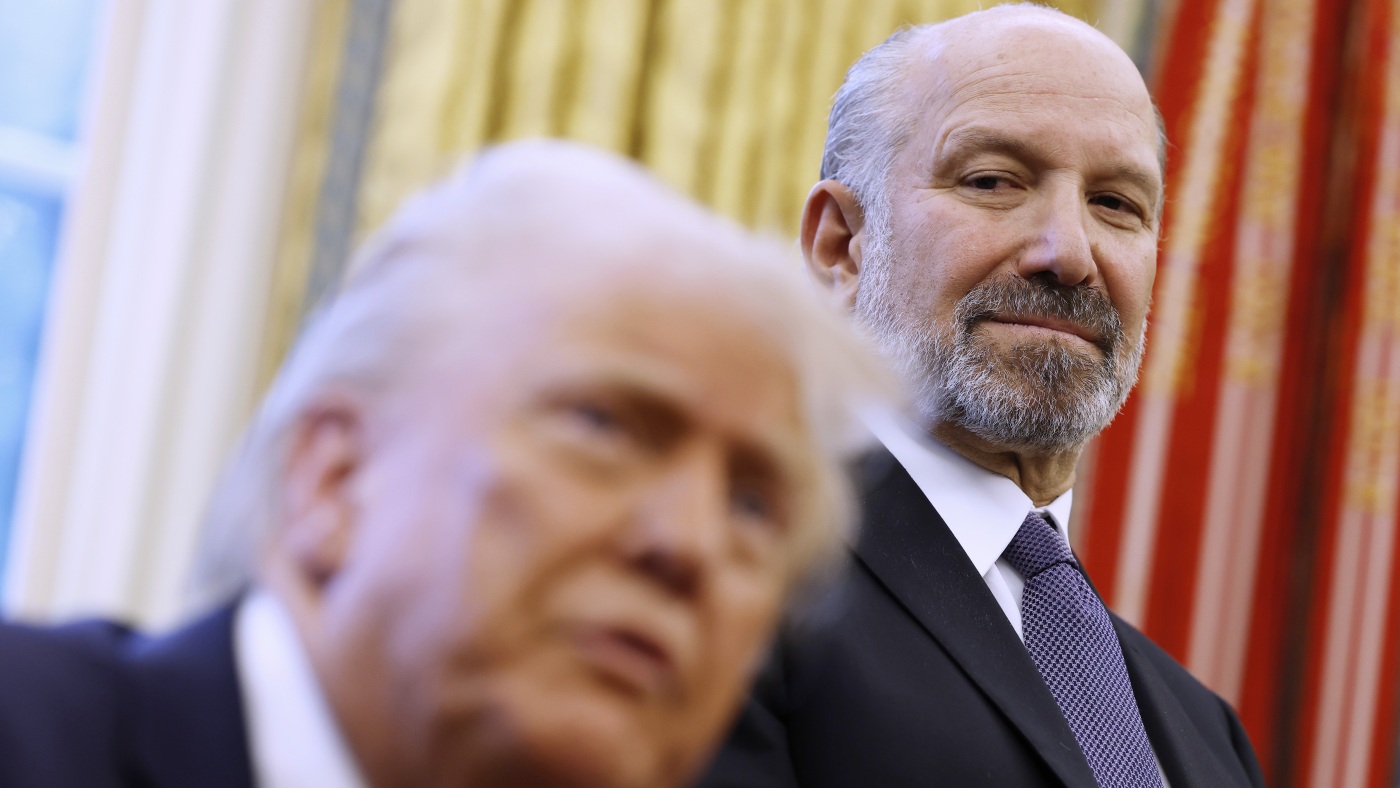
Howard Lutnick, who now oversees the Census Bureau as the commerce secretary, stands behind President Trump in the Oval Office of the White House in Washington, D.C., in February before his confirmation to Trump’s cabinet.
Anna Moneymaker/Getty Images
Lutnick has articulated that while individuals residing in the United States without legal status should indeed be counted in the census, their status should be distinctly noted. This approach aligns with recent discussions surrounding the differentiation of undocumented residents in population counts.
The secretary’s statements occurred amid a concerted Republican effort to leverage census data for redistricting purposes in Texas and other states, aiming to secure GOP dominance in the House of Representatives for upcoming elections. This push is part of a broader strategy to possibly conduct a census before the next scheduled one in 2030, a proposal that has sparked debate due to legal and logistical challenges.
Lutnick acknowledged legal hurdles facing any census before 2030
Despite these ambitions, experts have pointed out the impracticality of organizing a census by 2025 or 2026, given the extensive preparation required, typically spanning over a decade. As such, Lutnick’s recent comments represent the first official recognition of these legal and procedural challenges by a senior Trump administration figure.
President Trump’s social media post from August 7 suggested a historical departure by excluding undocumented individuals from the census count. However, the 14th Amendment mandates the inclusion of the “whole number of persons in each state” in the census, which determines House seat allocation and Electoral College votes.
During his Senate confirmation hearing, Lutnick assured adherence to the constitutional requirement of counting each whole person, stating, “I promise you we will count each whole person. That’s what the Constitution says. And we will stick right to it rigorously.”

Demonstrators rally outside the U.S. Supreme Court in Washington, D.C., in 2019, to protest the first Trump administration’s failed push to add a U.S. citizenship question to 2020 census forms.
Mandel Ngan/AFP via Getty Images
Meanwhile, discussions around the census have continued, with inquiries about consistency across states regarding the exclusion of non-U.S. citizens. Lutnick expressed support for consistency, stating, “Consistency makes sense.”
Some Republicans are still pushing for a census before the 2026 midterms
Under Article I of the Constitution, Congress holds the authority to direct the national census. While a mid-decade census in 2025 is legally permissible, it cannot be utilized for reallocating House seats, and the deadline for preparation has already passed. Despite this, President Trump remains supportive of legislative proposals for a new census and redistricting before the 2026 midterm elections.
Republicans such as Rep. Marjorie Taylor Greene and Rep. Randy Fine have introduced bills to modify federal law, allowing for a new census and excluding certain groups from the count. However, these bills have limited support and are currently stalled in committee.
Florida Attorney General James Uthmeier recently communicated with Lutnick, referencing Trump’s directive and proposing a recount in certain areas for House seat redistribution and adjustments to federal funding allocations based on census data.
“We are energized by President Trump’s leadership,” Uthmeier stated, expressing optimism for collaboration on resolving these census-related issues.
This article was originally written by www.npr.org