A Journey Back: Choosing Self-Departure Over Uncertainty
In the tranquil neighborhood of West Lansing, where leafy trees line the streets and spacious front yards are the norm, Samuel Kangethe faces a poignant farewell. Five suitcases filled with memories and necessities are scattered around his living room, amidst the chaos of clothes, finance books, and cherished Air Jordan sneakers.
“I just want to take the clothes that I need,” Kangethe admits, confronting the overwhelming task of selecting which 16 years of life to pack and which to leave behind.
His decision to leave the United States marks the end of a significant chapter in a country where he worked as an accountant, pursued higher education, and built a family with his wife Latavia and their three children: Dwight, Hailey, and Ella.
“For me it has been an absolute privilege to be in this country, like (an) absolute privilege,” Kangethe reflects. Yet, his choice to return to Kenya stems from a deep-seated fear of potential detention by Immigration and Customs Enforcement (ICE).
Despite having no criminal record, Kangethe remains entangled in removal proceedings, stemming from a 2014 immigration ruling labeling his prior marriage as fraudulent—a charge he has contested. Delays caused by the COVID-19 pandemic pushed his hearing to January 2026, leaving him in a precarious legal status.
In an effort to take control of his destiny, Kangethe has opted for self-deportation. “Deportation is the worst thing that would come out of this case,” he says. “How about if I take myself out as a show of good faith?” More details on his case can be found here.
The ‘Safest’ Option
As Kangethe moves through his home, sipping coffee and processing the aftermath of a surprise farewell party, he grapples with the emotional weight of his decision. “She got me super emotional,” he says of his wife’s effort to bring friends together, revealing how deeply he has touched others’ lives.
Leaving the U.S. is not an easy choice, but it’s one he sees as necessary. “This is the safest option that I had on the table for me,” he explains, acknowledging the pain it brings to his family, now left with only one income and dependent on a GoFundMe campaign for support.
Kangethe criticizes U.S. deportation policies for inadvertently increasing government dependency by removing breadwinners from families. “You deport this guy… what did he leave behind that we have to take care of as a country,” he questions.
An Uncertain New Life
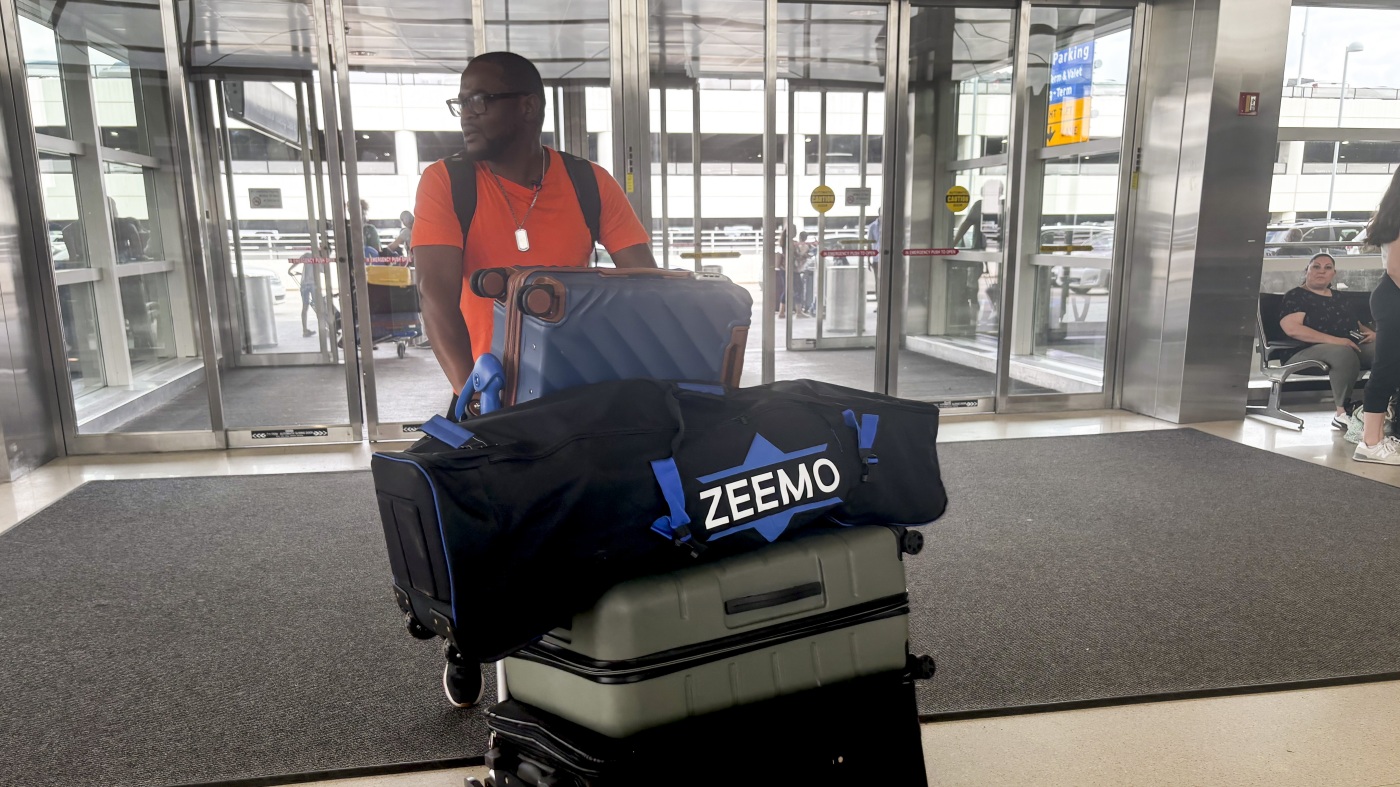
Arriving at Detroit Metro Airport with friends, Kangethe prepares for the journey to Kenya. Lawrence Hiti, a friend from Lansing, captures the bittersweet moments on camera. “It’s sad because he’s a long (time) friend,” Hiti remarks. “It’s his decision—I think he made the best decision for himself.”
His family remains at home, the emotional departure too difficult to bear. “I felt like I had to run from them because there weren’t enough ‘byes’, there weren’t enough hugs,” Kangethe recounts.
His sister Elizabeth, visiting from Kenya to assist him, shares the mixed emotions of leaving loved ones behind while welcoming him back to a country he hasn’t seen in nearly two decades. “The kids were all heartbroken,” she says, hoping for future reunions despite the potential 10-year ban he might face.
As Kangethe ventures toward an unfamiliar future, he remains hopeful. “I’m here to guide him,” Elizabeth reassures, as he walks through Gate A60, embarking on a new beginning in Kenya, while his family in the U.S. awaits their next meeting.
This article was originally written by www.npr.org