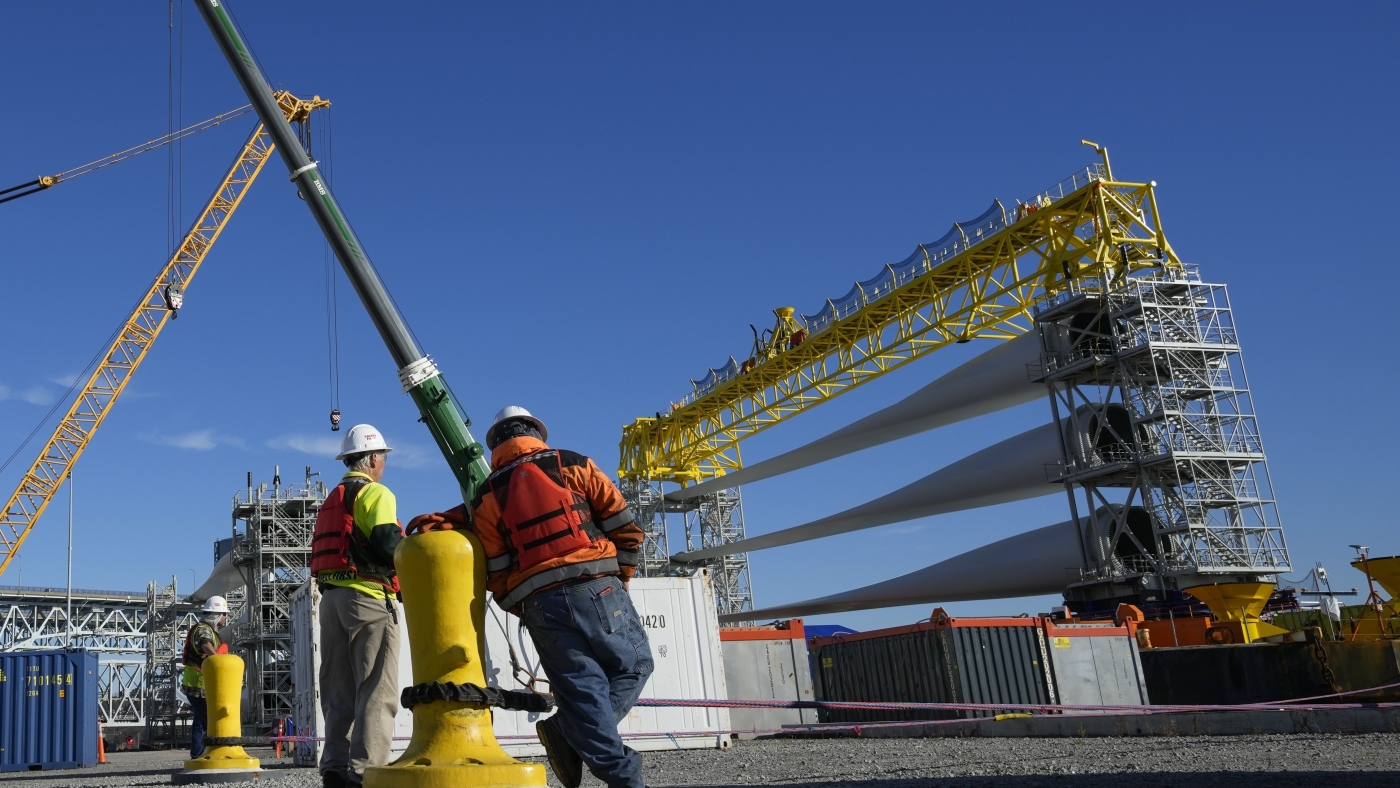
Controversy Surrounds Halted Wind Farm Project in Rhode Island Waters
In a move that has sparked significant debate within the energy sector, the Trump administration has intervened to stop the construction of a nearly completed wind farm project situated off the coast of Rhode Island. The decision is part of a broader pattern of actions against renewable energy initiatives.
Matthew Giacona, acting director of the Bureau of Ocean Energy Management, issued an order to Ørsted, a Danish energy company involved in the project, to cease operations. This decision was aimed at addressing “concerns related to the protection of national security interests of the United States.” Ørsted is collaborating with Global Infrastructure Partners on this project.
The Revolution Wind project, which has been under construction since 2023, was expected to deliver power to both Rhode Island and Connecticut starting next year. However, this new directive has cast uncertainty over the timeline and future of the project. Giacona’s letter to Ørsted highlights national security as the primary reason for the halt.
This development aligns with earlier actions by the Trump administration, which include a moratorium on new offshore wind projects and stricter tax incentive qualifications for renewable energy companies, as outlined by the Internal Revenue Service. Additionally, the Commerce Department’s investigation into the national security implications of imported wind turbine components adds to the regulatory challenges faced by the industry.
Ørsted has expressed its intent to explore all available options, including legal avenues, to resolve the situation swiftly, as mentioned in their official statement.
National Ocean Industries Association President Erik Milito emphasized that “any pause or uncertainty at this stage could ripple across jobs, contracts, and communities already benefiting from the project.” He highlighted that the U.S. currently has only one large-scale offshore wind project in operation, which is insufficient to meet the growing energy demands.
Jason Grumet, CEO of American Clean Power, criticized the administration’s decision, stating, “This is not the first time extreme partisan politics has derailed sound energy policy,” according to his statement. He warned that such actions send a clear message to investors that the U.S. may not be a reliable market for long-term energy investments.
Past incidents, such as the halted Empire Wind project near Long Island, have already demonstrated the financial implications of regulatory interventions. Although work on Empire Wind resumed in May, the disruption had significant financial repercussions for Equinor, the project’s developer, which subsequently reassessed its investment value.
Liz Burdock, CEO of the Oceantic Network, decried the recent halt as “unlawful” and argued that it undermines progress in various sectors, including energy and infrastructure development. Her statement further warned of potential increases in energy costs for consumers and economic ramifications for workers and businesses involved in the project.
This article was originally written by www.npr.org