The Thrill of Six-Man Football in Marfa, Texas
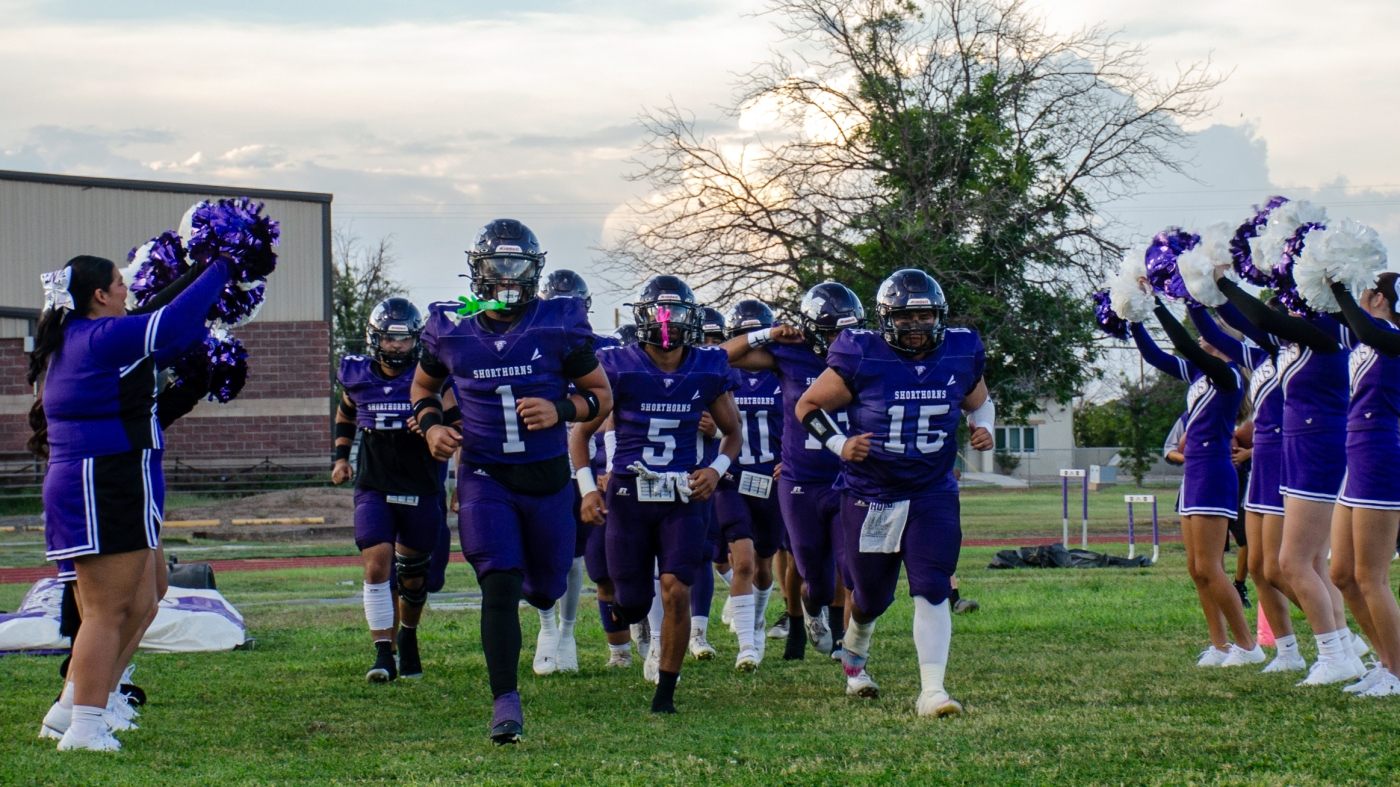
In Marfa, Texas, high school football takes on a unique form that keeps the community’s spirit alive. Jay Foster, a seasoned announcer at Martin Field, has witnessed many fans rallying to support their beloved Marfa Shorthorns. However, the game he’s been announcing for a decade isn’t the typical football spectacle most envision.
In rural Texas, schools with enrollments under 105 students, like Marfa High, embrace the thrilling variant of football known as six-man football. Unlike the grand stadiums and high-profile recruits seen in larger Texas schools, six-man football embodies community pride over mere competition.
“It’s not like 11-man ball, but you still have the basics,” shares Foster, who once coached at Marfa High. “You still got to block, tackle, you got to run, you got to pass, you got to kick and everything else you do normally in American-style football.”
Approximately 200 teams play this variant in Texas, characterized by an 80-yard field, narrower than the standard 100 yards, and a few distinctive rules. Field goals earn four points instead of three, and achieving a first down requires 15 yards instead of 10. Additionally, a 45-point lead after halftime ends the game, in a rule known as “getting 45’d.”
This fast-paced game has its enthusiasts. “It’s like 11-man [but] on steroids,” describes Bobbie Brown, founder of 1A Fan. “It’s so quick and fast and it’s so enjoyable, because there’s not one boring second in a six-man game.”
The evolution to six-man football in Marfa started in 2012, and while the transition required adjustment, the town’s residents are glad to continue their football tradition. “It’s like an identity,” Brown remarks, emphasizing the game’s cultural significance in small-town Texas.
“In small towns, there’s really not a whole lot to do,” Brown adds. “But the school is the hub for the community. We know what we’re doing Friday nights in the fall.”
At a recent game, amidst the high-energy plays, cheerleaders and “Bull-ette” the mascot lead the crowd in cheers. Gregory Victor Meads, a local preacher, observes, “You got people that disagree on all kinds of stuff, but they can agree on their team. It brings people together.”
Arturo Alferez, Marfa’s interim superintendent, highlights the longstanding traditions upheld by generations of fans. “Even though Marfa has changed, the town has changed, you come back here and it brings you back to those traditions and roots,” he says.
However, the declining student enrollment poses a future challenge, potentially threatening the ability to field a team. “I can’t even fathom that ever happening,” Lori Flores reflects, sharing the sentiment that losing the team would be a significant cultural loss.
Some schools in Texas have already skipped football seasons due to insufficient players, as reported here.
For Garry Webb, a senior who transferred to Marfa, the field and stands provide a sense of community. “From the stands, we see our parents, our cousins, our old teammates,” Webb says. “And what they see down here, is not just a number or a player, they see my little brother, my cousin, my old friend that I used to play with.”
Playing under Friday night lights is a rite of passage in Texas, and for Webb, experiencing it—even as six-man football—feels essential. “It just feels like the world’s watching,” he concludes. “Not the entire world, but our world.”
This article was originally written by www.npr.org