Rock Springs’ Forgotten Past Unearthed: A Journey Through Time and Memory
In the seemingly tranquil town of Rock Springs, Wyoming, a team of researchers is digging deep into the past, unearthing layers of history that reveal a time of conflict and tragedy. Nestled amidst vast plateaus and wild horse trails, this small town, home to about 23,000 residents, is now the site of a significant archaeological project.
Grinnell College researchers have embarked on a summer expedition, delving into the soil of Rock Springs to uncover remnants of its once-thriving Chinatown. Their quest is to find artifacts from the 1885 incident when labor tensions at Union Pacific Railroad’s coal mines erupted into violence. A mob, comprising mainly European migrants, targeted the Chinese community, resulting in the destruction of homes and shops and the deaths of 28 Chinese residents.
Professor Laura Ng, leading the excavation, stands amid the trenches where buildings once stood. “And it was right here where we’re standing,” she shares, as her team maps out the burnt layers of history, discovering pottery fragments, bones, and other relics.
The town’s history dates back to the 1860s, when the promise of coal deposits attracted a diverse workforce, earning Rock Springs the moniker “Home of 56 nationalities.” However, the darker chapter of its past is being revisited with renewed focus.
Rock Springs’ Reckoning with History
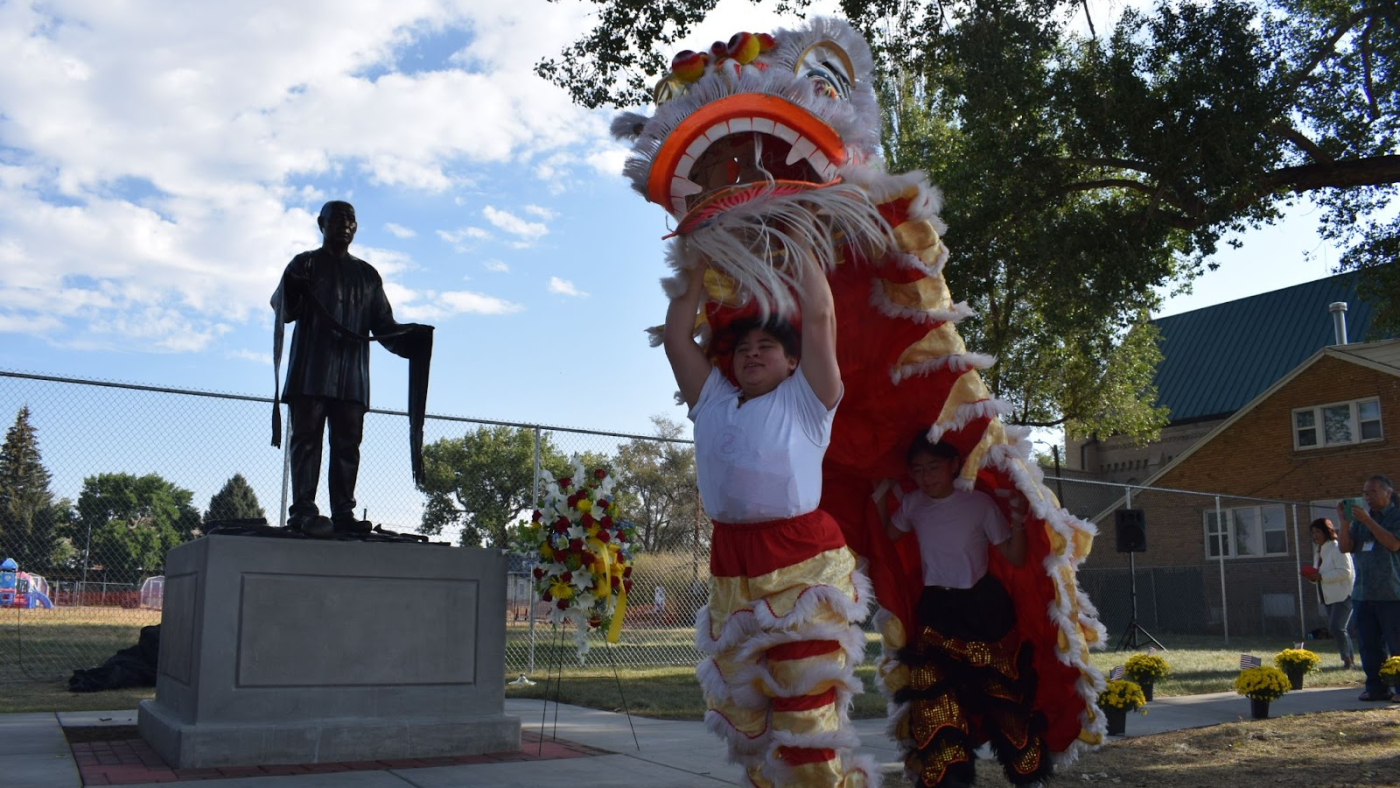
This year marks a significant turn for the town, as it embraces its migrant history and confronts the events of 1885. A new statue, “Requiem,” was unveiled during the Labor Day weekend, standing over seven feet tall and depicting a Chinese miner amidst the ruins, clutching a ceremonial dragon flag.
Rock Springs Mayor Max Mickelson, during the dedication ceremony, highlighted the significance of this memorial, acknowledging the contributions of the 55 other nationalities that built the town. Yet, this acknowledgment comes at a time when the county remains politically divided, with a strong majority having supported policies that some argue erase parts of America’s history.
Local students now learn about the massacre, and history museums have joined efforts to fundraise for the statue. Despite the county’s conservative leanings, there is a growing recognition of the need to honor the town’s diverse roots.
Descendants and Community Come Together
Ricky and Grace Leo, descendants of those affected by the massacre, returned to Rock Springs to participate in the commemoration. Their involvement was sparked by meeting archaeologist Dudley Gardner, an expert on the massacre. The Leos helped organize the event, which included traditional lion dances and blessings.
For many, like Robert Lew from California, learning about their connections to this history has been a recent revelation. His journey to Rock Springs allowed him to connect with his ancestral past and witness the community’s growing understanding of the events that shaped their town.
As Rock Springs continues to explore its history, the efforts of researchers, descendants, and the community highlight a collective desire to remember and learn from the past, ensuring that the stories of those who came before are never forgotten.
This article was originally written by www.npr.org