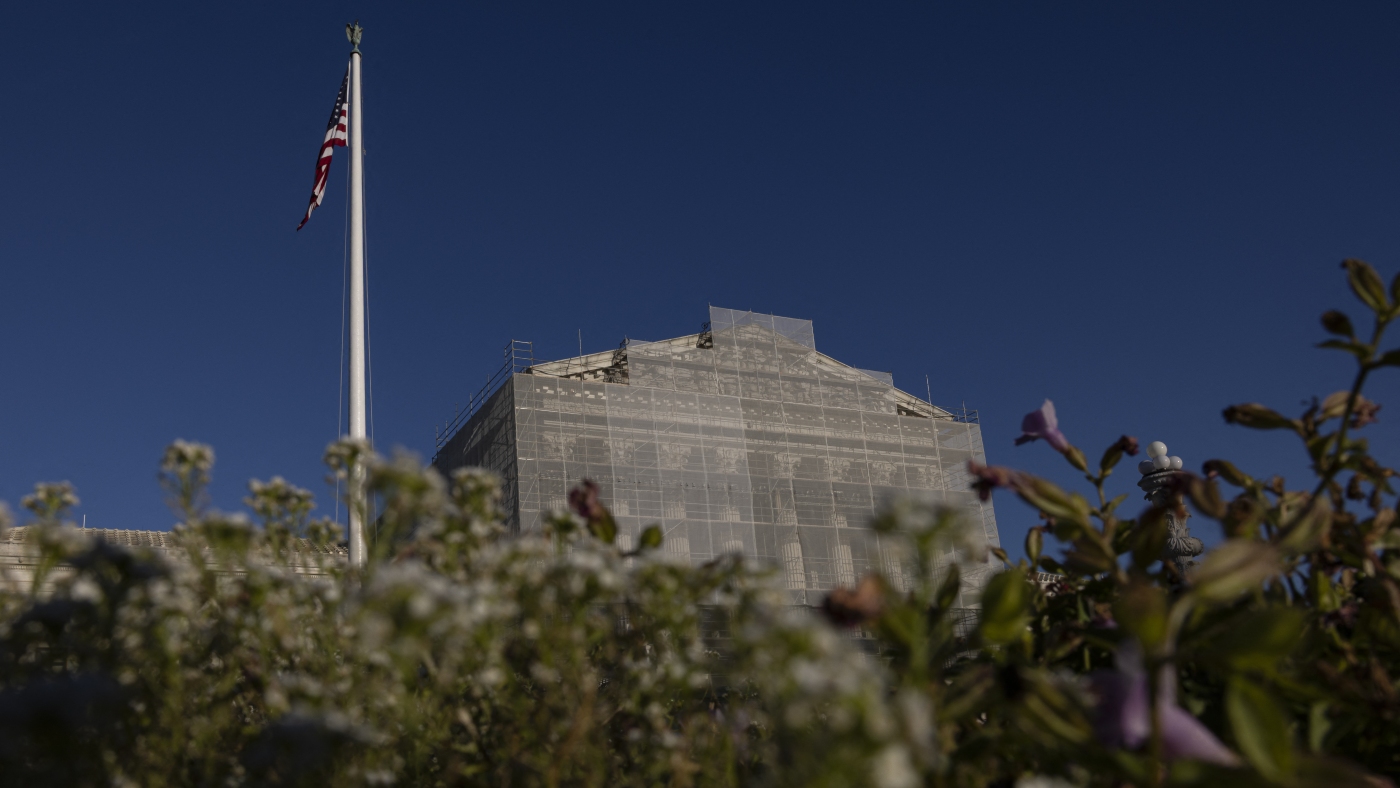

A view of the U.S. Supreme Court on October 4, 2025. Mehmet Eser/AFP via Getty Images
In a lively session at the Supreme Court, justices from both ends of the ideological spectrum showed skepticism toward arguments from both sides in a critical case concerning Illinois voting laws. The case questions the legality of a rule allowing ballots with postmarks on Election Day to be tallied up to two weeks after.
Central to the case is Rep. Michael Bost, R-Ill., who disputes the constitutionality of this rule, claiming it diluted his victory margin and caused additional campaign expenses. However, lower courts have dismissed his claims, stating Bost couldn’t prove personal injury as he emerged victorious.
Paul Clement, representing Bost, argued that the extended counting period harmed his client. Chief Justice John Roberts quickly dismissed this argument as weak, summarizing it as “Hi, I’m a candidate. These rules apply to me, and I’m suing.”
Justice Samuel Alito suggested that Bost’s argument could have been more robust by addressing common perceptions about the impact of such voting rules, which are believed to disadvantage Republicans and favor Democrats.
Justice Sonia Sotomayor critiqued the lack of substantial legal grounding in Bost’s brief, stating, “You didn’t put in any facts.”
As the justices explored whether unlikely candidates should have the right to challenge election rules, Clement humorously aligned himself with minor party candidates, saying, “I’m going to stand with the 2% candidate. I stand in locked shoulder with the Socialist Workers Party.”
Justice Neil Gorsuch pointed out the improbability of success for such candidates, noting past cases where the Socialist Workers Party had “zero chance of winning the election.”
Illinois Solicitor General Jane Notz argued that only competitive candidates should have standing to sue over election laws. Yet, this stance was met with skepticism. Chief Justice Roberts warned of potential negative implications, while Alito questioned the validity of assessing a candidate’s background in legal arguments.
Justice Gorsuch also questioned the appropriateness of federal courts predicting a candidate’s chances right before an election. Justices Brett Kavanaugh and Ketanji Brown Jackson implied that Illinois’s position was inconsistent with its own brief. Kavanaugh remarked, “That’s your choice.”
This article was originally written by www.npr.org