Controversy Surrounds Data Center Expansion as AI Demand Grows
Efforts to expand data center infrastructure in the United States are facing increasing resistance from local communities concerned about environmental and economic impacts. As major tech companies pour billions into constructing these facilities, the demand for data centers is driven by a surge in artificial intelligence applications. Yet, local residents and environmental advocates raise questions about the sustainability of this rapid development.
Local Pushback Against Data Center Projects
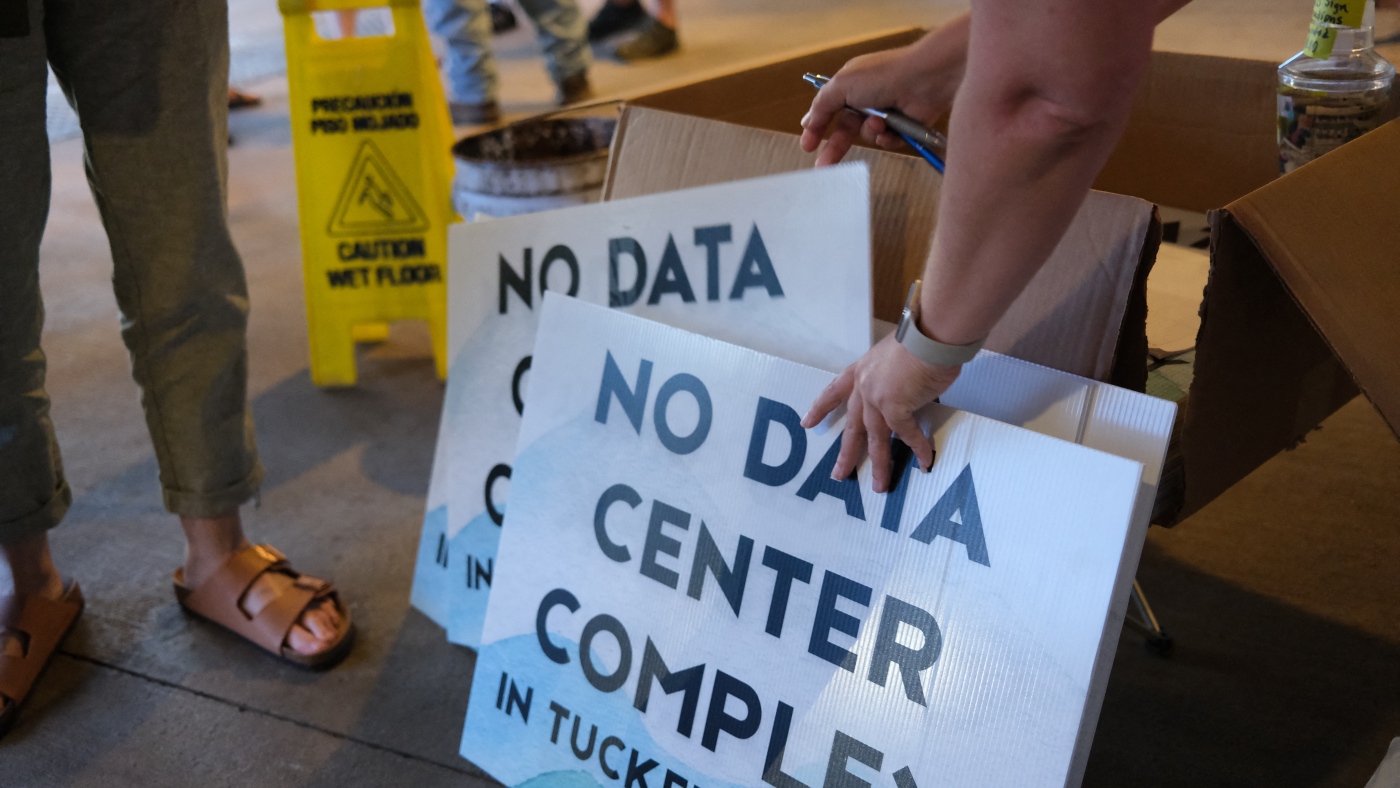
In Franklin, Indiana, a proposed Google data center met with significant community opposition over concerns about water and electricity consumption, leading the company to withdraw its proposal. This incident is part of a broader trend across the U.S., where residents are increasingly vocal against the construction of large data centers.
Joseph Majkut from the Center for Strategic and International Studies highlights the potential consequences of such local opposition, stating that it could slow down the industry’s development or lead to uneven distribution across regions.
Understanding Data Centers and Their Environmental Impact
Data centers, which house essential computer hardware for processing and storing digital information, are the backbone of the internet. These facilities can be massive, covering over a million square feet. However, their environmental footprint is substantial, with some centers consuming as much electricity as 100,000 households and vast amounts of water for cooling systems.
According to the International Energy Agency (IEA), the energy consumption of AI data centers is a growing concern, with the largest centers under development potentially using 20 times more power than typical ones.
Data Center Boom Driven by AI Investment
The current boom in data center construction is fueled by the growing demand for AI technologies. Since the launch of ChatGPT in 2022, AI adoption has accelerated, with significant investments in data centers and AI chips. Goldman Sachs predicts that AI will account for 28% of the global data center market by 2027.
This expansion is concentrated in areas like Northern Virginia’s “Data Center Alley” and parts of Texas, though new markets such as Las Vegas are emerging due to favorable conditions like affordable land and renewable energy sources.
Community Concerns and Industry Responses
Residents in various regions express concerns about the impact of data centers on local resources. In Georgia, issues of water supply have arisen, while some Arizona cities have restricted water deliveries to high-usage facilities like data centers.
Dan Diorio, from the Data Center Coalition, notes efforts to mitigate resource usage by adopting technologies like closed-loop water systems and waterless cooling. However, tensions remain as communities demand transparency from tech companies regarding water and energy consumption.
Challenges in Meeting Power Demand
Ensuring sufficient electricity supply is a major challenge for data center developers. While renewable energy sources are crucial for increasing power capacity, recent governmental actions have limited their expansion. Industry insiders stress the importance of diverse energy sources, including natural gas and nuclear, in meeting future demand.
Despite these challenges, data centers are not the only drivers of increased power needs. The rise in electric vehicles, factories, and home appliances also contributes to the growing demand for electricity.
Note: Google is a financial supporter of NPR.
This article was originally written by www.npr.org