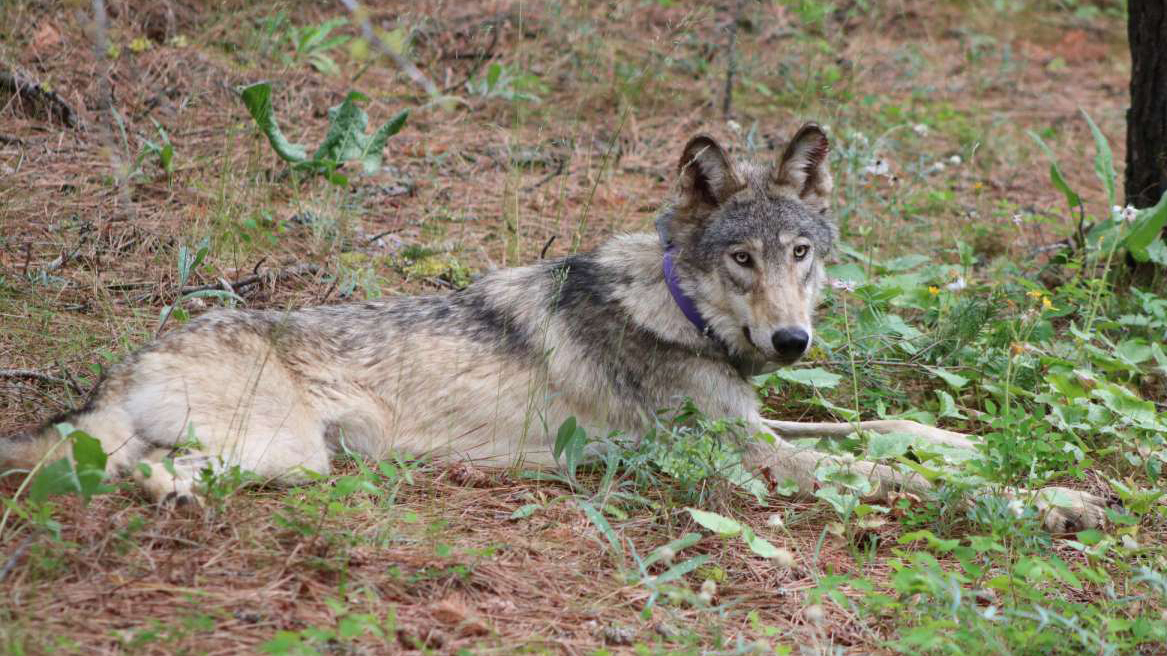
The Return of Gray Wolves in California: A Story of Conservation and Conflict
Once absent from California for nearly a century, gray wolves are making a remarkable return to the state. This resurgence is welcomed by conservationists and nature enthusiasts. However, it also brings challenges, particularly for ranchers who are increasingly finding themselves in conflict with these predators.
The pattern of returning wolves and subsequent conflicts with livestock owners is not unique to California. Similar scenarios have unfolded in other states where wolf populations have been on the rise.
In a recent development, officials in Northern California made the difficult decision to euthanize four wolves after an “unprecedented level” of attacks on livestock occurred in the region.
The California Department of Fish and Wildlife (CDFW) reported that between late March and early September, the Beyem Seyo pack was responsible for 70 livestock losses, making up nearly two-thirds of the state’s total wolf-related livestock depredations during that period.
“This decision was not made lightly nor was it easy,” stated CDFW director Charlton Bonham in a statement. Despite extensive non-lethal efforts to deter the wolves, they continued to prey on livestock, cementing their reliance on cattle as a food source.
Efforts to manage predator-livestock interactions typically include non-lethal measures such as firing guns into the air, using brightly colored flags, and patrolling grazing areas with ATVs and trucks. Nevertheless, these strategies were insufficient in altering the wolves’ behavior.
Historically, gray wolves were hunted, trapped, and poisoned to near extinction in the lower 48 U.S. states by the early 20th century, with the last Californian wolves disappearing by the 1920s. In recent years, wolves have naturally returned to California, dispersing from Oregon and even reaching the southern Sierra Nevada.
Across the country, particularly in areas like Colorado and Yellowstone National Park, gray wolves have been reintroduced to restore natural ecosystems. These efforts have been met with enthusiasm from conservationists, though they face criticism from ranchers concerned about their impact on rural livelihoods.
In 2020, the U.S. Fish and Wildlife Service, under the Trump administration, removed gray wolves from the Endangered Species Act in the lower 48 states, pointing to population recoveries in parts of the Western U.S. and the Upper Midwest. This decision was later challenged, and in 2022, a judge ordered that protections be reinstated, ensuring the species remains safeguarded under federal law.
This article was originally written by www.npr.org