U.S. Considers Resuming Nuclear Testing Amid Global Tensions
In a move that could potentially shift the global nuclear balance, President Trump announced on Thursday that the United States may resume nuclear testing after decades of dormancy. This statement has sparked discussions and concerns among experts about the implications of such a decision.
“We’ve halted many years ago, but with others doing testing I think it’s appropriate to do so,” the president stated while aboard Air Force One, suggesting that recent international developments have influenced this decision.
Experts argue that this step could mark a significant escalation in international nuclear dynamics. Corey Hinderstein from the Carnegie Endowment for Nuclear Peace warned, “I think a decision to resume nuclear testing would be extremely dangerous and would do more to benefit our adversaries than the United States.”
The Nevada Test Site: America’s Nuclear Testing Ground
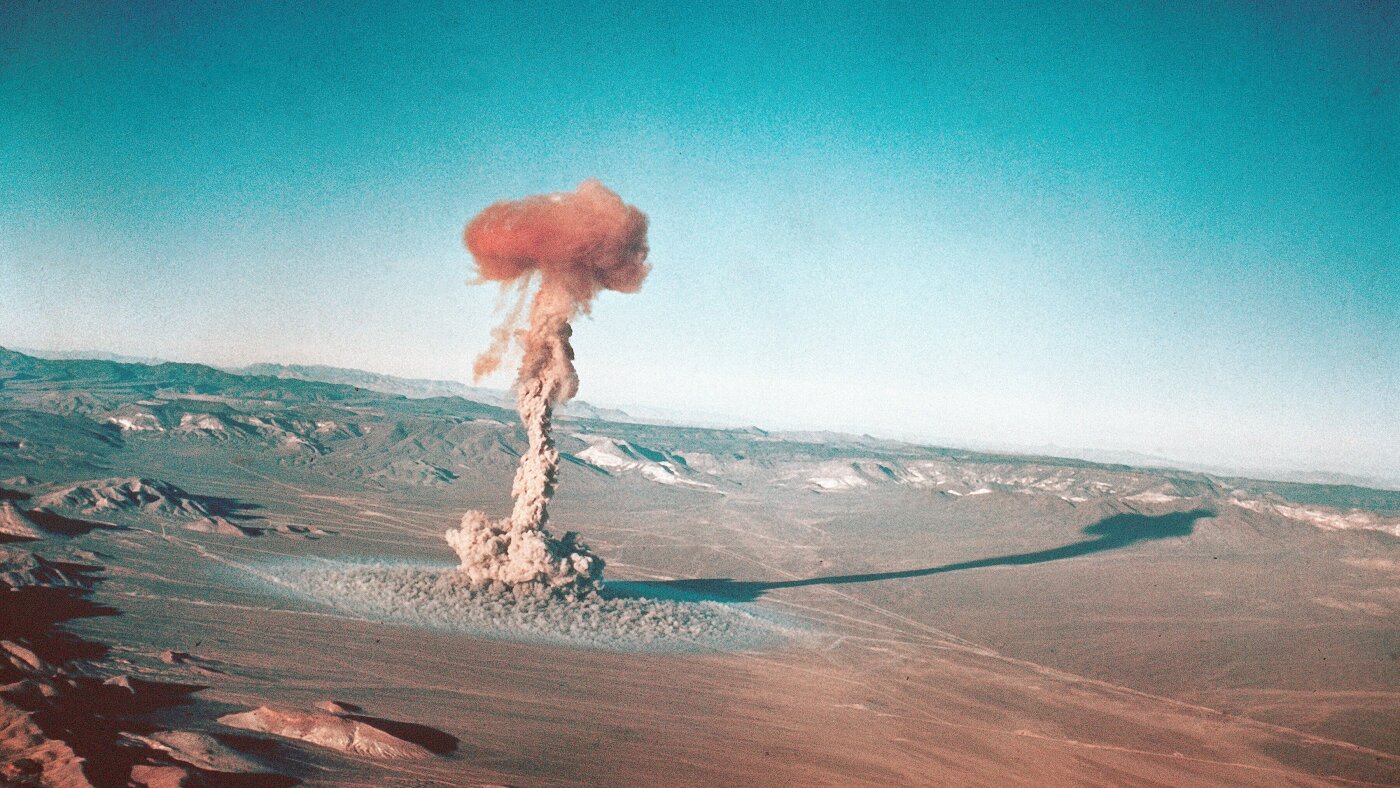
Currently, the Nevada National Security Site stands as the sole location in the U.S. where nuclear tests could be conducted. Located 60 miles northwest of Las Vegas, this site has a storied history of nuclear experimentation dating back to the 1950s.
Robert Peters from the Heritage Foundation notes that any new tests would likely occur in “a complex of deep underground mineshafts,” minimizing atmospheric risks. However, even underground tests carry potential hazards, including the possibility of seismic disturbances affecting nearby areas like Las Vegas.
A Historical Pause in Nuclear Testing
The last U.S. nuclear test took place in 1992, following a period of voluntary cessation among the world’s nuclear powers. This moratorium was part of efforts to stabilize global nuclear capabilities. Today, the U.S. relies on scientific simulations to ensure the efficacy and safety of its nuclear arsenal.
Don Haynes, a scientist from Los Alamos National Laboratory, mentioned that while testing could supplement current methods, there are no pressing issues that necessitate actual detonations. “Our assessment is that there are no system questions that would be answered by a test, that would be worth the expense and the effort and the time,” he stated.
International Developments and Strategic Reactions
President Trump’s announcement seems to be a response to recent activities by Russia, which recently tested a nuclear-powered cruise missile and an underwater drone. Although Trump did not explicitly name Russia, he indicated these tests as a reason for the U.S. to consider resuming its own nuclear tests.
This development comes as the last nuclear treaty between the U.S. and Russia approaches expiration, potentially signaling a new arms race era. Jon Wolfsthal from the Federation for American Scientists remarked on the situation’s similarity to Cold War dynamics.
The Cost and Necessity of Nuclear Testing
While some argue for the strategic need to resume testing, others highlight the significant costs involved. Paul Dean from the Nuclear Threat Initiative estimates testing expenses could reach $140 million per test. Meanwhile, some experts believe that other nations might gain more strategically from a resumption of nuclear tests than the U.S. itself.
Robert Peters from the Heritage Foundation believes that while immediate testing is unnecessary, future scenarios might change this stance given the current global tensions.
This article was originally written by www.npr.org