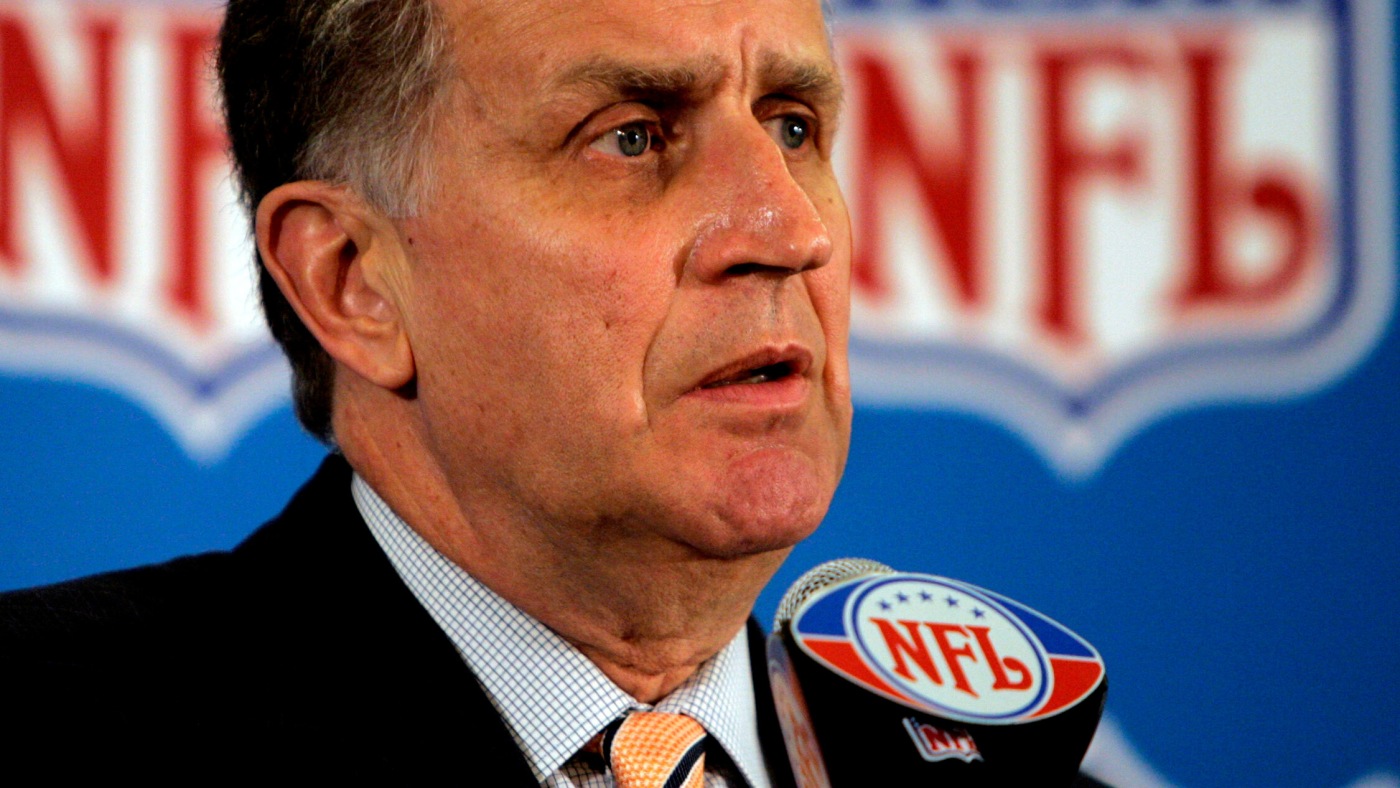
Remembering NFL’s Former Commissioner Paul Tagliabue
Paul Tagliabue, who guided the NFL through significant transformations over nearly two decades as commissioner, has passed away at 84 due to heart failure. His tenure from 1989 to 2006 was marked by substantial financial growth and labor stability, though not without its criticisms regarding concussion management.
Tagliabue’s passing was confirmed by NFL spokesman Brian McCarthy, who reported that the family informed the league of his death in Chevy Chase, Maryland. He had been battling Parkinson’s disease in recent years.
As the successor to Pete Rozelle, Tagliabue’s leadership saw the NFL secure lucrative television contracts and foster labor peace, avoiding any work stoppages. His contributions earned him a place in the Pro Football Hall of Fame in 2020, recognized as part of a special centennial class. Current Commissioner Roger Goodell, who followed Tagliabue, regarded him as both a friend and mentor.
“Paul was the ultimate steward of the game — tall in stature, humble in presence and decisive in his loyalty to the NFL,” Goodell remarked. “I am forever grateful and proud to have Paul as my friend and mentor.”
Tagliabue’s era was notable for the introduction of the “Rooney Rule,” mandating that teams interview minority candidates for head coaching positions. This policy has since been expanded to cover front-office and executive roles within the league. By the time he stepped down, there were seven minority head coaches in the NFL, a significant achievement from the era’s starting point.
His decision to cancel games following the September 11, 2001, attacks was one of the few times he was favorably compared to Rozelle, who had made the controversial decision to proceed with games after President Kennedy’s assassination in 1963.
However, Tagliabue faced criticism for his handling of concussions, an issue that has long plagued the league. In 2017, he apologized for past remarks, acknowledging the lack of data available in the 1990s when he downplayed the issue. “I do regret those remarks,” he admitted, reflecting on the need for more robust data and understanding.
Despite this, Tagliabue’s work with the NFL Players Association under Gene Upshaw was pivotal. He insisted on direct involvement in labor negotiations, a move that led to a more cooperative relationship with the players’ union. This approach helped stabilize the league’s labor relations and contributed to its expansion and financial success in the 1990s.
A Georgetown basketball captain and Rhodes scholar finalist, Tagliabue was a towering figure both physically and professionally. He brought his legal expertise from Covington & Burling to the NFL, where he initially served as a Washington lawyer before ascending to commissioner.
Known for his reserved nature, Tagliabue was less of a public figure than his predecessors and successors. Yet, his compassionate response following 9/11, particularly towards league employees who suffered personal losses, revealed a more personal side.
Art Shell, the NFL’s first modern-day Black head coach, praised Tagliabue’s leadership, describing him as a commissioner who was always driven to improve the game. “He always challenged us to find better ways of doing things,” Shell noted.
Paul Tagliabue leaves behind a legacy of growth and development in the NFL, survived by his wife Chandler, son Drew, and daughter Emily.
This article was originally written by www.npr.org