Alaska’s Schools: A Lifeline in Crisis, Yet in Crisis Themselves
In the remote village of Kipnuk, Alaska, an alarming situation unfolded as floodwaters from a massive storm surge, remnants of ex-Typhoon Halong, forced residents to seek refuge. James Taq’ac Amik, along with his girlfriend, found themselves stranded on a bridge as the storm’s fury swept through. “I couldn’t make it up. I tried, but the wind was too strong,” Amik recounted. The village of 700 people became a scene of chaos as houses began floating away, carrying their occupants with them.
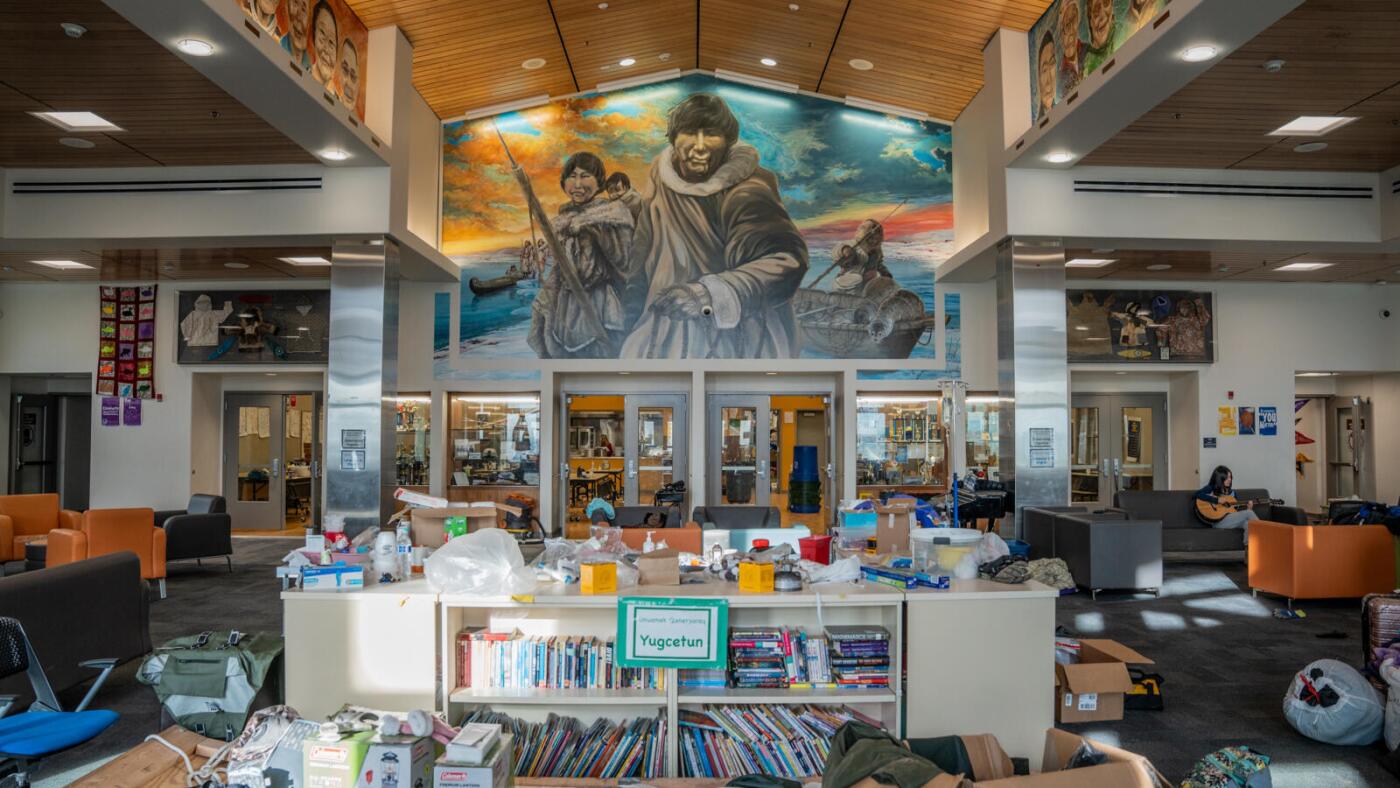
The residents aimed to reach the Chief Paul Memorial School — the largest structure in the village — hoping it would provide a safe haven. The storm, which intensified in an unusually warm Pacific Ocean, left the community in ruins. However, the school remained largely intact, elevated on steel pilings. Yet, inside, issues with power generators posed significant challenges.
Alaska’s public school buildings often double as emergency shelters in Indigenous communities, like Kipnuk. These schools, typically the only buildings equipped with flush toilets and generators, stand as critical sanctuaries during crises, thanks to their elevated construction. Alaska’s emergency management director, Bryan Fisher, calls them “the last place of refuge.”
Governor Mike Dunleavy has declared numerous disasters since 2024, with schools serving as shelters in many cases. In October alone, damage was reported in 52 communities, leading residents to sleep in gyms and classrooms. Despite their importance, Alaska’s rural schools have faced years of neglect. Since 1998, over 140 state-declared disasters have necessitated the use of schools as shelters.
According to reports from KYUK Public Media, NPR, and ProPublica, many rural schools are facing a health and safety crisis. They are deemed emergencies in their own right, amidst the broader crisis they are meant to alleviate. The state is obligated to fund maintenance in these schools, yet the process has been sluggish, with only 14% of requests approved over 28 years.
The main generator at Kipnuk’s school failed under the strain of the emergency, as reported by Lower Kuskokwim School District Superintendent Hannibal Anderson. The reliance on an insufficient backup generator underscored the need for better infrastructure. “The generator was working well enough for the school,” Anderson noted, but not for the emergency demands.
In other villages like Kotlik and Chevak, schools also became temporary shelters. Principal Cassius Brown from Kotlik explained, “We have a church and a community building, but those are seldom used in evacuations because the school is situated higher.” Despite repeated funding requests, essential repairs remain unfunded, exacerbating the vulnerability of these communities.
In Chevak, Principal Lillian Olson highlighted the community’s dependence on the school during power outages. Yet, despite the importance of these buildings, a request for $32 million for renovations was not fulfilled. The state only funded 17 of 114 projects for fiscal year 2025, sidelining crucial improvements.
Further complicating the situation, Alaska’s emergency management division and the education department lack formal agreements to maintain schools as emergency shelters. While schools serve multiple roles, including educational, community, and emergency functions, they are not maintained with these uses in mind.
State Senator Löki Tobin emphasized the multifaceted role of schools, stating, “They’re not just institutions of learning. They’re also institutions of after-school activities, of community gatherings, and of evacuation facilities and disaster preparedness support infrastructure.”
Efforts to secure funding for these dual-purpose facilities face bureaucratic challenges. During a budget meeting, Tobin pointed out the financial implications of evacuations versus maintaining existing infrastructure. Deputy Commissioner Craig Christenson acknowledged the reliance on schools but noted that maintenance is not within his department’s purview.
Emily Schwing of NPR Member Station KYUK Public Media reported this story while participating in the University of Southern California Annenberg Center for Health Journalism’s National Fellowship. She also received support from the Center’s Fund for Reporting on Child Well-being and its Dennis A. Hunt Fund for Health Journalism.
This article was originally written by www.npr.org