Amidst rising challenges for international medical professionals in the U.S., a young doctor reflects on the changing landscape of opportunities that once attracted him to the country. Michael Liu, originally from Toronto, Canada, pursued his medical career in the United States, drawn by what he perceived as the “American Dream.” His journey took him to Harvard and eventually to a residency at Mass General Brigham in Boston.
“You know, in chase of the American Dream, and understanding all the opportunities — that was such a draw for me,” Liu remarked, capturing the allure that the U.S. once held for many aspiring professionals worldwide.
However, recent policy changes have prompted reconsideration among international professionals like Liu. This spring, the Trump administration’s budget cuts to the National Institutes of Health and the Department of Health and Human Services marked a turning point for Liu, making him question the professional viability of staying in the U.S.
Further compounding the situation was the administration’s decision in September to significantly increase the fees for H1B visas, a crucial permit for highly skilled professionals. The fee hike, raising costs to $100,000, has sparked uncertainty and distress among international doctors, including Liu’s colleagues from Mexico and Costa Rica.
“It was terrible to see,” Liu shared, noting the emotional impact on his peers. Even though Liu himself has a green card, having married an American citizen, the broader implications of these policies remain a concern.
A Rural Workforce
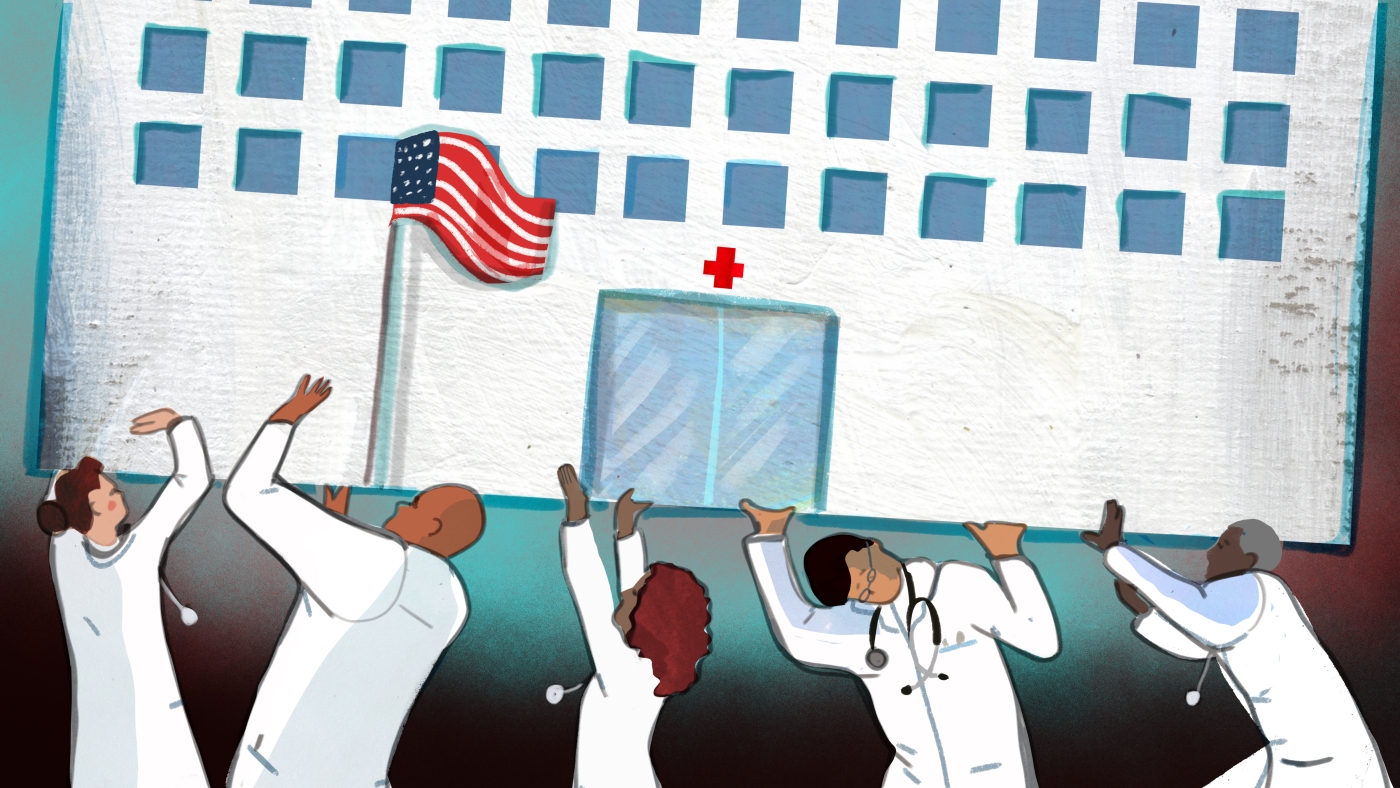
Immigrant doctors form a substantial part of the U.S. medical workforce, constituting about a quarter of all physicians nationwide. With approximately 325,000 foreign-born doctors practicing in the U.S., their presence is notably significant in rural areas and specific medical specialties such as primary care and oncology, where they account for about half of the workforce.
The healthcare sector is already grappling with challenges such as retirements and burnout, and current policies are exacerbating the difficulties in attracting international talent. Dr. Julie Gralow, chief medical officer at the American Society of Clinical Oncology, expressed concerns about the potential erosion of decades of progress in the field.
Gralow pointed out that the U.S. is losing its appeal as a destination for top international talent, with countries like China, Denmark, Germany, and Australia seizing the opportunity to recruit these professionals by offering stable funding and advanced facilities. “Up until this year, it was a dream — a wish! — that you could get a job and you could come to the U.S. And now nobody wants to come,” she said.
Michael Liu, reflecting on his research published in JAMA, noted that about 11,000 doctors in the U.S. hold H1B visas, a figure that represents around 1% of U.S. physicians. “That might seem like a small number, but this percentage varied widely across geographies,” Liu explained, highlighting the concentration of these doctors in underserved areas.
Efforts are underway to address the situation, with groups like the American Medical Association advocating for exemptions from the new H1B fees for physicians. However, the impact of recent policies on the American healthcare system remains a pressing concern.
A History of Immigration
The U.S. has long benefited from the contributions of immigrant physicians, starting from the 1965 Hart-Celler Immigration and Nationality Act, which opened doors to skilled professionals. During this period, federal investment in health and scientific research expanded significantly, driven by international competition and Cold War dynamics.
Eram Alam, a science history professor at Harvard, noted that the passage of Medicare and Medicaid in 1965 created a sudden demand for doctors, leading to a significant influx of immigrant physicians. By 1975, immigrants made up about 45% of all U.S. doctors, a testament to the country’s ability to attract global talent.
Today, the U.S. risks undoing much of its historical advantage in healthcare by reducing its openness to international professionals. According to Alam, “There were more immigrant physicians that were entering the labor force per year than there were U.S. trained physicians that were joining,” highlighting the vital role of foreign-born doctors in the American healthcare system.
This article was originally written by www.npr.org