Black Bears Return to Texas: A Growing Presence Sparks New Challenges
In the remote expanses of West Texas, black bears are making a noticeable comeback, sparking both excitement and concern among local residents. For Matt Hewitt, a researcher with the Borderlands Research Institute, this resurgence presents an opportunity to study these majestic creatures closely. Hewitt and his team are engaged in efforts to capture and collar black bears to better understand their numbers and movements in the region.
Hewitt’s research is focused on the remote areas of Far West Texas, where he uses bait such as glazed donuts and cantaloupe to attract black bears into steel traps. Although exact population figures are yet to be determined, Hewitt believes there are more bears in the area than commonly perceived.
Historically, black bears roamed the region in large numbers until overhunting and habitat loss led to their decline. Recent data, however, indicates a resurgence, with bear sightings in Texas increasing from nearly 80 in 2020 to at least 130 this year. This trend is not unique to Texas, as other states are also witnessing growing black bear populations.
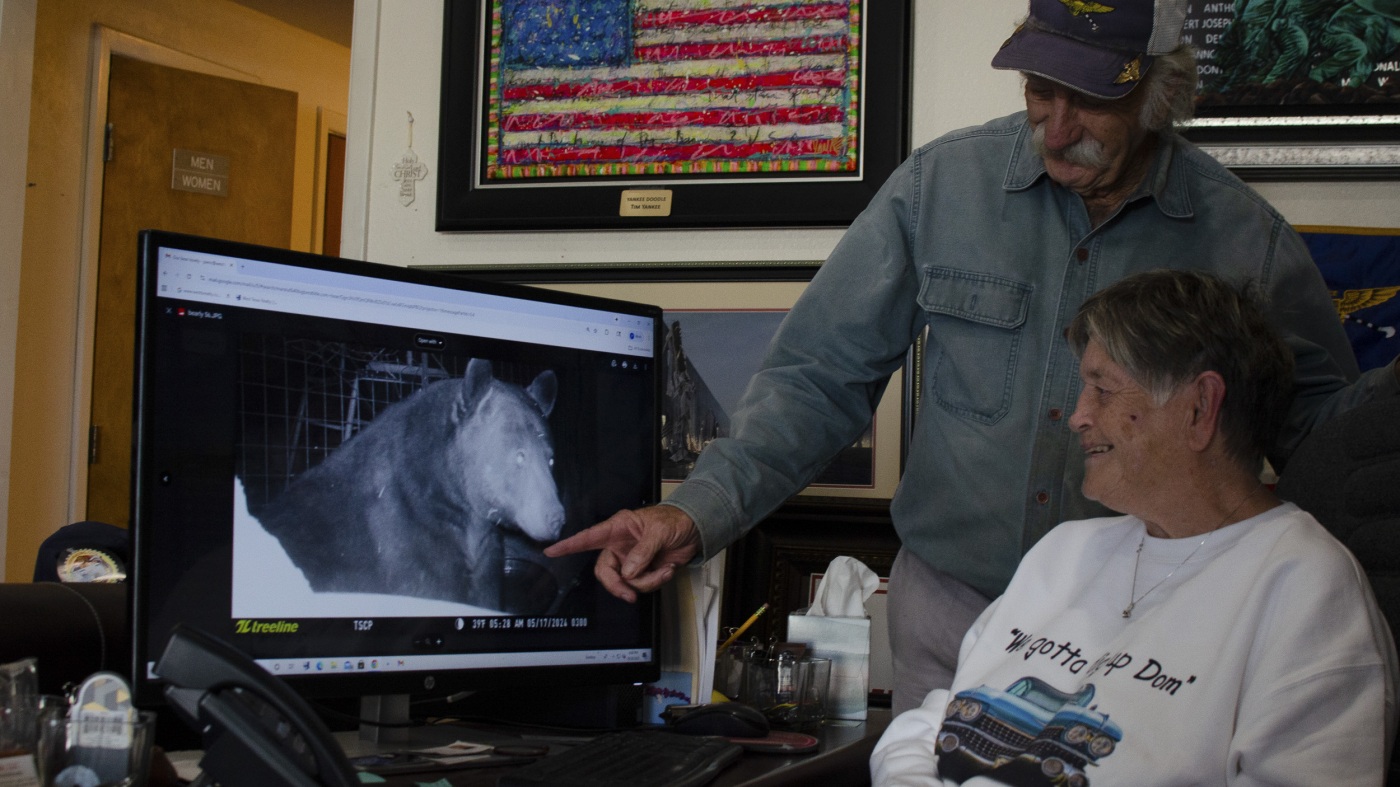
Despite the positive signs of recovery, the return of black bears in West Texas is not without its challenges. Some residents, like Pam and Ken Clouse of Alpine, Texas, have experienced bear encounters in their neighborhoods. “I don’t mind the bears coming back, we don’t want them wiped out, that’s for sure,” said Pam Clouse. In response, the Clouses have taken measures to deter bears, such as removing food and water sources and electrifying their fence.
In other states like Montana and Colorado, residents have adapted to bear presence by using bear-resistant dumpsters and trash bins. Wildlife biologists emphasize the importance of removing attractants to prevent bear-human conflicts. “They have a great sense of smell, much better than our own,” said Raymond Skiles, former wildlife biologist at Big Bend National Park.
Skiles recalled adapting to the return of bears at Big Bend National Park in the late 1980s. Measures such as bear-proof dumpsters and visitor education have helped reduce conflicts in the park, and Skiles hopes similar strategies can be applied in West Texas towns.
As wildlife conservationists in Texas work to educate residents, they note that the bears’ northward push is due to the area’s land reaching its “carrying capacity.” Krysta Demere, a wildlife biologist with the Texas Parks and Wildlife Department, explains, “When you’re over carrying capacity, there’s not [enough] resources on the natural landscape for those animals, so they begin to move out and search for new food sources.”
Demere’s role involves preparing the people of West Texas for a reality they haven’t faced in over 80 years—living alongside black bears. With the next generation likely to grow up in a region once again known as bear country, the emphasis is on coexistence and adaptation.
This article was originally written by www.npr.org