Rescheduling Marijuana: What Trump’s Executive Order Means for Cannabis Policy
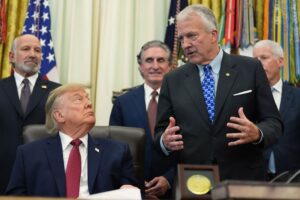
President Trump’s recent executive order marks a significant step toward modifying federal marijuana regulations, but the journey to a new cannabis landscape is complex. While the order aims to reclassify marijuana as a less dangerous drug, the implications of this change are nuanced and far-reaching.
“It’s hard to see the big headlines of, ‘Marijuana rescheduled to [Schedule] III; marijuana research will open,'” says Gillian Schauer, executive director of the nonpartisan Cannabis Regulators Association, which includes agencies from 46 states. “You know, those things are not true as of now.”
The executive order issued on December 18 by President Trump initiates a process that could eventually ease some restrictions on cannabis, yet it doesn’t immediately alter existing federal laws. According to Schauer, “The Controlled Substances Act [of 1970] does not grant any president the authority to unilaterally reschedule a drug.” Historically, such changes occur through a comprehensive rulemaking process or legislative action.
The Path Forward: DOJ’s Role and Timeline
The directive instructs Attorney General Pam Bondi to expedite the rescheduling of marijuana to Schedule III under the Controlled Substances Act. This process may follow the groundwork laid during former President Joe Biden’s administration, which proposed shifting marijuana from Schedule I to III, a category shared by drugs like ketamine and Tylenol with codeine.
Schauer mentions the possibility of a streamlined approach through Section 811 of the Controlled Substances Act, which could allow the attorney general to bypass usual procedures. This method was previously utilized to schedule the CBD-based epilepsy drug Epidiolex in 2018.
Public Comment and Administrative Procedures
The administration’s decision on whether to solicit public comments could affect the timeline for rescheduling. “I would anticipate, if they use that [expedited] option, that we would not see a comment period,” Schauer explains. This could expedite the process compared to the traditional notice-and-comment procedure.
However, potential legal challenges from anti-marijuana groups could complicate the DOJ’s efforts, as they balance expediency with legal defensibility.
Economic Impacts: Tax Relief and Financial Transactions
Rescheduling marijuana could relieve cannabis businesses from the burdensome Section 280E of the tax code, which currently prevents them from claiming standard business expenses as deductions. Sam Brill, CEO of Ascend Wellness Holdings, highlights the immediate benefits, stating, “The biggest thing that happens overnight is the 280E, the restrictive punitive tax code that is set on us,” would no longer apply.
Despite potential tax relief, cannabis companies still face challenges in financial transactions, as most banks avoid dealing with the industry due to legal risks. The inability to use credit cards remains a significant obstacle for customers and businesses alike.
Implications for Medical Research
The rescheduling could facilitate cannabis research by eliminating the need for a Schedule I license and easing laboratory regulations. However, sourcing marijuana for research remains a hurdle, as federal rules require researchers to obtain cannabis from limited suppliers.
Schauer notes that while the rescheduling effort may simplify some aspects of research, “there’s a lot that will still be challenging in researching cannabis unless we see a lot of agency policies change and adjust.”
For further details on the executive order and its implications, visit the White House’s official announcement.
This article was originally written by www.npr.org