(Photo: Lambeth Palace)
The Church of England’s recent decision to advance with Project Spire has sparked a significant debate among its members and critics. This initiative, aimed at addressing historical injustices, involves the establishment of a £100m fund dedicated to supporting ethnic minority groups affected by the transatlantic slave trade.
Charles Wide, an Anglican Reader and barrister, has criticized the move as being “unpopular, ill-judged, [and] highly political.” The Church Commissioners’ plan for this fund is seen as an act of repentance and restitution for the Church’s alleged involvement in the slave trade.
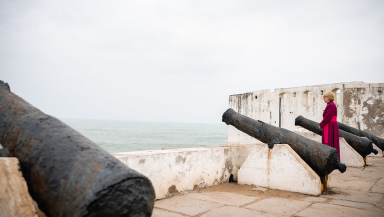
During a visit to Ghana, where the Archbishop of Canterbury, Sarah Mullally, spent time at a former British slave trade site, she reiterated the Church’s commitment to this initiative. She expressed her hopes for justice and reconciliation, saying, “I pray not only in lament for the Church’s involvement in the slave trade, but also for hope – hope that the God of healing can bring justice and reconciliation to all who are still impacted by its legacy.”
Nonetheless, the fund’s rationale and the historical research supporting it have faced scrutiny. Dr. Richard Dale, Emeritus Professor at the University of Southampton and a Fellow of the Royal Historical Society, has challenged the notion that the Church of England benefited financially from the slave trade.
There is also a debate about whether contemporary Church of England members should bear responsibility for past transgressions. Wide, writing for The Telegraph, stated, “None of the parishioners I know played any part in the slave trade and bear no responsibility for it … They have no reason to repent something they did not do, nor can Church leaders repent on their behalf or on behalf of Christians of three hundred years ago. The Gospels reject the idea of inherited sin and furthermore make clear that our obligation to forgive is not conditional upon the contrition of those who have done us wrong.”
Wide also pointed out that during Mullally’s visit to Ghana, she did not address the historical reliance on slavery by the country’s past leaders, despite Ghana’s prominent role in reparation demands today.
Historically, the transatlantic slave trade was a multifaceted system involving European commodities exchanged with African rulers for slaves, who were often captured through conflict or raids.
Wide expressed concern over what he perceives as a “contested history” presented by Mullally in Ghana. He cautioned that continuing with Project Spire, especially with a potential legal challenge, could result in reputational damage across the Anglican Communion.
“Has she considered the reputational harm, throughout the Anglican Communion, if this unpopular, ill-judged, highly political hangover from the Welby regime cannot be lawfully delivered?” he questioned.
This article was originally written by www.christiantoday.com