
A Provocative Exploration of Power and Empathy in Cristian Mungiu’s Fjord
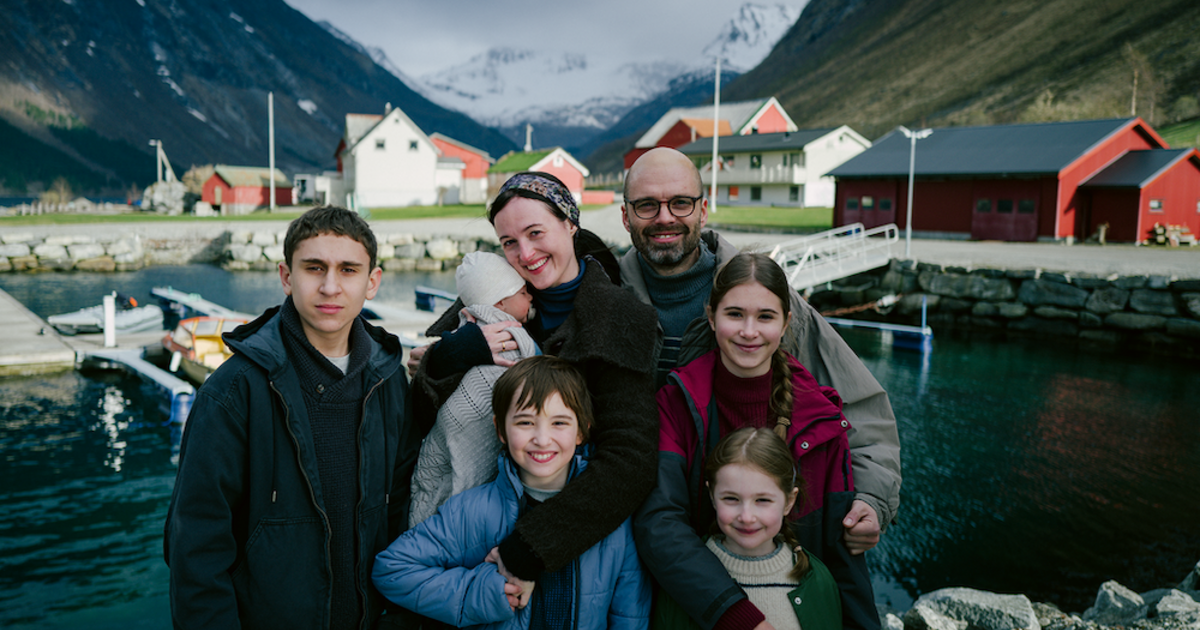
Romanian filmmaker Cristian Mungiu challenges audiences with his latest work, Fjord, a film that delves into the complexities of power dynamics and empathy. Featuring Hollywood stars Sebastian Stan and Renate Reinsve, the story follows a religious couple grappling with the intervention of Norwegian Child Welfare Services, known as Barnevernet, after accusations of domestic abuse lead to the removal of their children.
Stan and Reinsve portray Mihai and Lisbet Gheorghiu, who relocate from Romania to Norway with their family of five. Initially integrating well into their new surroundings, tensions arise when their children express conservative beliefs at school, leading to a closer look by authorities after bruises are found on some of the kids. This situation propels the narrative from the private sphere of home life to the public arena of the Norwegian justice system.
Fjord examines the influence of majority power on empathy and understanding. Mungiu explains, “I think that we have to fight this natural tendency that we have as human beings to identify the other as an enemy just because they are different.” He stresses the importance of inclusivity, even when it challenges personal ideologies.
The film’s release, coinciding with the U.S. midterm elections, sparked reflections on political power shifts. As Democrats gained control, questions emerged about whether progressive dominance leads to a more equitable society or if the accumulation of power inherently affects everyone, regardless of political stance. It raises probing inquiries about offering grace to controversial leaders, like those involved in cutting healthcare aid or enforcing immigration policies.
At the New York Film Festival, Mungiu discussed Fjord with Sojourners via Zoom, touching on themes such as worship music and supernatural elements. He emphasized a neutral stance, urging viewers to consider perspectives they might typically overlook, fostering dialogue across differing beliefs.
Mungiu, who doesn’t identify as a believer, highlighted empathy as a core value: “As much as I’m not a churchgoer, I’m practicing a lot of very profound humanistic Christian values.” This sentiment resonates with progressive ideals of defending minorities and embracing diversity.
In Fjord, Mungiu flips the narrative of power, exploring the potential pitfalls of liberal dominance. He questions if a crowd can act justly or if true change comes from challenging the status quo. His previous work, R.M.N., also tackled these issues, dissecting the behavior of conservatives in power.
Faith’s role further complicates the narrative, as the Gheorghius’ beliefs are deeply intertwined with their identity. Mungiu notes that both sides, religious and progressive, operate on intuitive and emotional foundations, despite seeming differences.
Romanian worship songs, like “Amazing Grace,” enrich the film, embodying themes of harmony and coexistence. Mungiu guided his actors through religious experiences to authentically portray believers, highlighting the gentleness and humility often found in people of faith.
The film subtly hints at supernatural elements, such as children seemingly walking on water, inviting viewers to interpret these moments through their own lenses. Mungiu suggests that the younger generation, less burdened by adult biases, might offer a more inclusive future.
In Fjord, Mungiu crafts a visual language that invites audiences to engage with its abstract themes of love, empathy, and societal change, reflecting his belief in the transformative power of dialogue and understanding.
“It is easy to talk about empathy and trying to be inclusive, but I think in our everyday lives, we realize just how tempted we are to cling to the strength of belonging to a majority.” —Cristian Mungiu, filmmaker
This article was originally written by sojo.net


Comments are closed.