
Utah’s GOP Primary: A Litmus Test for Republican Identity
In the evolving landscape of American politics, Utah presents a unique case study for the Republican Party as it navigates the post-Trump era. Historically a Republican stronghold, the state has not supported a Democratic presidential candidate since Lyndon B. Johnson in 1964. Yet, its relationship with former President Donald Trump has been anything but straightforward.
Utah’s conservative electorate has shown a complex response to Trump, giving him the narrowest margin of victory among Republican states in 2016. Although his support grew in subsequent elections, it never surpassed 60%. In the current primary race, Republican candidates are notably avoiding Trump’s name, a strategic choice highlighted by Chris Karpowitz, a political science professor at Brigham Young University, who suggests that Trump’s policies might not resonate as they do in other red states.
According to Karpowitz, “There’s many Republican voters in Utah who have sort of made their peace with Donald Trump enough to vote for him. But that doesn’t mean they necessarily support either his style of politics or some of the policies that he pursues.” He further explains, “They are loyal to the party, not the president.”
Utah’s voters, known for their fiscal and social conservatism, have been particularly turned off by Trump’s stance on issues such as immigration and his controversial remarks about Islam, a sensitive topic in a state deeply linked to the Church of Jesus Christ of Latter-day Saints. Trump’s approval in Utah hit a low of 44% in April, as noted in a Deseret News/Hinckley Institute of Politics poll, with a significant drop in support among Utah Republicans.
A Battle for Republican Identity
In the 3rd Congressional District’s Republican primary, both candidates—Rep. Celeste Maloy and former state Rep. Phil Lyman—are conservative and back Trump, yet his name remains notably absent from their campaigns. Maloy, who leans more towards policy-driven approaches, contrasts with Lyman’s alignment with the America First, Freedom Caucus wing of the party.
This primary will decide the type of Republican representation the newly redrawn district desires. Stretching from northern Utah to the Arizona border, it includes rural regions, national parks, the ski haven Park City, and a slice of blue-leaning voters from Salt Lake City suburbs. Despite its size and diversity, it remains one of the reddest districts in the country.
Maloy, who narrowly won a special election and then barely secured the primary in 2024 despite Trump’s endorsement, faces a challenge in winning over constituents. Lyman, having previously run for governor, aims to leverage Maloy’s lukewarm reception. Pardoned by Trump for an illegal protest, Lyman’s campaign emphasizes reducing federal control and promoting rural interests.
Lyman’s Campaign Message
Lyman’s campaign focuses on limited government and transparency, seeking to resonate with voters disillusioned with Washington’s establishment. He stated, “What is at stake here is are we going to go down a collectivist technocratic, centralized power model, or are we going to retain an American independent individual autonomy. I believe in the Constitution. I believe in the government staying in its lanes.”
Despite his ties to the Freedom Caucus and Trump, Lyman’s campaign volunteers avoid mentioning the president, instead highlighting transparency and government reform as key issues.
Maloy’s Legislative Focus
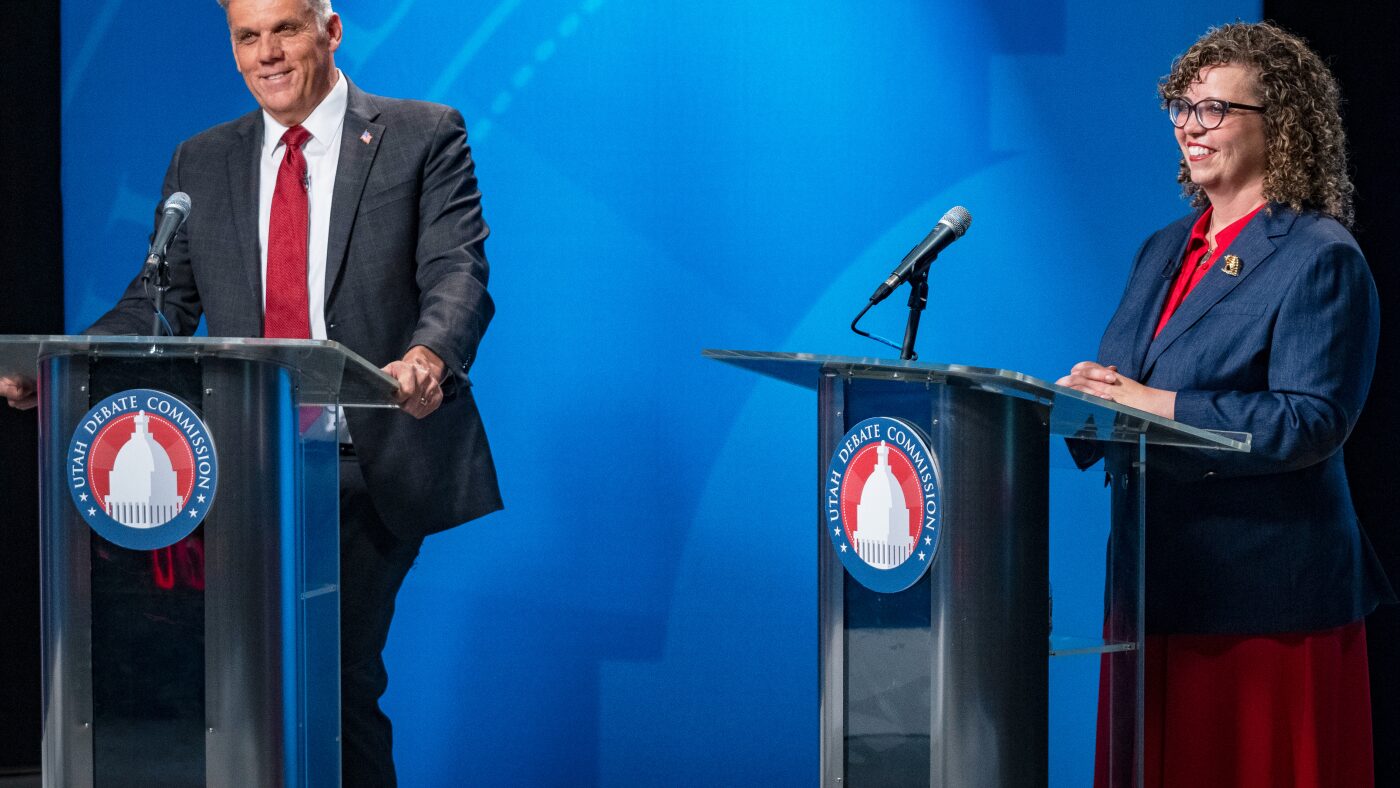
In the recent debate, Maloy emphasized her legislative achievements, such as tax cuts and committee work, without directly associating them with Trump. “I think people in CD3 are going to be looking for someone who can competently represent their issues on a national stage and solve problems,” she said. Her recent convention win indicates growing acceptance, albeit narrowly achieved.
Professor Damon Cann from Utah State University notes that Utah’s Republicans have successfully balanced their approach, neither embracing nor outright rejecting Trump. With Trump endorsing Maloy and other incumbents on Truth Social, Karpowitz concludes that while this support won’t harm her, it lacks the impact seen in other states. “Republicans in Utah are ambivalent enough about Donald Trump that I don’t think it carries quite the same weight that it might in other states,” he remarked.

Comments are closed.