
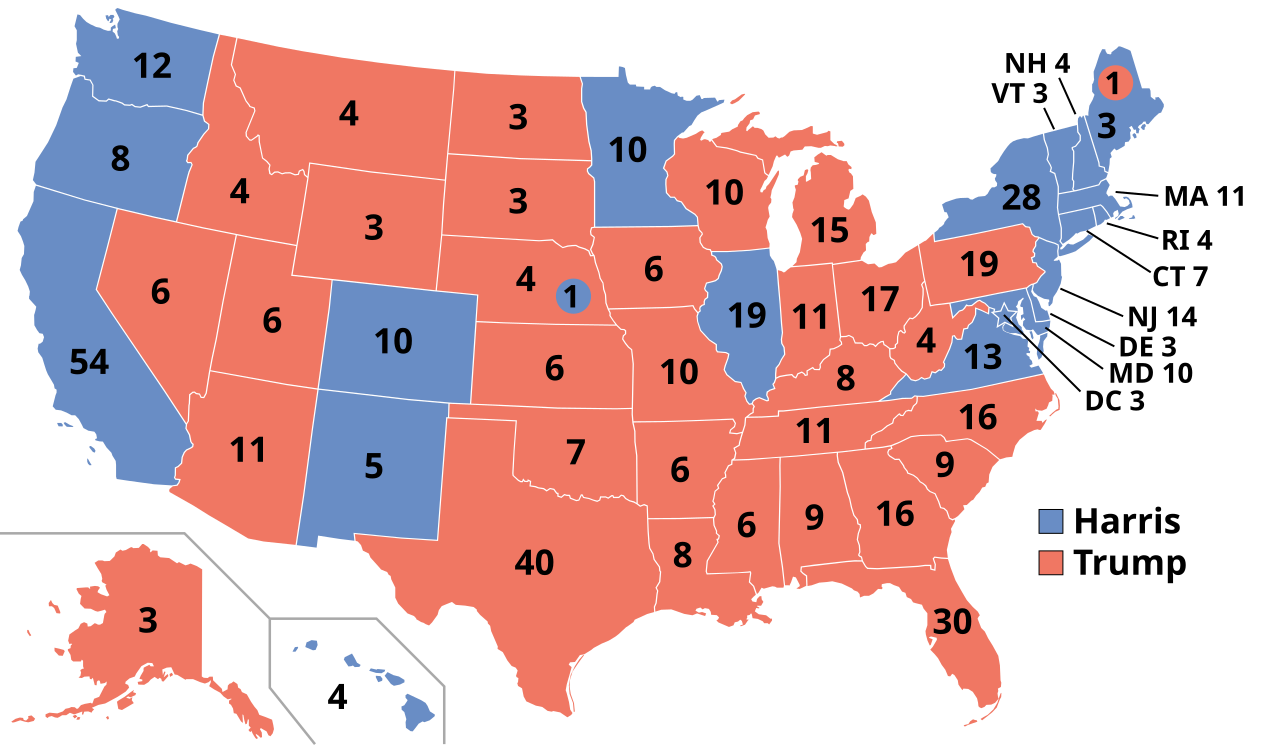
As election season intensifies across the country, faith communities are finding themselves at the center of one of democracy’s most fundamental questions: will Americans show up to vote — and will fear, ideology, or misinformation stand in their way? From op-eds urging civic courage to podcasts dissecting anti-democratic movements, religion journalists and faith leaders are generating some of the most urgent conversations about what it means to participate in American democracy right now.
Showing Up to Vote — With Love, Not Fear
The most directly democracy-focused voice in this week’s religion news roundup belongs to Bridget Moix, whose opinion piece at Religion News Service cuts straight to what many voters are quietly feeling. President Trump’s rhetoric and actions, she argues, have generated a climate of anxiety and intimidation heading into the polls — but she insists that climate doesn’t have to define how Americans engage with their civic duty.
Her message is direct:
“We do not have to be cowed.”
For millions of eligible voters who may be hesitating — whether from discouragement, distrust, or a sense that their vote won’t matter — that message carries real weight. Democracy depends on participation, and any atmosphere that suppresses the desire to vote is a threat to the integrity of the process itself, regardless of which party benefits.
The The State of Belief podcast is covering this same territory from a practical angle. Host Rev. Paul Brandeis Raushenbush sits down with Civic Nation CEO Kyle Lierman and filmmaker Rev. Dr. Otis Moss III to talk about voting despite obstacles — exactly the kind of on-the-ground civic engagement conversation that matters for communities facing barriers to the ballot box.
When “Saving Democracy” Means Getting Rid of It
One of the more alarming ideological trends surfacing in this week’s coverage is the subject of Saved by the City, a podcast hosted by Katelyn Beaty and Roxanne Stone. Their latest episode — also available as a written feature with scholar Bradley B. Onishi — examines a growing movement of online commentators and influencers who argue that the real solution to Western civilization’s problems is, quite literally, a king.
This is not a fringe academic debate. It is an ideological movement actively circulating in online spaces where young men are being radicalized away from democratic values. When public trust in elections erodes and institutions are painted as irreparably broken, movements offering authoritarian alternatives gain traction. Onishi’s analysis makes clear that these “strange bedfellows” — tech bros, certain religious nationalists, and reactionary cultural commentators — are united by a rejection of democratic self-governance. Understanding this movement is essential context for anyone tracking threats to election integrity and public faith in democratic institutions.
The Complexified podcast, hosted by Rev. Amanda Henderson, adds another dimension to this conversation. The latest episode examines Defense Secretary Pete Hegseth’s push to treat faith like physical fitness in the military — measuring and standardizing soldiers’ spiritual readiness. The episode raises a critical question for democratic norms: whose beliefs get to define institutional standards, and who gets left out? You can listen to “Spiritual Readiness, Pentagon-Style: Who Measures a Soldier’s Soul?” directly through RNS.
Faith Leaders and Civic Engagement
Beyond the explicitly political stories, several faith leaders this week demonstrated how religious institutions can play a direct role in civic life and community advocacy — a reminder that democratic participation extends beyond the ballot box.
Catholic and evangelical leaders publicly condemned plans for a public execution of the Fort Hood gunman, with reporting by Jack Jenkins. A Catholic bishop in Iowa stepped forward to advocate for an immigrant from Ivory Coast facing deportation, reported by Fiona André. Both stories reflect faith communities acting as civic voices — pressing government institutions to account for their actions and the people those actions affect.
Pope Leo XIV is also making news on multiple fronts. He is scheduled to undergo surgery to remove a nodule on his lung, as reported by Nicole Winfield and Colleen Barry in a full report at RNS. Separately, the pontiff has opened a review of Pope Francis’ controversial policy allowing civilly remarried Catholics greater access to the sacraments — a development that will shape how one of the world’s largest religious institutions engages millions of its members.
What Else Is Worth Reading
For those looking beyond the headlines, RNS has a rich lineup of other coverage this week. Scholar Eric Vanden Eykel explores why the search for Noah’s Ark at Turkey’s Durupınar formation has persisted for nearly 70 years, via The Conversation. The Martini Judaism podcast features Tomer Persico unpacking what may be the most important one-liner in Western civilization. And a cultural history piece traces how Jim Bakker became the Johnny Carson of Christian television.
The Money Meet Meaning podcast, with hosts Amber Hacker and Tom Levinson, takes on artificial intelligence in its latest episode — “Can AI Make Us More Human?” — asking whether the technology makes us richer and freer, or simply turns efficiency into a new form of worship. You can stream it directly through the episode audio.
The Myanmar military leader’s arrival in Malaysia amid criticism of ongoing repatriations rounds out the international coverage from the Associated Press.
Religion News Service offers a range of resources for readers and professionals: Love Thy Neighbor coverage, RNS Games, the full podcast library, article republication, wire subscriptions, image licensing, and press release services. For those who want religion journalism delivered directly to their inbox, RNS newsletters are free to sign up. Learn more about RNS, its staff, columnists, and leadership, or explore the annual report and 90th anniversary materials. You can also support the work through donor acknowledgment or check out open careers and the 2025 Symposium.



Comments are closed.