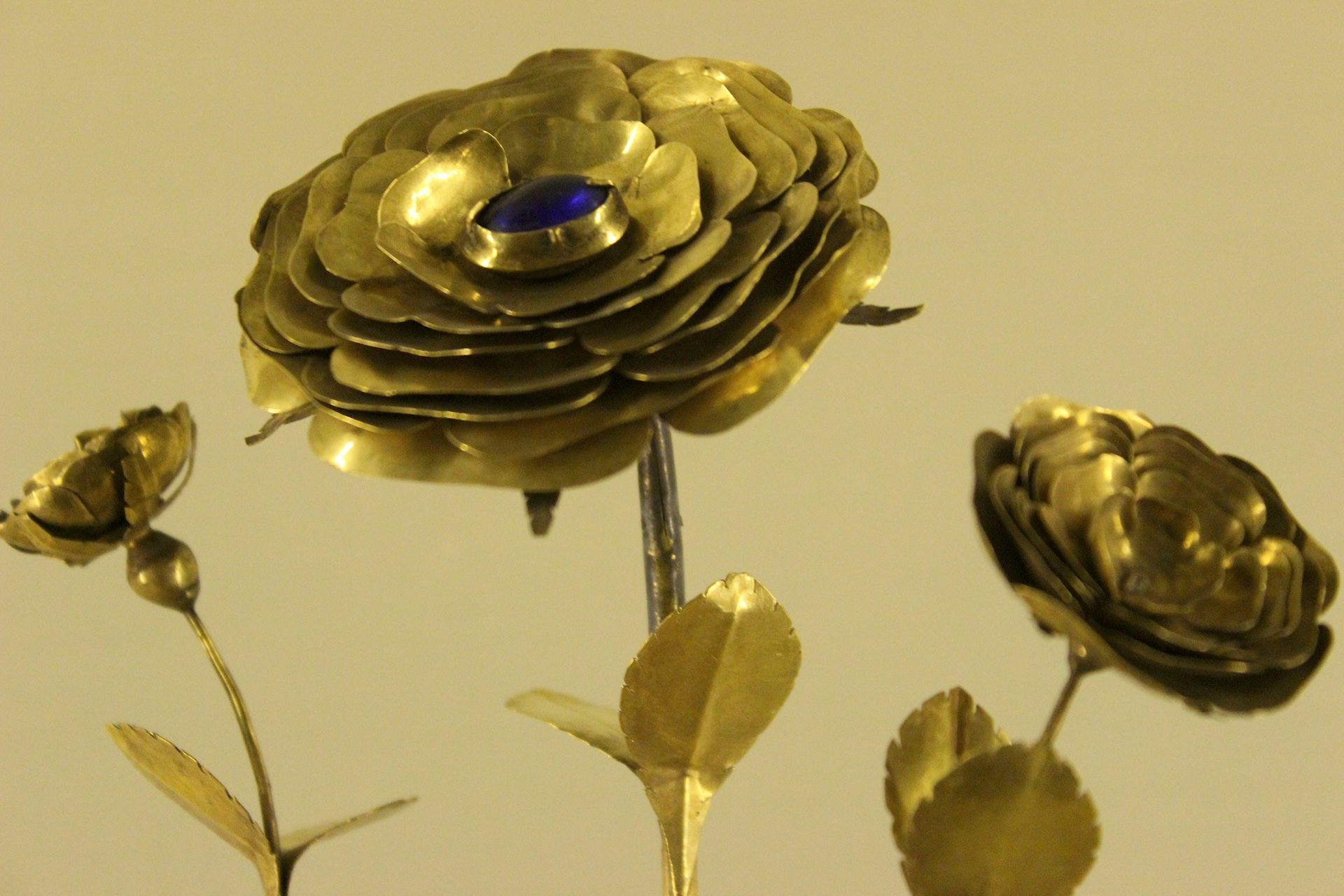
When Pope Leo XIV knelt in prayer at one of the world’s most famous shrines to the Virgin Mary in Lourdes, France, on September 26, 2026, he then rose and presented a golden rose to Our Lady of Lourdes — a gesture that stretches back nearly a thousand years. That single ornate gift carries within it the entire arc of how the Catholic Church has exercised, negotiated, and ultimately reimagined its authority across ten centuries.
The golden rose is one of the few ceremonial objects of the medieval papal monarchy still in active use today. Medieval historian Joëlle Rollo-Koster, a professor emerita at the University of Rhode Island, has spent years tracing the roses through papal accounting registers and medieval chronicles. Her research reveals that who receives the rose — and why — tells the story of the Church itself.
A Tradition Born in Feudal Exchange
The golden rose did not begin as a papal gift. It began as a tribute. On April 18, 1049, Pope Leo IX exempted a nunnery in Alsace — in what is now Sainte-Croix-en-Plaine, France — from the authority of the local bishop. In return, the nunnery’s head was required to offer the pope a golden rose weighing about 2 ounces, or its equivalent value. At the time, roses were commonly used to symbolize a feudal pledge: the submission of a vassal to a lord.
Within a generation or two, the direction of the gift reversed. By 1096, Pope Urban II — then touring France and preaching the First Crusade — granted a rose to Fulk of Anjou to honor his willingness to participate in the campaign. The pope had become the giver, not the receiver.
From that point on, the rose was presented once a year, on Laetare Sunday — the fourth Sunday of Lent, the period before Easter when many Catholics commit to some form of penance. According to ceremonial books called “ordines,” the pope held the rose during worship, preached about its symbolism, and presented it to a recipient — typically the prefect of Rome, who oversaw the city’s police and jurisdictions. The rose reminded the faithful that even in the austerity of Lent, beauty and joy would follow.
A Diplomatic Weapon in Disguise
The roses were no small expense. Records in the Vatican Apostolic Archives accounting registers show they typically weighed 11 to 16 ounces of precious metal — gold and silver adorned with sapphires and rubies — and cost the equivalent of ten years of a laborer’s annual wage. One of the buds even contained a small receptacle filled with musk and balsam, rare and costly fragrances. The oldest surviving rose, dating from the early 1300s, is now housed at the Musée de Cluny in Paris, and its design — multiple golden branches and buds — is not far removed from what Leo XIV offered at Lourdes.
For much of the medieval period, receiving the rose was a public declaration that the recipient stood alongside the pope in defending the Church. In 1148, Pope Eugene III offered it to the king of Leon and Castile, Alfonso VII, in recognition of his campaigns against those the Vatican deemed enemies of the faith. A century later, Pope Innocent IV gave one to Raymond Berenger, count of Provence, for similar reasons.
The Avignon papacy of the 14th century — when several popes resided in what is now southern France, far from Rome — sharpened the rose’s political edge. With no Roman prefect to honor in the traditional ceremony, the ceremony had grown even more elaborate: the rose recipient would hold the reins of the pope’s horse and kiss the pope’s feet, a full gesture of submission. The gift had become an instrument of geopolitical negotiation.
From Kings to Queens to Shrines
The early centuries of the tradition aligned with an era of Catholic expansionism, when conversion frequently came through military conquest. With very few exceptions, the rose went to male rulers who had militarily defended the faith.
That changed with the birth of the Protestant Reformation and the religious conflicts that followed. As popes sought allies among Europe’s powerful women, the rose began flowing to queens and empresses. Catherine de’ Medici, who played a pivotal role during France’s wars of religion between Protestants and Catholics, was among those honored. From the 16th century onward, the rose increasingly went to influential women at the courts of Catholic Europe.
By the 18th and 19th centuries — a period of revolutions and rising secularism — the shift was nearly total. From 1790 to 1893, not a single man received the rose. Eugénie, empress of the French and wife of Napoleon III, received one in 1856 for her piety and philanthropy. The rose allowed popes to cultivate relationships with the wives of powerful rulers — women who could, in turn, influence their husbands.
The last person ever to receive a golden rose was Charlotte, the grand duchess of Luxembourg, who was honored in 1956 for her piety and courage during World War II. After that, the tradition shifted entirely to shrines and basilicas, typically those dedicated to the Virgin Mary.
Pope Leo XIV continues the tradition in this modern mode. His Lourdes presentation was the fifth time he has dedicated a rose to a Marian shrine or image — a pattern that reflects how far the rose has traveled from its feudal origins. Where it once cemented political alliances between popes and kings, it now serves as an expression of devotional symbolism, carrying no transactional weight and making no political statement about the church’s relationship to power.
What began nearly a millennium ago as a feudal tribute paid to a pope has become, in the hands of Leo XIV, a quiet act of Marian devotion — a golden flower offered not to a king, but to a shrine. Few objects in religious history have managed to survive so long while meaning something so entirely different than they once did.