Controversy Surrounds One Big Beautiful Bill Act as Local Editorials Criticize GOP Supporters
Across the United States, editorial boards of local newspapers are voicing strong disapproval of the One Big Beautiful Bill Act, particularly targeting Republican lawmakers who played a role in its passage.
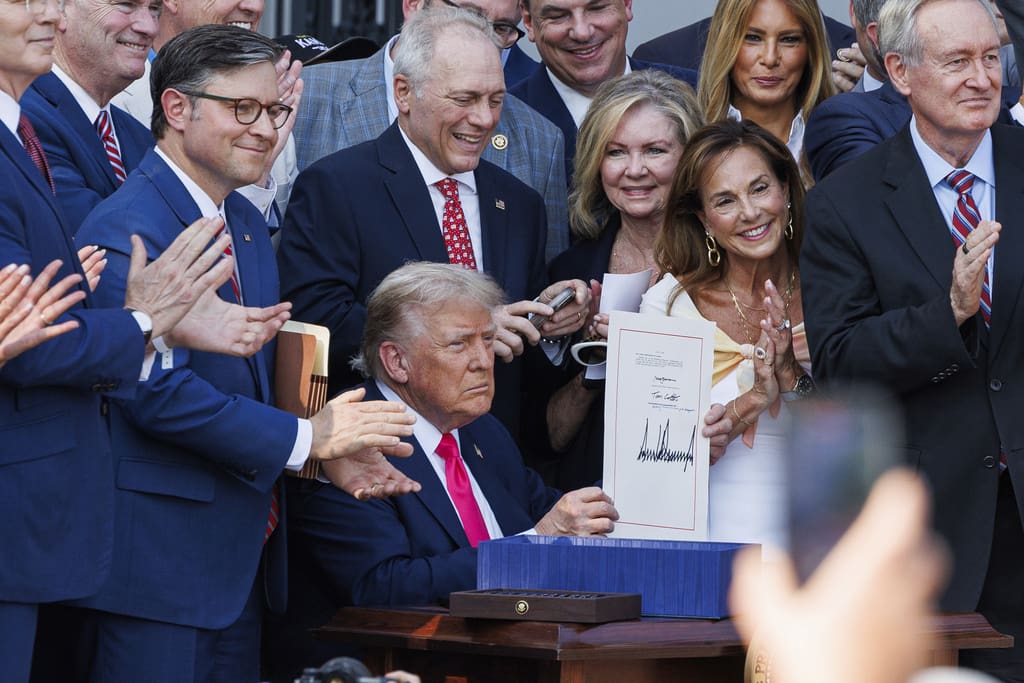
The law, signed by President Donald Trump on July 4, introduces significant reductions to Medicaid and SNAP, reallocating funds to provide tax breaks for the wealthiest Americans. Furthermore, it reverses clean energy tax credits established under the Biden administration while increasing funding for ICE to facilitate mass deportations. The legislation is projected to increase the national debt by $3.9 trillion.
The editorial board of The Virginian-Pilot highlighted the potential adverse impacts, noting that 323,000 Virginians could lose health care, 204,000 might lose food assistance, and approximately 20,000 clean energy jobs may be eliminated. The board specifically criticized Reps. Jen Kiggans and Bill Willman for their support of the bill.
“Kiggans and Wittman promised to protect Hampton Roads residents and jobs, and to fight for fiscal responsibility, only to fold when the moment demanded courage,” the editorial stated, addressing the paper’s audience in southeastern Virginia.
This surge of negative press could pose challenges for the GOP, as they aim to maintain their slim majority in the House of Representatives in the upcoming year.
Similarly, the editorial board at NorthJersey.com criticized Reps. Tom Kean Jr. and Jeff Van Drew, who represent swing districts.
“Each issued a statement hailing the Trump package’s passage — and each deflected from acknowledging its impacts on health care coverage for New Jersey residents,” the editorial observed, appearing in daily newspapers across Passaic and Bergen counties. “Next year, as these congressmen pursue reelection, they should be prepared to be held accountable at the ballot box.”
Other editorials have labeled Republicans as hypocritical, pointing out that local lawmakers initially vowed to protect Medicaid before eventually supporting the One Big Beautiful Bill Act.
The Scranton Times-Tribune called out Pennsylvania Rep. Rob Bresnahan, who previously stated he would “protect Medicaid benefits for my constituents who rely on them.” Bresnahan now claims the new law will help eliminate fraud in the program—a claim the Times-Tribune questions.
“We find his arguments that the bill won’t negatively affect some — if not all — of the more than 200,000 8th District residents currently receiving Medicaid — a quarter of the district’s residents according to numbers provided by Bresnahan himself — defy common sense,” the publication commented.
In a similar vein, The Fresno Bee scrutinized Rep. David Valadao.
“Since January, the representative for the 22nd Congressional District has publicly stated he would not support any effort to reduce federal spending on Medicaid, of which 68% of district residents rely on for their healthcare,” the Bee noted. “What happened to Valadao in five days to change his mind? For one thing, he visited the White House … His office didn’t provide details of that reunion, but Trump has used such meetings to pressure reluctant lawmakers to do his bidding over that of the people.”
CalMatters columnist Dan Walters suggested that Valadao and fellow California Reps. Young Kim and Ken Calvert may have jeopardized House Republicans’ prospects by supporting the bill.
“Republicans have a paper-thin House majority … and Valadao, Kim and Calvert barely survived past challenges,” Walters remarked. “What happens in the three targeted districts next year could easily determine which party will prevail, with potentially major consequences for the final two years of Trump’s presidency.”
However, Democrats also face hurdles. Many of the bill’s most severe cuts won’t take effect until after the 2026 midterms—a delay that AZCentral columnist E.J. Montini speculates was designed to protect Arizona Reps. David Schweikert, Eli Crane, and Juan Ciscomani from difficult reelection campaigns.
“The billionaires will get their tax breaks right away, but the big pain to states like Arizona won’t happen until after November 2026,” Montini stated. “Of course, by then the congressmembers who supported the bill will expect to have been reelected and can start laying out promises (that they won’t keep) for 2028.”
Wisconsin Rep. Derrick Van Orden sought to counter potential electoral damage with a social media post claiming credit for a state law providing new funding for rural hospitals. Ruth Conniff, editor-in-chief of the Wisconsin Examiner, called out this misrepresentation.
“Contrary to Van Orden’s triumphant tweets, he did not ‘secure’ $1 billion for rural health care in Wisconsin,” Conniff wrote. “He had nothing to do with the bipartisan state budget deal that was drafted and rushed to completion in order to capture those funds — which, by the way, represent just a fraction of the billions the state stands to lose in Medicaid funds under the Republican mega bill Van Orden approved.”
A KFF poll conducted on June 17 revealed that nearly 64% of American voters hold a negative view of the One Big Beautiful Bill Act. Continued negative press may further increase this figure.
—
Read More Kitchen Table News