Large contributions from the oil and gas sector have bolstered the two main Republican groups responsible for U.S. Senate elections.
This year, the National Republican Senatorial Committee (NRSC) and the Senate Leadership Fund PAC (SLF) have collectively received $6.83 million from oil company PACs, executives, and trade associations. This financial backing coincides with rising fuel prices attributed to the ongoing conflict in Iran.
Amid these developments, Senate Republicans up for reelection have consistently voted to extend the conflict, which has allowed oil companies to maintain significant profits from the elevated prices.
“The reason why oil companies are doing so well right now, or at least are projected to do very well in the near term, is exactly because Americans are hurting,” remarked Kelly Mitchell from the oil and gas industry watchdog Fieldnotes, as reported by the Guardian.
Since February, SLF’s financial contributions have included $250,000 from Valero, $100,000 from Marquis Energy, and $2 million from Chevron. The American Petroleum Institute, the largest trade group for domestic oil and gas companies, also contributed $1 million.
Chevron is projected to earn $9.2 billion solely from war-related profits this year, while Valero’s stock has surged by 24% since the conflict’s onset.
Billionaire Paul Singer contributed $1.5 million to SLF and $310,000 to the NRSC. Earlier this year, Singer’s venture capital firm, Elliott Investment Management, assumed control of Citgo Petroleum.
Sam Susser, former CEO of Sunoco, donated $75,000 to the NRSC, and oil magnate Philip Anschutz added $150,000.
The $6.83 million total also includes donations from coal industry figures. Joe Craft, a coal billionaire, gave $100,000 to SLF. Coal’s value has risen due to the conflict’s impact on global energy supplies.
“If your goal is domestically produced energy and you’re South Africa or Indonesia or China, coal looks pretty good from an energy security standpoint,” noted Jason Bordoff, founding director of the Center on Global Energy Policy, in the New York Times.
Energy Transfer LP, a natural gas shipping company, provided $500,000 to SLF. According to a Semafor report, the company is expected to continue benefiting from increased shipping costs even after the conflict ends.
The American Exploration & Production Council, representing independent oil producers, gave $100,000 to SLF, and received $750,000 from Koch Inc., an energy conglomerate owned by Charles Koch.
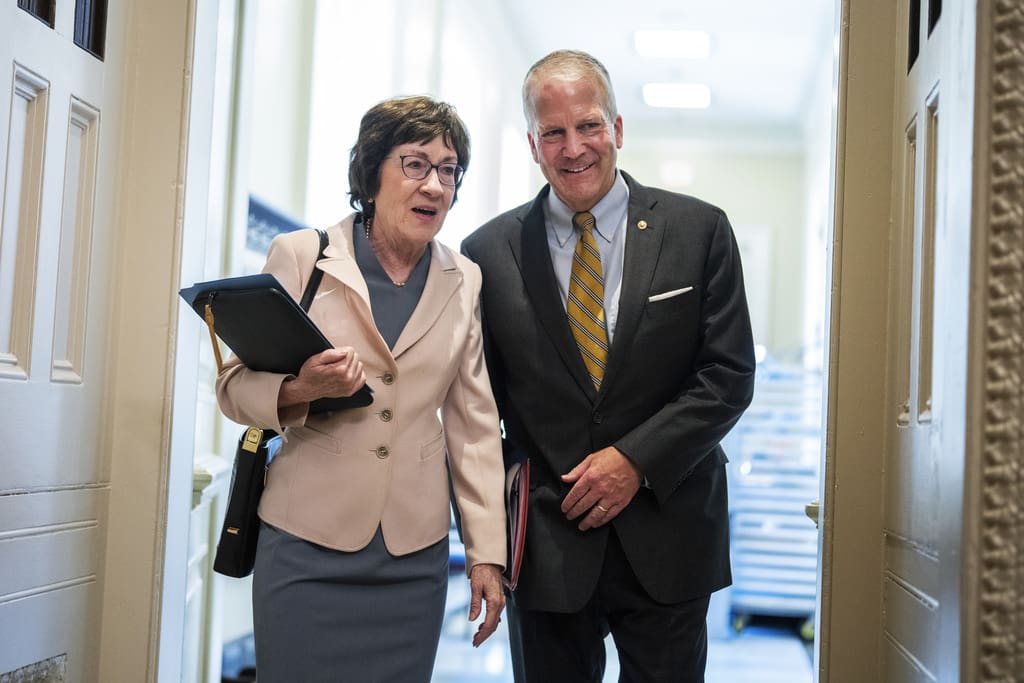
Republican Senators Dan Sullivan, Ashley Moody, and Jon Husted have voted multiple times to block resolutions aimed at ending the conflict. Senator Susan Collins has similarly voted to block such measures six times.
Republican Representatives Ashley Hinson and Mike Collins, both Senate candidates, have also voted against the House versions of these resolutions.
Collins and Michael Whatley of North Carolina have faced criticism for their substantial oil and gas investments, which have allowed them to profit from the conflict. Former Senator John Sununu, who is attempting a political comeback, holds similar investments and has shown support for the war.
President Donald Trump announced on June 14 that a ceasefire with Iran had been reached, with details of the agreement expected on June 19.
—
Read More Kitchen Table News