Tensions Rise Over National Guard Deployment as Legal Battles Continue in Chicago
As the Trump administration pushes forward with plans to deploy the National Guard in Chicago, a new legal hurdle has emerged, adding complexity to an already contentious situation. Vice President JD Vance has made it clear that the administration is prepared to “litigate this as much as we can” following a federal appeals court’s decision to block the deployment temporarily.
Last Saturday, the U.S. Court of Appeals for the Seventh Circuit allowed the federal government to maintain National Guard troops in Illinois but prohibited their deployment. This decision marks the latest chapter in a broader effort by the administration to deploy federal forces in several Democratic-led cities, including Chicago and Portland, Oregon. Read more about Chicago’s response here.
Vice President Vance, speaking on ABC’s This Week, emphasized the administration’s commitment to ensuring safety nationwide, particularly in Chicago. “We think that we have the authority to provide proper safety to our citizens all over the United States,” he stated. Watch the full interview here.
The controversy centers around the administration’s claim that federal forces are necessary to manage crime and safeguard federal agents. However, local leaders argue that the presence of the National Guard is unwarranted and constitutes an overreach of federal power. Illinois Governor JB Pritzker, a vocal critic of the deployment, expressed relief that the courts have intervened to prevent the Guard’s presence on Chicago’s streets. “We’ve got to rely on the courts to do the right thing,” Pritzker remarked on This Week. See more from the governor’s interview.
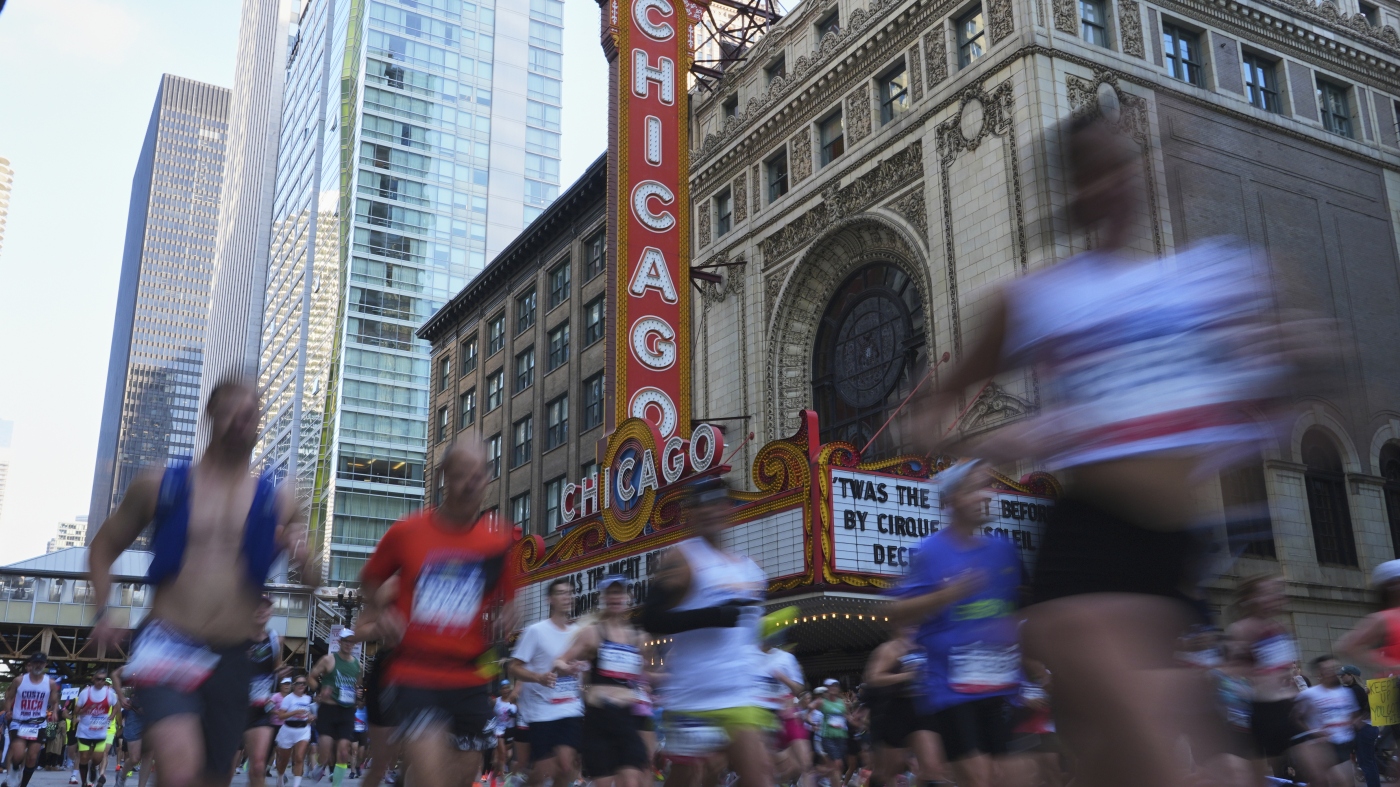
The legal wrangling coincides with the Bank of America Chicago Marathon, a major event drawing over 53,000 runners and an estimated 1.7 million spectators. Learn more about the marathon here. Concerns had surfaced about potential immigration enforcement operations during the marathon, part of “Operation Midway Blitz,” but ICE assured the public that no operations would occur at sensitive locations without exigent circumstances. The Chicago Park District also countered social media rumors about ICE’s presence at the event. See the Park District’s statement here.
Community activist Enrique Rivera, representing the Latino running club Venados, voiced concerns about safety for runners, especially when training in small groups. “I’m more afraid of individuals that are out there trying to do this in a group of three, a group of four,” Rivera shared with WBEZ. “That’s where you know something can happen, and your family won’t find out for days.”
Meanwhile, legal proceedings continue to unfold. U.S. District Court Judge April Perry initially blocked the deployment, criticizing the administration’s portrayal of recent Chicago protests as “simply unreliable.” This order was partially reversed by the appeals court shortly thereafter. Read the court order here.
Amid these developments, clashes between protesters and federal agents persist. Notably, Debbie Brockman, a journalist with WGN, was detained but released without charges after allegedly throwing objects at a border patrol vehicle. The Guardian covers this incident.
This article was originally written by www.npr.org