Justice Department Intensifies Push for Voting Data Amid Legal Challenges
The battle over access to sensitive voter information has intensified as the Department of Justice (DOJ) takes legal action against Oregon and Maine. Both states, controlled by Democrats, have resisted the DOJ’s demands for voter registration lists, which include partial Social Security numbers.
The DOJ’s legal move marks the first lawsuits against states that have not complied with requests for voting data, although similar demands have been made to other states. Oregon Secretary of State Tobias Read responded defiantly, emphasizing his commitment to safeguarding citizens’ privacy: “If the President wants to use the DOJ to go after his political opponents and undermine our elections, I look forward to seeing them in court,” Read asserted.
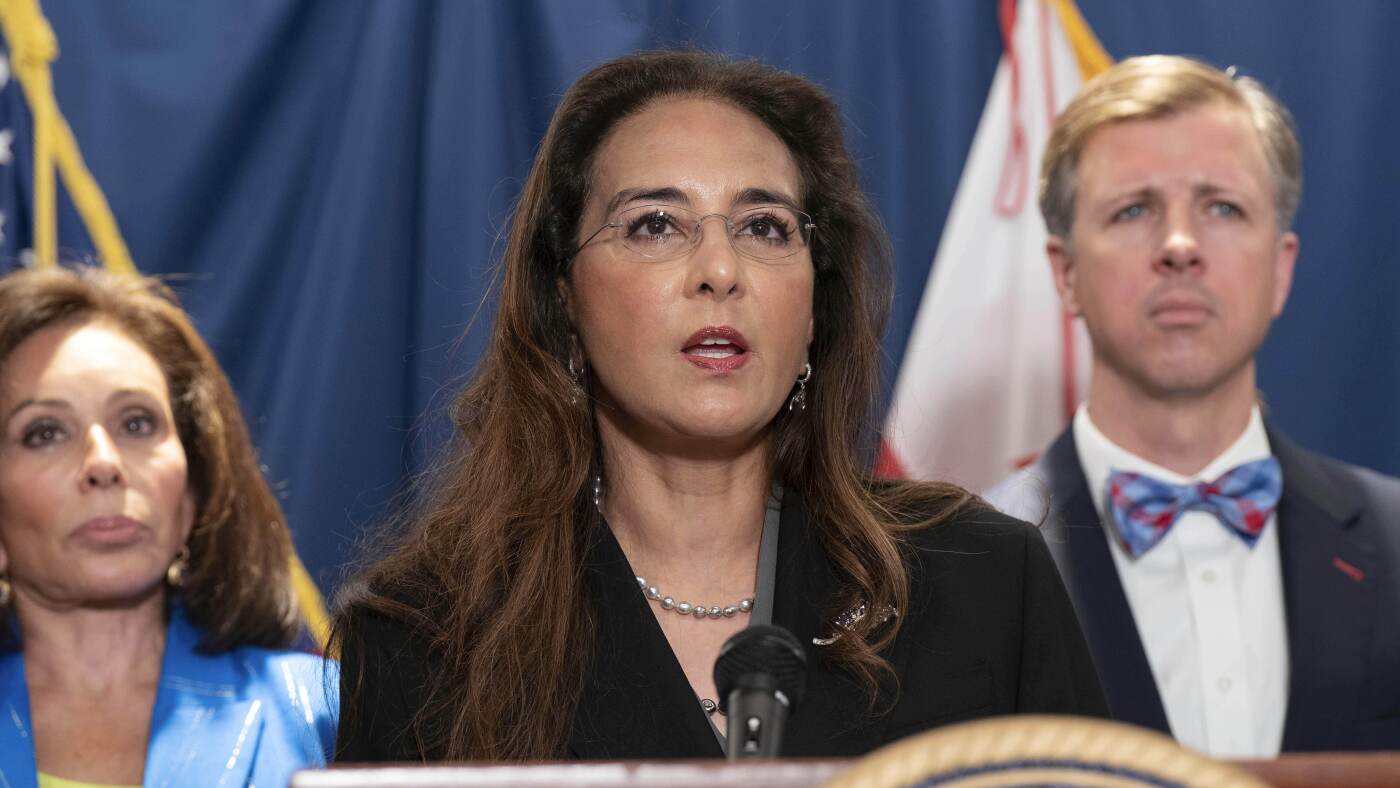
Harmeet Dhillon, the head of the DOJ’s Civil Rights Division, emphasized the importance of compliance with federal laws, stating, “States simply cannot pick and choose which federal laws they will comply with.” Dhillon underscored the need for public trust in the electoral process, suggesting that non-compliance could lead to “legal consequences.”
Ensuring the accuracy of voter lists is a challenging task for states, which hold the constitutional authority to manage their own elections. This has led to calls from election integrity advocates for more rigorous list maintenance and transparency. Critics argue that these demands are often based on misleading claims about electoral fraud.
The lawsuits have brought attention to the DOJ’s internal dynamics, as key figures such as Maureen Riordan, who previously worked for a conservative law firm, and Dhillon have been linked to past election fraud claims.
In Maine, Secretary of State Shenna Bellows voiced her opposition to the DOJ’s request, citing concerns over data security: “The Department of Justice hasn’t shown any good reason for its fishing expedition for sensitive voter information on every American,” said Bellows, who is also campaigning for governor.
Resistance to federal requests for voter data is not new. In 2017, Mississippi’s then-Republican Secretary of State Delbert Hosemann famously told the Trump administration to “go jump in the Gulf of Mexico” in response to similar demands.
Concerns persist regarding the current administration’s intentions with voter data. Recent reports suggest that over 33 million voter records have been processed through a Department of Homeland Security tool, raising questions about the tool’s accuracy and security. Although DHS officials have assured voting officials that they do not seek state data, indications of collaboration with the DOJ have emerged.
While the DOJ maintains that its data requests are within legal bounds and aim to identify ineligible voter entries, the potential for future legal action against other non-compliant states remains uncertain.
For further information, access the full lawsuits for Oregon and Maine.
This article was originally written by www.npr.org