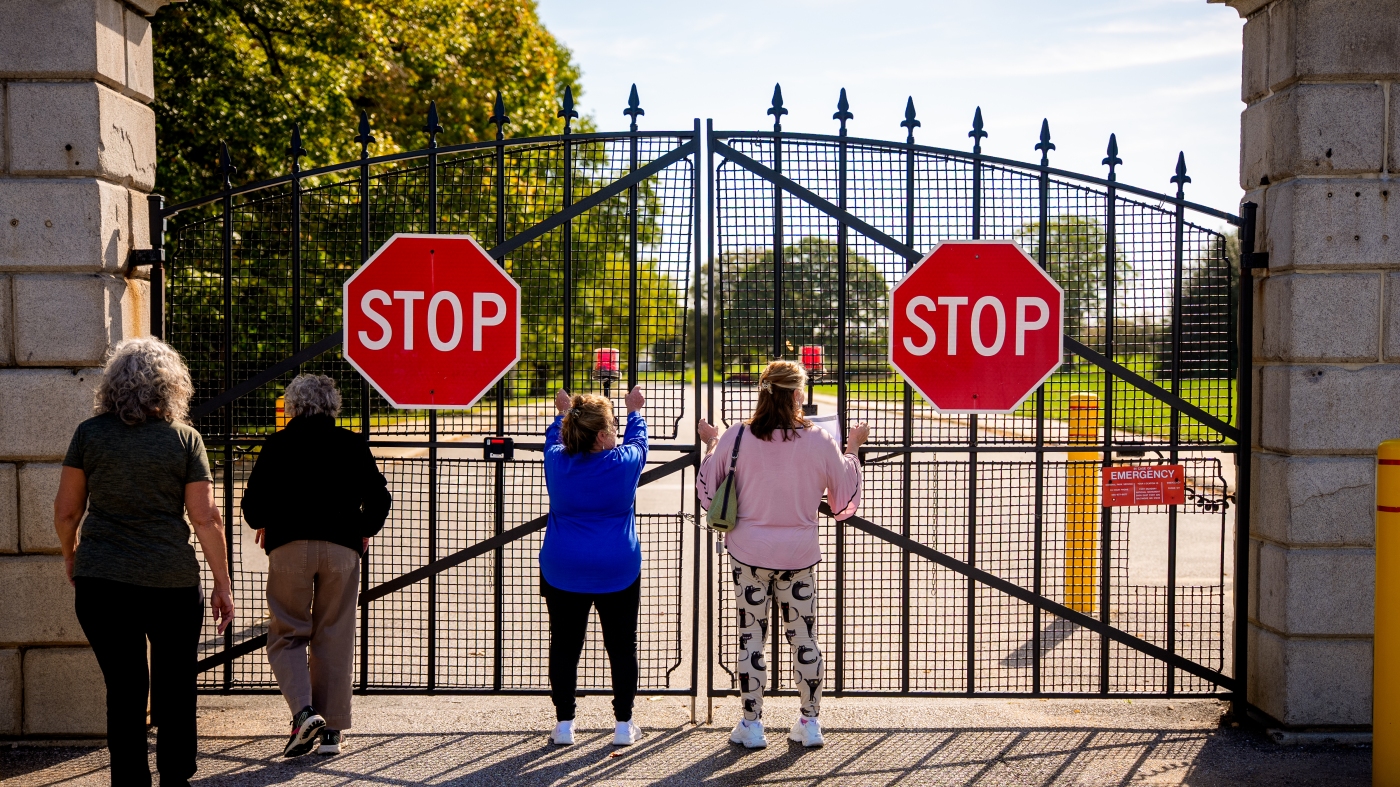
The Shutdown’s Ripple Effects: Understanding the Federal Government Halt
The federal government has come to a stop after failing to pass a funding bill by the deadline, leaving non-essential services suspended and numerous federal employees working without pay. As the shutdown enters another week, the impact is being felt nationwide, affecting services, benefits, and operations across various sectors.
Root Cause of the Shutdown
The deadlock stems from a partisan disagreement over the extension of subsidies for the Affordable Care Act (ACA) marketplaces, which are crucial for the 24 million people purchasing health plans through this system. Senate Democrats have refused to support the Republican short-term funding bill, which lacks an extension for enhanced premium tax credits and seeks to repeal certain healthcare cuts imposed by a GOP spending and tax bill.
Potential Resolutions
With no progress in sight, several scenarios could lead to reopening the government:
- Scenario 1: Moderate Democrats might join Republicans to pass a funding bill under increased public pressure.
- Scenario 2: Republicans might feel compelled to negotiate if they bear the brunt of the blame, especially amid threats of mass layoffs and funding cuts to blue states by Trump’s budget director, Russ Vought.
- Scenario 3: A temporary deal could be reached to extend negotiations on healthcare measures due to high public support for the ACA.
Impact on Services and Benefits
The shutdown has led to varying degrees of disruption across the country:
Nutrition Assistance: The Women, Infants, and Children (WIC) program could face a crisis within two weeks unless states fill funding gaps. SNAP benefits are secure for October due to advance loading of debit cards.
Postal Services: The USPS will continue operations as it is primarily self-funded.
IRS Operations: The IRS is operational for now but may face uncertainties beyond the initial five days of funding.
Education: While teachers and schools are not directly impacted, many Department of Education employees are furloughed, leading to potential delays in administrative functions.
National Parks: Many parks remain accessible, but safety concerns arise due to reduced staffing.
Federal Benefits: Programs like Social Security, Medicare, and Medicaid will continue, though there might be delays in processing new applications.
Regional Specific Impacts
States are experiencing unique challenges due to the shutdown:
- Alaska: For more, visit Alaska Public Media.
- Arizona: Governor Katie Hobbs will not use state funds to keep the Grand Canyon open. Federal disaster relief for flood-affected areas remains unaffected. [KJZZ]
- Connecticut: Food assistance continues despite the shutdown, but SNAP reserve funds may run out by month’s end. [WSHU]
- Kansas: Farmers face uncertainty with USDA offices closed and crop reports delayed, affecting harvest season. [KCUR]
- Louisiana: Nearly half a million residents risk losing flood insurance coverage due to the NFIP lapse. [WWNO/WRKF]
Looking Ahead
With the shutdown continuing, the focus remains on how lawmakers will address the impasse and what measures will be implemented to alleviate its widespread effects.
This article was originally written by www.npr.org