House Votes to Slash Federal Support for Public Broadcasting Amid Political Tensions
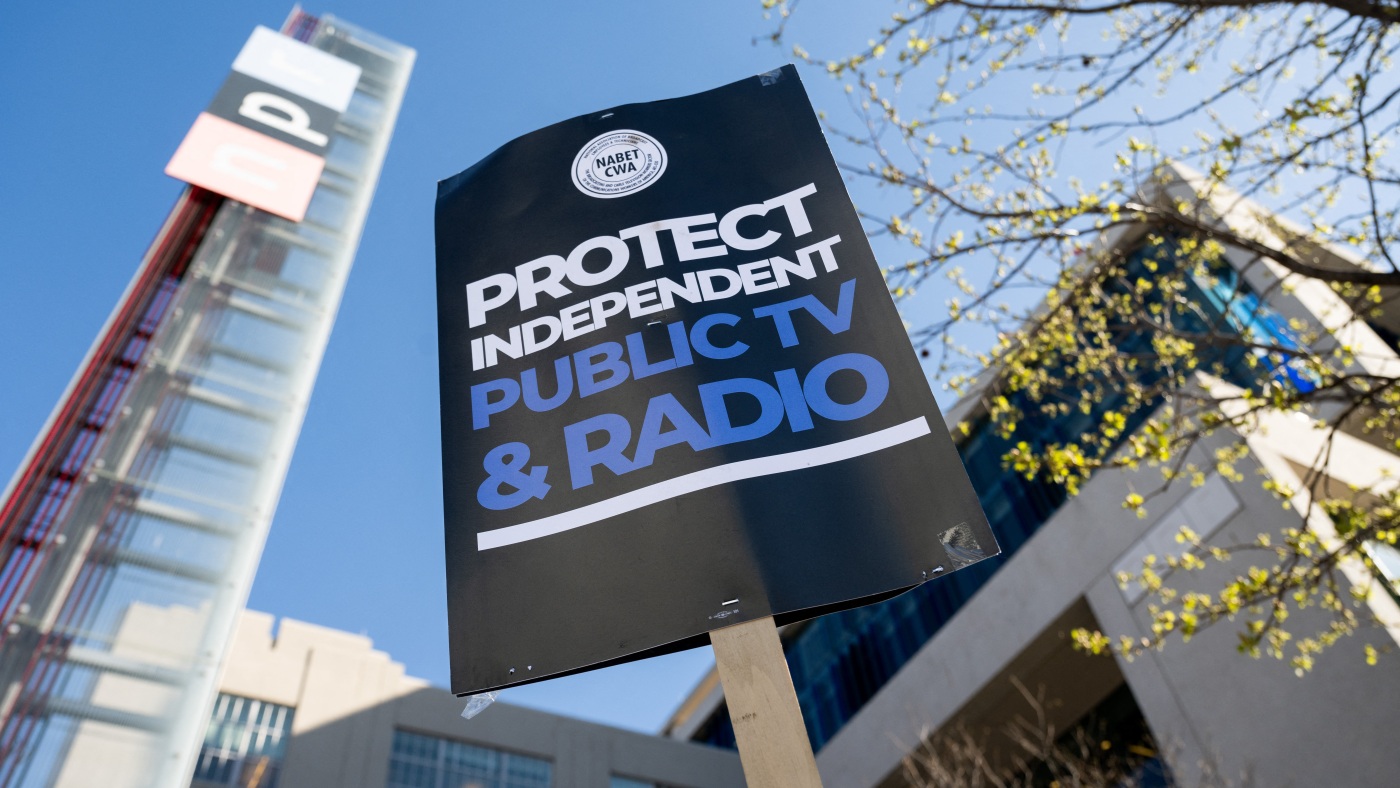
A recent decision by the House to approve a plan proposed by the Trump administration has sparked significant controversy. The plan aims to rescind $9 billion in previously allocated funds, which includes a crucial $1.1 billion for the Corporation for Public Broadcasting (CPB). This cut effectively eliminates federal support for NPR, PBS, and their member stations, while also reducing foreign aid by approximately $7 billion.
With a narrow margin of 216-to-213, the vote saw almost unanimous support from Republicans, except for two dissenters. The bill now awaits the President’s signature.
NPR CEO Katherine Maher expressed deep concern following the vote, describing it as an “irreversible loss” that threatens the very fabric of public radio. Maher criticized the decision as an “unwarranted dismantling of beloved local civic institutions” and accused Congress of ignoring public sentiment.
“Public funding has enabled the flourishing of a uniquely American system of unparalleled cultural, informational, and educational programming,” Maher stated. She emphasized that the funding supports vital emergency alert systems and reporting, offering these services at a cost of about $1.60 per American annually.
Rep. Alma Adams of North Carolina highlighted the critical role of public broadcasting during emergencies, recounting its importance during Hurricane Helene in North Carolina when traditional communications were down.
In a rapid series of votes, known as a “vote-a-rama,” the Senate considered numerous amendments to the rescission package, most of which were rejected along party lines. The lone successful amendment aimed to protect PEPFAR, a U.S. AIDS relief initiative.
The House vote effectively strips CPB of $1.1 billion intended for the next two years, while also cutting $7.9 billion from other programs. CPB channels federal funds to NPR, PBS, and their affiliates. Although NPR relies on direct federal funding for a small fraction of its budget, its approximately 1,000 member stations depend more heavily on CPB’s support.
Many of these stations, particularly those serving rural or underserved communities, face the risk of closure due to the funding cuts. Sen. Mike Rounds of South Dakota announced a plan to use funds from the Biden administration to maintain 28 stations serving Native American audiences. However, Loris Taylor of Native Public Media criticized the plan as “structurally impractical.”
Paula Kerger, President and CEO of PBS, voiced her disapproval, stating that the cuts oppose the preferences of most Americans who trust and value PBS services. PBS receives around 15% of its revenue through CPB funding.
Kerger warned that these reductions would disproportionately affect smaller and rural stations, forcing them to make difficult decisions regarding their operations.
A Harris Poll revealed that 66% of Americans favor federal funding for public radio, including 58% of Republicans and 77% of Democrats. The poll surveyed 2,089 U.S. adults and has a margin of error of 2.5 percentage points.
NPR has faced criticism from conservatives over perceived political bias and “woke” programming. A public essay by former NPR editor Uri Berliner added to this narrative, arguing that a focus on diversity had limited the network’s perspectives.
Following the essay’s publication, Berliner resigned, and NPR’s Edith Chapin defended the network’s coverage, emphasizing the importance of diverse storytelling.
During discussions, Rep. Mark Amodei of Nevada acknowledged conservative frustrations with NPR and PBS but stressed the importance of supporting local stations, many of which serve regions that lean politically conservative.
Concerns about the rescission process have been voiced by members of both parties. The process, not used in 25 years, could complicate the passage of future funding bills before a Sept. 30 deadline.
Sen. Thom Tillis of North Carolina highlighted the challenges of securing bipartisan support for future appropriations if past agreements are not upheld, referencing the rescission as a potential obstacle.
Senate Minority Leader Chuck Schumer criticized the rescission package as undermining the bipartisan appropriations process in a letter to Senate Democrats.
Director of the Office of Management and Budget, Russell Vought, announced plans to introduce another rescission package soon, signaling continued efforts to make these cuts permanent.
Rep. Don Bacon of Nebraska praised the Senate version of the bill for retaining more funds for PEPFAR and stated that future appropriations would ensure funding for local public TV stations, based on assurances from House Speaker Mike Johnson.
This article was originally written by www.npr.org