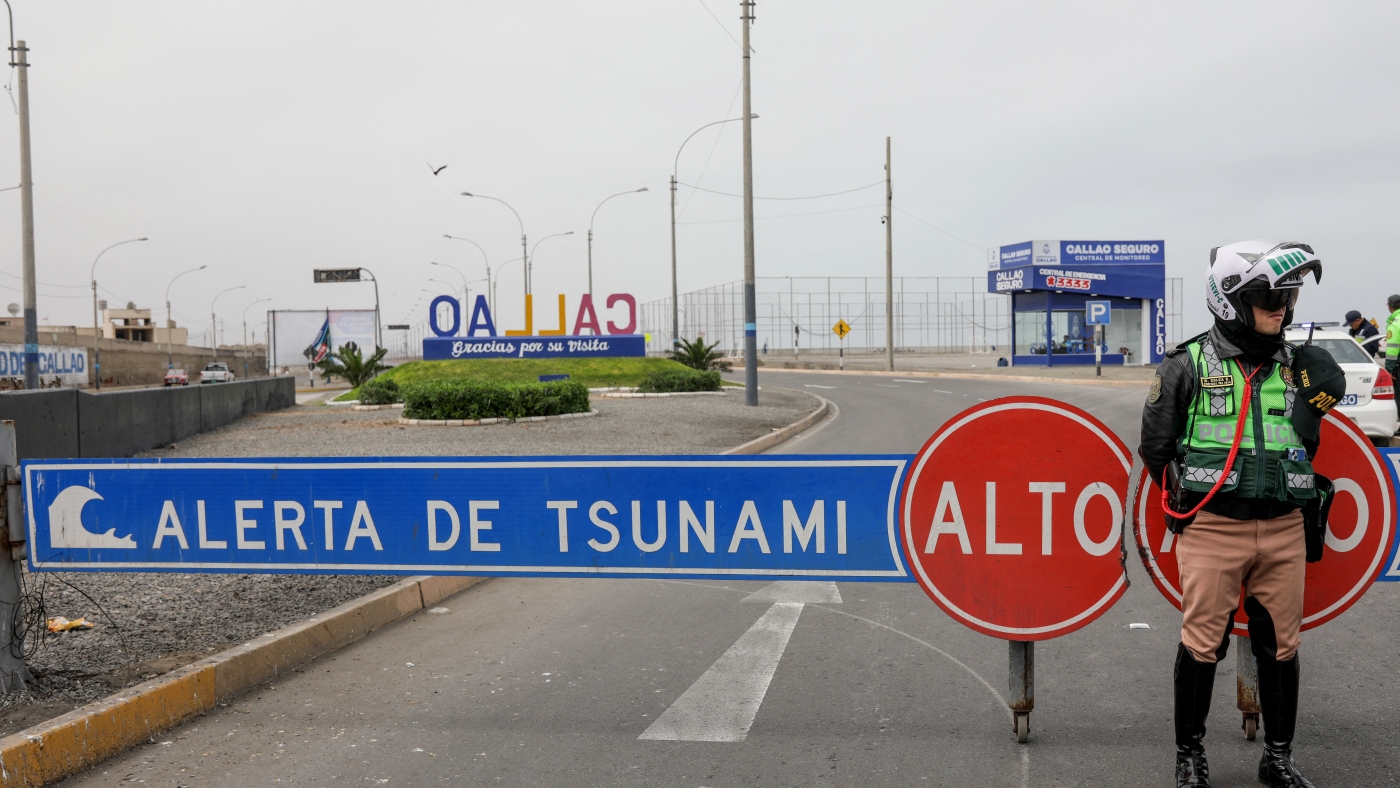
Massive Seismic Event in Russia Sparks Pacific Tsunami Alerts
A powerful 8.8-magnitude earthquake has struck Russia’s Far East, triggering tsunami warnings across the Pacific. From Japan to Hawaii, coastal communities reacted swiftly, seeking safety from potentially devastating waves.
The earthquake, occurring on Wednesday, is noted as one of the most significant on record. Its impact was felt as far as Hawaii, where residents, like Siri Zama, a high school teacher from Kapolei, heeded the alerts by moving inland. “It was raining, and the clouds got real dark. It was just a little scary,” Zama shared.
While regions along Russia’s Kamchatka Peninsula experienced immediate flooding, similar scenes unfolded in Japan. In Hawaii’s capital, traffic surged as residents evacuated.
Despite widespread alerts, no fatalities or major damage have been reported. However, the U.S. West Coast remains under advisory, urging caution.
Understanding Tsunami Genesis
The creation of a tsunami often begins with a potent earthquake. Research geophysicist Eric Geist from the United States Geological Survey notes that earthquakes need to measure at least 6.5 to 7 in magnitude to initiate such waves. “You need a large enough earthquake that gives enough motion,” Geist explained.
Location and movement type are crucial. Underwater quakes near the shore are more likely to result in tsunamis. The Pacific’s Ring of Fire is particularly prone due to tectonic shifts. Vertical motion during these quakes contributes significantly.
Harold Tobin, from the University of Washington, emphasizes the role of shallow earthquakes, which are more likely to trigger tsunamis. “It’s a shallow earthquake, exactly the type that tends to produce large and damaging tsunamis,” Tobin stated.
This week’s quake presented all the conditions for a tsunami: strength, underwater origin, and vertical movement. A similar event in 1952 resulted in widespread damage across the Pacific.
Challenges in Tsunami Prediction
Tsunami prediction remains complex. “Every earthquake is like a unique snowflake,” said Tobin, highlighting the variability in outcomes. The initial fear of a larger tsunami was not realized, though the reasons remain under study.
As tsunamis travel, their speed and wave height fluctuate. In deep ocean, they move swiftly and may go unnoticed. Nearing shore, they slow, but wave height increases, posing significant danger.
Geist describes the formidable power of these waves: “You probably see pictures of tsunamis just lifting train engines up. They’re just extremely powerful.”
Advancements in Tsunami Forecasting
Advancements in technology are improving tsunami predictions. Tide gauges and deep ocean pressure sensors are pivotal tools in forecasting wave height and timing, according to Geist. These sensors, crucial near seismic zones, are complex to deploy.
Tuesday’s tsunami energy primarily moved toward Hawaii, but ocean depth variations caused secondary waves elsewhere, affecting locations like Alaska and Papua New Guinea.
Before a tsunami, ocean recession is a warning sign. Although some animals might sense impending tsunamis, the scientific basis for this remains unclear.
Response and Safety Measures
Immediate action is vital upon receiving tsunami alerts. Geist advises moving to higher ground quickly, ideally 100 feet above sea level. “Thirty feet is not a lot above sea level, but that can really be the difference,” Tobin noted.
Coastal evacuation maps are essential tools, as danger zones vary. “It’s a hump of water that is tremendously long in its wavelength,” Tobin explained, stressing the unique nature of tsunamis.
Even small tsunamis can cause severe damage, especially through debris they collect. Following all warnings is crucial, as these events can last for hours.
Long-term Impacts of Tsunamis
The aftermath of a tsunami extends beyond immediate damage. Flooding can disrupt water, food, and healthcare access, leading to broader health implications.
Dr. Jyothi Tirumalasetty from Stanford highlights the risks of mold-related allergies following water damage. Longer-term, mental health effects and chronic disease management become challenges, as seen in the 2004 Indian Ocean tsunami.
Tirumalasetty advises having a preparedness plan, especially for vulnerable individuals. “Having all that ready to go and packed… provides peace of mind,” she said.
While the link between tsunamis and climate change is debated, some experts suggest a warming planet could increase seismic activities. The medical field is adapting, with a growing emphasis on climate education, indicating a proactive approach to future challenges.
This article was originally written by www.npr.org