New Orleans Bolsters Security Measures Amid Anniversary of Bourbon Street Attack
New Orleans is enhancing security as it prepares for New Year’s festivities, a year after a devastating truck attack on Bourbon Street claimed 14 lives. The National Guard has been deployed to support safety efforts as city leaders seek long-term solutions.
The tragic event on January 1st last year exposed significant security gaps on the bustling street, known for its lively atmosphere of bars, brass bands, and revelers. Despite assurances from Louisiana officials about increased safety measures, families of the victims argue more needs to be done to avert future incidents.
On that fateful day, Shamsud-Din Jabbar drove a pickup truck through Bourbon Street, bypassing a police blockade, which resulted in multiple casualties. Jabbar, a U.S. citizen and Army veteran, was killed by police, with his social media activity indicating support for the Islamic State.
Post-attack investigations by city officials and representatives of the victims’ families have focused on the street’s steel bollard system, meant to deter vehicles. At the time of the attack, these bollards were under replacement, raising questions about the effectiveness of the current security infrastructure.
Victims like 18-year-old Nikyra Dedeaux, who was about to start college, were among those who tragically lost their lives. Her mother, Melissa Dedeaux, expressed her ongoing grief, sharing her pain over seeing her daughter’s last moments on social media. “I’m a parent that had to wake up, log on my Facebook account and see my daughter’s last days — my daughter’s last time,” she told the AP. “I saw no safety. I saw that my daughter could still be here.”
Concerns remain over the makeshift nature of the current barricade system, which relies on a combination of bollards, police vehicles, and temporary steel barriers. Captain Samuel Palumbo of the New Orleans Police Department emphasized that these measures are not designed for high-speed threats, calling them a “temporary solution to a permanent problem.”
Palumbo and other officials have proposed the installation of permanent security gates capable of withstanding high-speed impacts. The decision, however, awaits the new administration under Mayor-elect Helena Moreno, set to take office in January.
Additionally, a consulting firm recommended turning Bourbon Street into a pedestrian-only zone. Although this suggestion has support from victims’ families, it faces opposition from local residents and business owners concerned about accessibility.
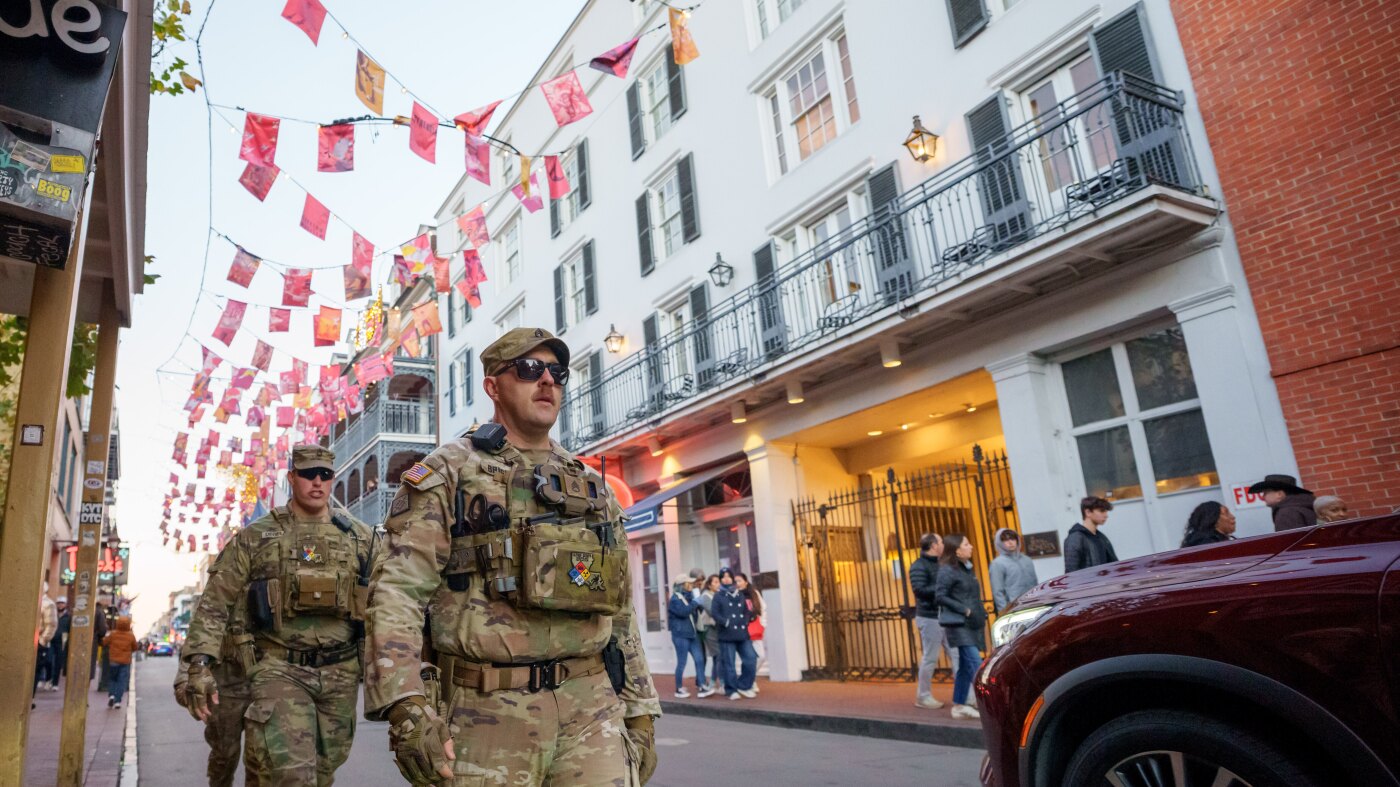
In response to these ongoing challenges, 350 National Guard troops, authorized by President Donald Trump’s administration, have been stationed in New Orleans. Their presence, alongside state police and other law enforcement, aims to bolster security visibility during major events.
Longtime French Quarter worker Miguel Thornton welcomed the added security, noting the lasting impact of the previous year’s events on local service industry professionals. “As far as the National Guard, they’ve been here before. Honestly, they’re welcome,” Thornton commented.
As New Orleans gears up for its famous Carnival season, the city remains a vibrant hub of tourism, even amid past tragedies. Bourbon Street has been reopened since the attack, and now features flags commemorating the victims, serving as a poignant reminder of the lives lost.
Buck Harley, who manages a local cigar shop, shared that he often explains the significance of the flags to tourists. “We seem to as a society forget. And I don’t think it’s because of a lack of empathy but because there’s another big story taking its place,” Harley observed.
As the city continues to navigate its security challenges, the focus remains on ensuring a safe environment for both locals and visitors alike.
This article was originally written by www.npr.org