Two Tennis Stars Face Off with Mental Health Journeys in the Spotlight
In a high-stakes showdown at the U.S. Open, Amanda Anisimova and Naomi Osaka will compete in the semifinals on Thursday night, each bringing a unique narrative of resilience and recovery. Their journeys back to prominence highlight the growing conversation about mental health in sports.

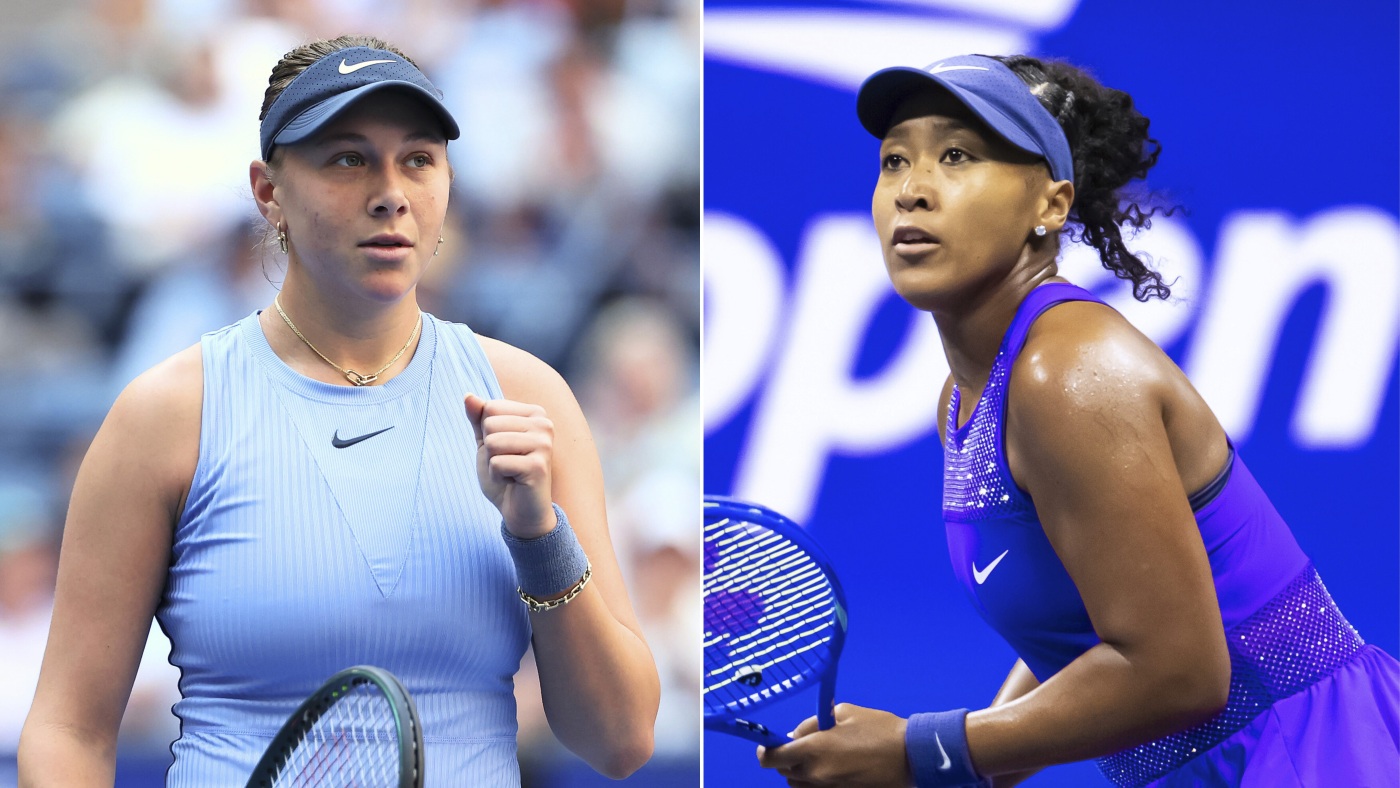
Amanda Anisimova of the U.S., left, and Naomi Osaka of Japan will face off in the U.S. Open semifinals in New York City on Thursday night. Both have been open about their mental health struggles.
Elsa/Getty Images; Robert Prange/Getty Images
Both Anisimova and Osaka are making significant comebacks after taking breaks to focus on their mental health. The match at Arthur Ashe Stadium, scheduled for 8 p.m. ET, promises not just a place in the final but also a testament to their perseverance.
“It’s exactly like a movie,” comments Jackie Johnston, a women’s sports content creator. Osaka, a four-time Grand Slam champion, took a hiatus in 2021 due to anxiety and depression, later becoming a mother in 2023. She rejoined the circuit in 2024, unranked, facing formidable opponents from the outset.
Osaka’s journey has been arduous, as unranked players confront top-seeded competitors early in tournaments. “It is the hardest thing ever to do, to get your rating back up in tennis,” Johnston explains, highlighting the challenge of regaining high rankings.
Currently ranked 24th, Osaka triumphed over No. 11 Karolina Muchova, securing her first U.S. Open semifinal spot since 2020. “It means so much, I’m actually surprised I’m not crying,” Osaka expressed post-match, acknowledging the unseen hard work and support from her team.
Meanwhile, Amanda Anisimova’s path to the semifinals has been equally compelling. She achieved a notable victory against No. 2 Iga Świątek, avenging a previous defeat in the Wimbledon final. “This has been such a dream,” Anisimova remarked, reflecting on her journey back to form.
Anisimova has faced personal and professional challenges, including injuries and the tragic loss of her father. Taking an indefinite break in 2023, she returned with renewed vigor in 2024, climbing back into the top 20 with significant wins, including her first WTA 1000 title.
The upcoming match will be their third encounter, with Anisimova having won the previous two. However, Osaka’s record in Grand Slam semifinals remains unblemished. Johnston notes the broader impact of their stories, emphasizing the importance of mental health awareness in sports. “Hopefully the root cause is addressed and the symptom is not normalized,” she says, advocating for better mental health support for athletes.
Naomi Osaka recently shared insights on prioritizing mental health, influencing tournament structures with initiatives like quiet rooms at the U.S. Open. Her advice to younger athletes is clear: “You don’t have to view self-care as a weakness.”
This article was originally written by www.npr.org