The Tradition of Groundhog Day: Will Winter Linger or Will Spring Arrive Early?

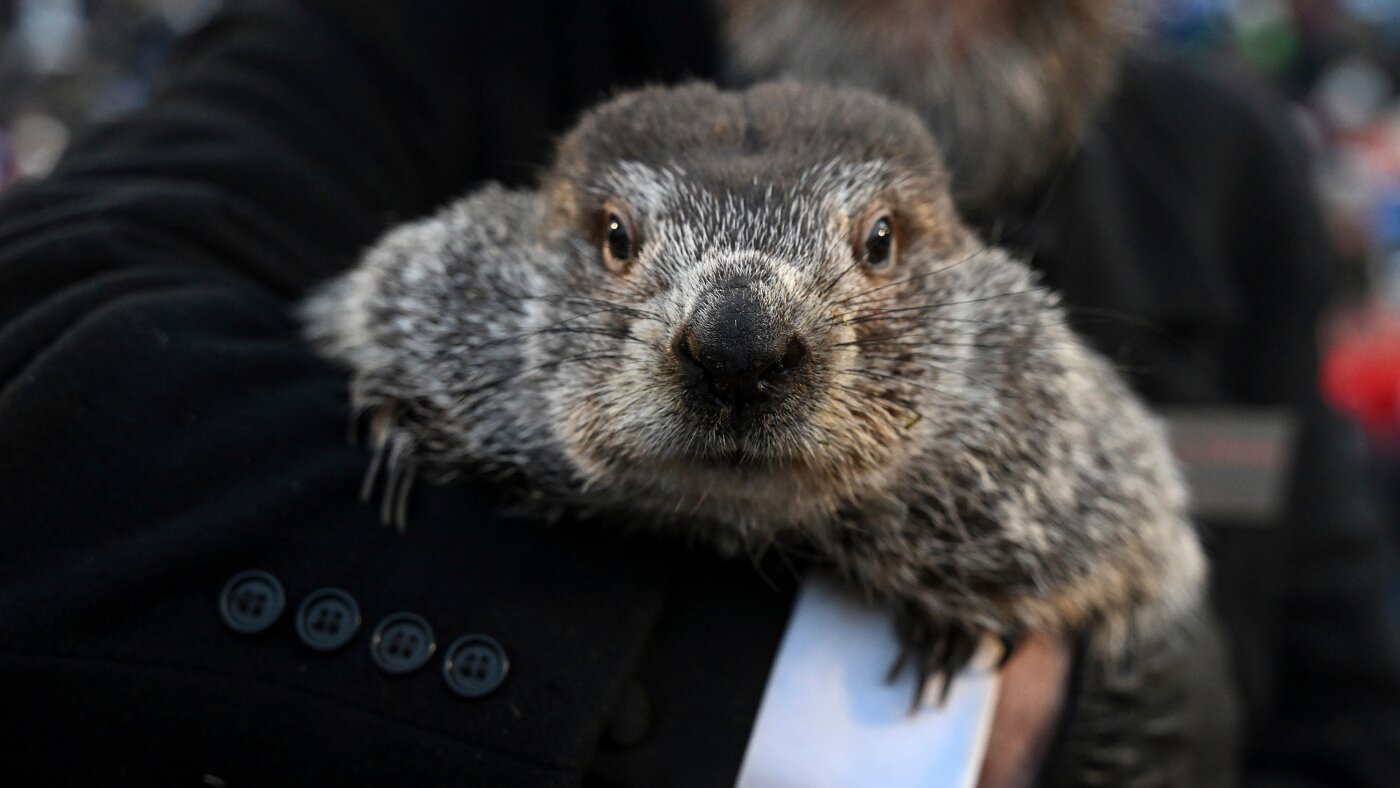
FILE – Groundhog Club handler A.J. Dereume holds Punxsutawney Phil, the weather prognosticating groundhog, during the 137th celebration of Groundhog Day on Gobbler’s Knob in Punxsutawney, Pa., Feb. 2, 2023.
Barry Reeger/AP
Barry Reeger/AP
PUNXSUTAWNEY, Pa. — As winter’s chill continues to grip much of the United States, anticipation builds for the annual weather prediction by Punxsutawney Phil. This age-old tradition, set to take place on Monday, hinges on whether the famous groundhog will spot his shadow, signaling another six weeks of winter, or not, heralding an early spring.
Every year, tens of thousands gather at Gobbler’s Knob in rural Pennsylvania to witness this unique event. The custom, with roots in European farming lore, has gained significant popularity, especially after the release of the 1993 film “Groundhog Day” starring Bill Murray.
Last year, Phil’s prediction of six more weeks of winter was in line with historical trends. His caretakers, members of the Punxsutawney Groundhog Club, claim they interpret Phil’s “groundhogese” — communicated through winks, purrs, chatters, and nods — to forecast the weather ahead.
While Punxsutawney Phil is perhaps the most famous weather-predicting animal, similar Groundhog Day celebrations occur in various locations across the U.S., Canada, and beyond, both formally and informally.
Groundhog Day, observed on February 2, is a midpoint between the winter solstice and the spring equinox. This time of year holds significance in both the Celtic calendar and the Christian tradition of Candlemas.
This article was originally written by www.npr.org