National Guard Deployment Marks Escalation in Federal Policing Efforts in Washington, D.C.
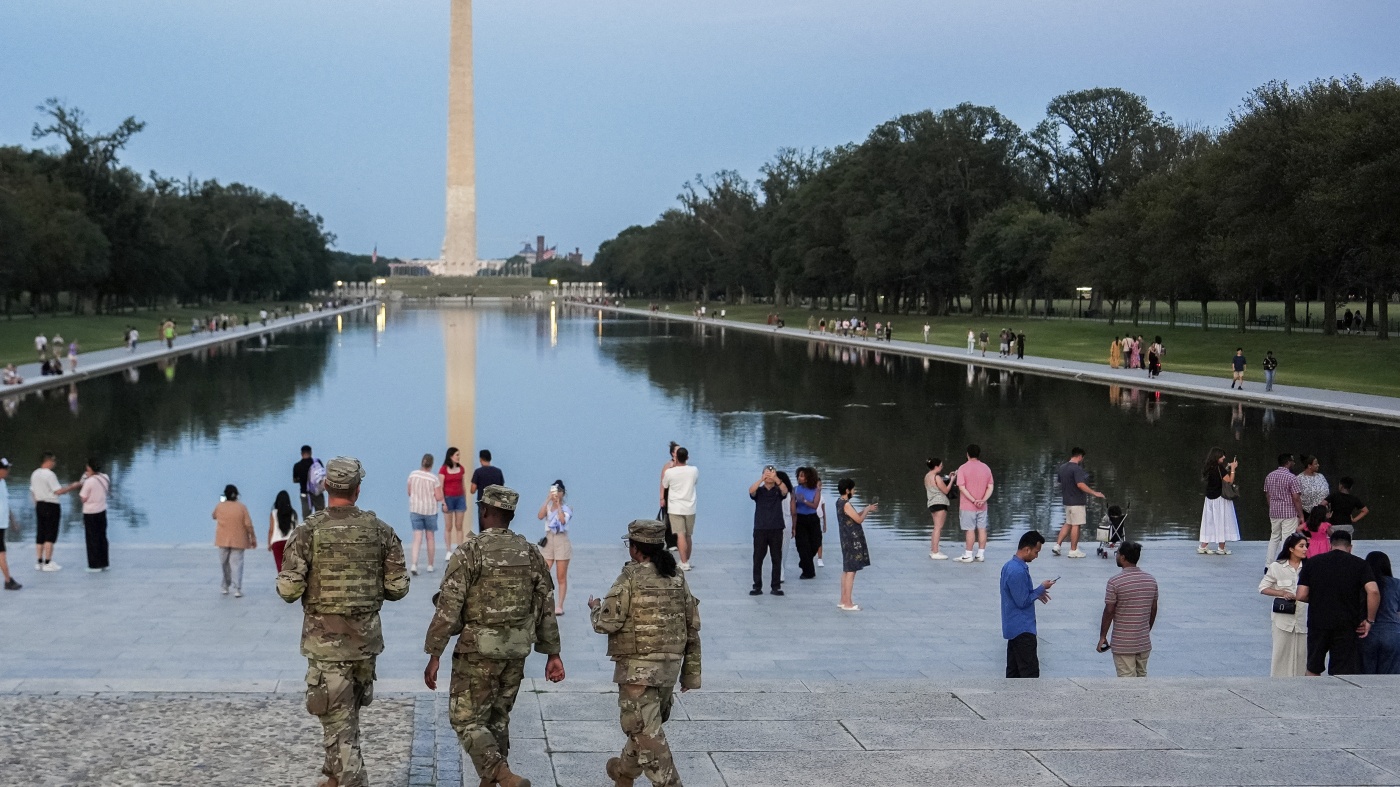
In a move that heightens federal involvement in Washington, D.C., West Virginia, South Carolina, and Ohio announced the deployment of hundreds of National Guard members to support the Trump administration’s initiative. This intervention aims to enhance policing in the nation’s capital amidst a federal crackdown on crime and homelessness.
West Virginia has committed 300 to 400 troops, while South Carolina and Ohio are dispatching 200 and 150 troops, respectively. This represents a significant increase in federal efforts to address issues in the heavily Democratic city.
Following President Donald Trump’s executive order to federalize local police, an additional 800 members of the District of Columbia National Guard have been activated. This bolstered presence is intended to curb crime and homelessness, despite city officials noting that violent crime rates are lower than earlier in Trump’s presidency.
Deployment from Republican-Led States
Governors from these states have responded to requests from the Trump administration. West Virginia’s Gov. Patrick Morrisey stated his support for the President’s efforts, emphasizing their commitment to “restore pride and beauty” to the capital. South Carolina’s Gov. Henry McMaster confirmed the deployment of 200 guardsmen but assured their recall in case of emergencies like hurricanes. Meanwhile, Ohio’s Gov. Mike DeWine announced the dispatch of 150 military police to bolster security, following a request from Army Secretary Dan Driscoll.
Protests Against Federal Intervention
Protests erupted in opposition to the federal crackdown, with demonstrators gathering at Dupont Circle before marching to the White House. Morgan Taylor, organizer of the protest, expressed their goal to generate backlash against Trump’s agenda. Concerns about overreach and the justification of crime as a pretext for increased control have fueled these demonstrations.
Local residents like John Finnigan and Jamie Dickstein voiced their disapproval, highlighting the disconnect between the administration’s actions and the actual crime statistics. Finnigan criticized the move as “ridiculous,” while Dickstein expressed concerns about safety with the presence of “unmarked officers.”
Mixed Reactions to Federal Law Enforcement Surge
The influx of federal agents in Washington has elicited varied responses from locals and leaders nationwide. While city officials are required to comply with Trump’s directive, they have expressed unease about the extent of federal control. A recent legal challenge led to the reversal of an order that would have appointed the DEA head as an “emergency police commissioner.”
City Officials Respond to Federal Directives
President Trump’s declaration of an emergency cited the local government’s inability to maintain order, which he argued impedes federal operations. In response, Washington’s Mayor Muriel Bowser acknowledged the unprecedented challenge to the city’s limited self-governance. She urged residents to unite in demonstrating their commitment to American democracy.
This article was originally written by www.npr.org