
Unrelenting Floods Ravage the Four Corners Region with Historic Intensity
The Four Corners region of the United States, where New Mexico, Colorado, Utah, and Arizona converge, is grappling with unprecedented flooding. This severe weather event, marked by heavy rains and rising waters, has disrupted lives and prompted emergency actions across multiple states.
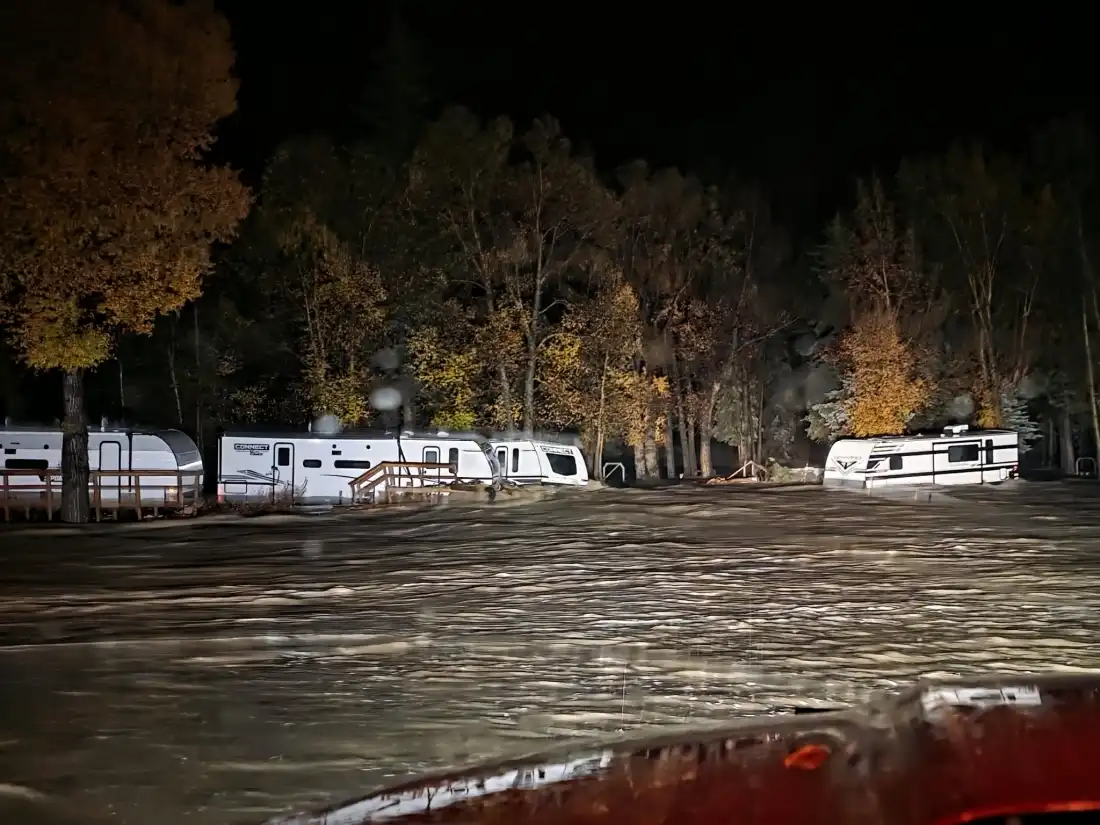
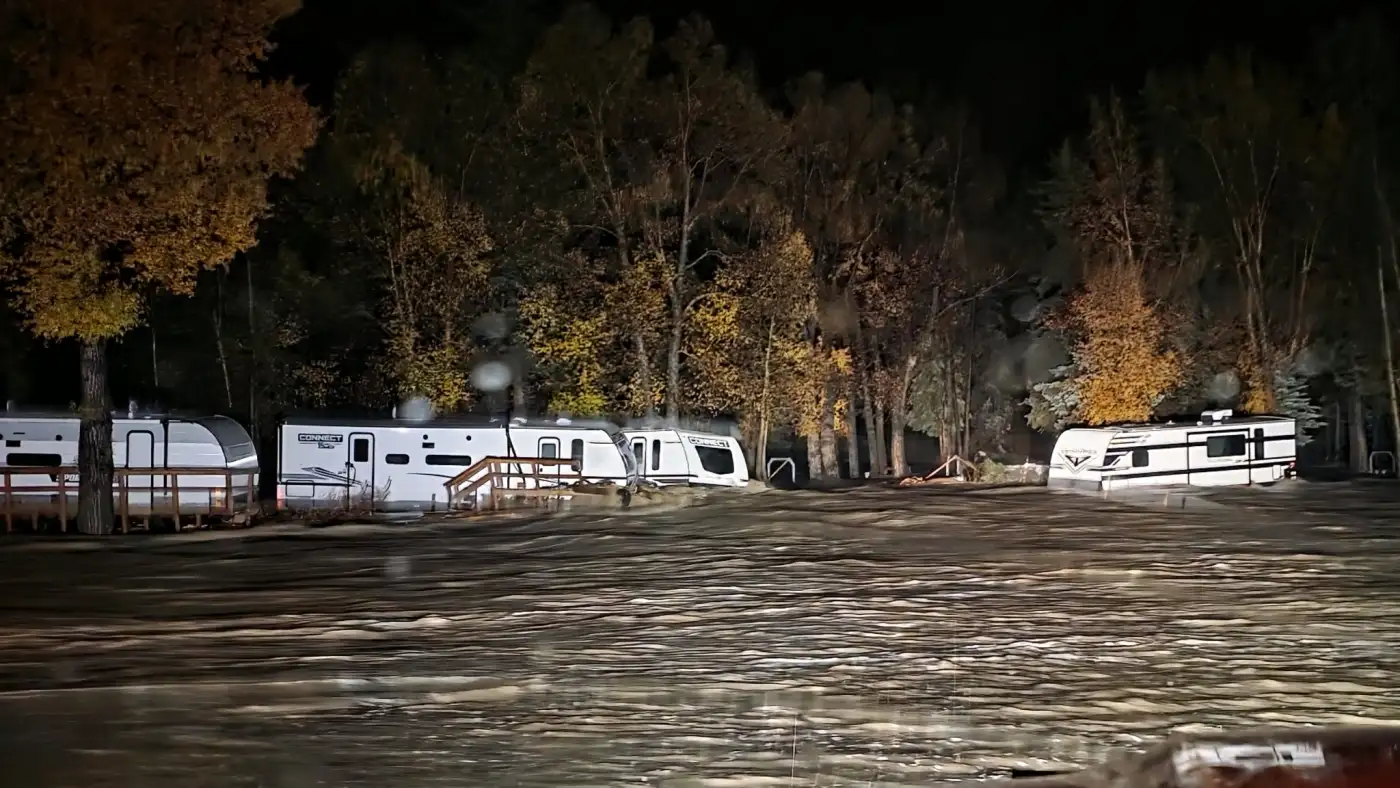
Floodwaters surround trailers at the Fun Valley Family Resort campground and RV park in South Fork, Colo., early Friday, Oct. 23, 2026. South Fork Fire Rescue/AP
Devin Neeley, public information officer for emergency management in San Juan County, N.M., described the scene as “surreal” despite the clear skies, as brown rainwaters flooded homes and overwhelmed sewage systems. “The sky belies really the danger that is coming down the river in historic levels,” he noted, emphasizing the generational severity of the flooding.
Rescue operations were underway as emergency responders assisted residents stranded on rooftops. An emergency declaration was issued, urging evacuations in vulnerable areas. “These are communities that have beautiful riverfront places to live,” Neeley remarked. “And unfortunately, that’s a problem today.”
Widespread Impact Across States
From Wednesday, the Four Corners region has experienced heavy rainfall leading to thick, brown floodwaters. The flooding has resulted in road closures, forced evacuations, and emergency declarations. Utah’s Governor Spencer Cox expressed solidarity with affected families via social media and urged adherence to evacuation orders.
Hurricane, Utah, declared an emergency as over 100 homes and RVs sustained damage. A video shared by the National Weather Service depicted residents guiding horses through floodwaters. In Farmington, N.M., Police Chief Steve Hebbe described the situation as “singular and real,” warning against underestimating the threat despite the absence of fatalities.
Colorado’s Governor Jared Polis declared disaster emergencies in 11 counties, deploying National Guard resources to aid rescue efforts. The Navajo Nation police reported rescuing 30 people, while the Hopi Tribe declared a state of emergency due to infrastructure damage.
Record Rainfall and Persistent Threats
The region’s mountainous landscape often exacerbates flooding. Recent storms, fueled by remnants of Hurricane Trudy, resulted in record rainfall amounts, with certain areas receiving up to six inches. Meteorologist Kris Sanders highlighted the rarity of these rainfall levels, though similar events have occurred in the past.
Thunderstorm watches remain active, with climate scientist Daniel Swain linking the severe weather to a strong El Niño event and marine heat wave. Swain noted, “that is exactly what we’ve seen,” as forewarned in spring predictions.
With the threat persisting, communities remain vigilant. Neeley conveyed the community’s anxiety over long-term impacts: “People are concerned about their life and their welfare and their property. This is going to be a long term impact to this community.”
This article was originally written by www.npr.org




Comments are closed.