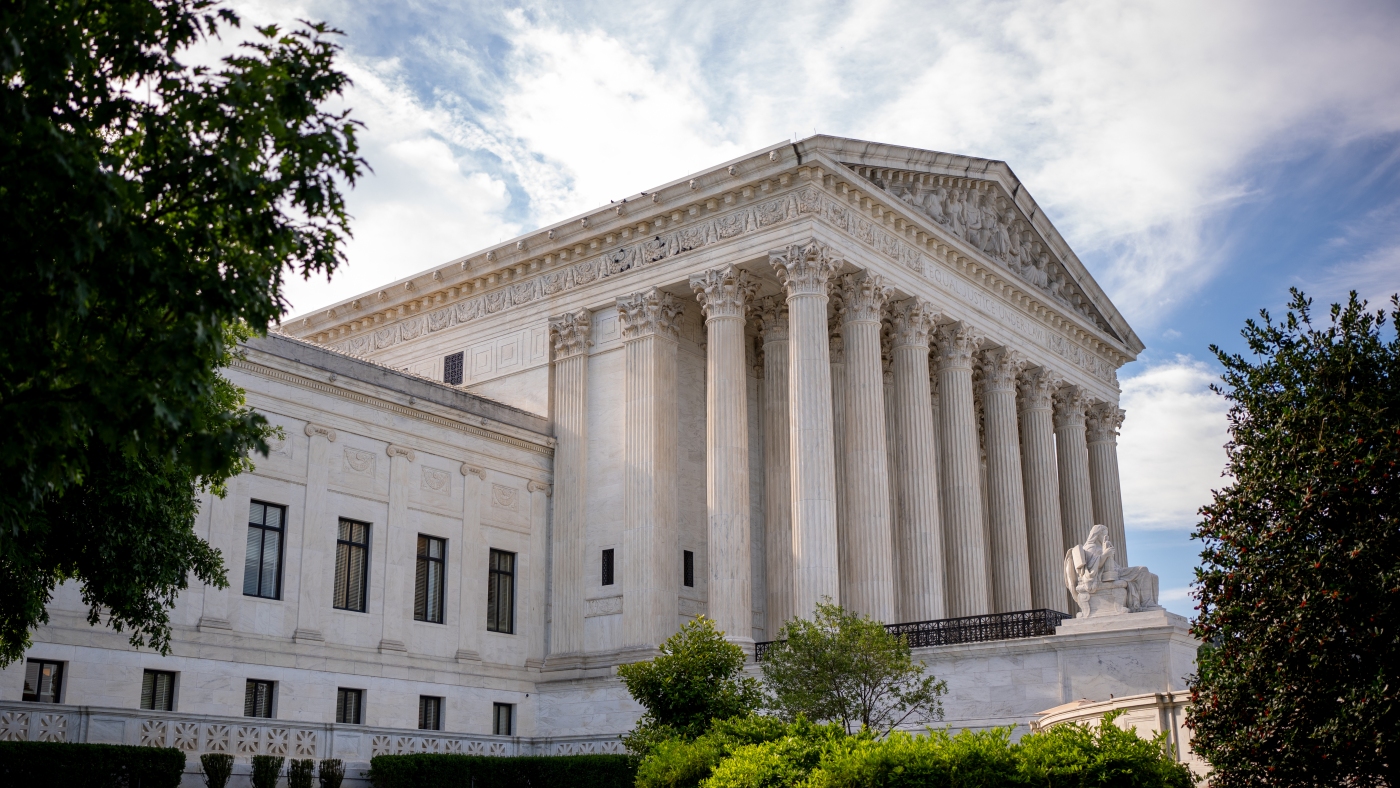
The Supreme Court’s Decision Halts NIH Grant Payments
In a narrow decision on Thursday, the Supreme Court temporarily halted the distribution of approximately $783 million in research grants by the National Institutes of Health (NIH), a move that reverses a lower court’s order. This decision is part of a broader debate over the NIH’s termination of funding for certain projects.
The court issued a 5-4 decision on its emergency docket, maintaining the lower court’s ruling that invalidated NIH memos enforcing the Trump administration’s funding policies. This decision reflects a split within the court, with Justice Amy Coney Barrett aligning with the conservative bloc, excluding Chief Justice John Roberts, who joined the liberal justices.
Earlier this year, the NIH, touted as the world’s largest public funder of biomedical research, began to withdraw federal grants under the directive of the Trump administration. The administration’s policies led to the defunding of initiatives that did not align with its agenda.
According to the American Civil Liberties Union, Robert F. Kennedy Jr., the Secretary of Health and Human Services, called for a reassessment of all funding related to diversity, equity, inclusion (DEI), and gender identity research. Additionally, grants for studying “vaccine hesitancy” and the COVID-19 pandemic’s impacts were also cut, as the NIH claimed these projects had fulfilled their “limited purpose.”
NIH officials argue that they reserve the right to terminate awards that do not align with the agency’s objectives or policies. They drew parallels with a prior Supreme Court decision that allowed the administration to halt $65 million in Department of Education grants related to DEI.
In response, sixteen states, along with advocacy groups and researchers, filed a lawsuit against the NIH and Kennedy, challenging the constitutionality of the funding terminations. A federal District judge ruled that the terminations lacked “reasoned decision-making” and temporarily reinstated the grants, criticizing the NIH for deviating from its traditional apolitical stance. However, the 1st U.S. Circuit Court of Appeals did not step in to alter the temporary reinstatement.
With the Supreme Court’s latest decision, the Trump administration is allowed to pause the grant payments while the legal battle continues in the lower courts.
This article was originally written by www.npr.org