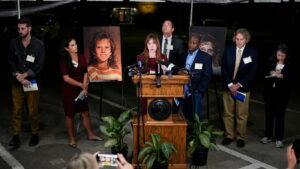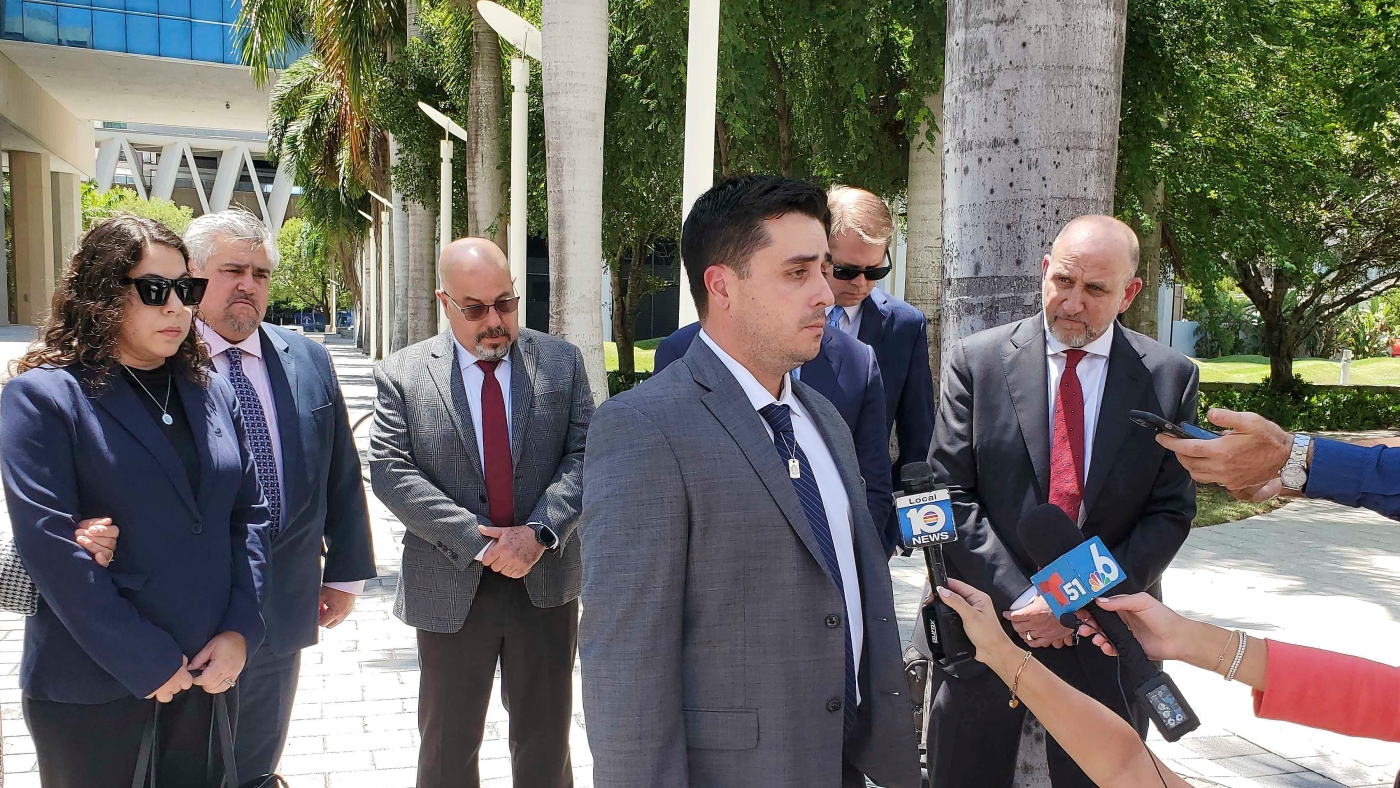

Dillon Angulo, who was seriously injured in a Florida crash involving Tesla’s Autopilot driver assist technology, speaks to reporters outside the federal courthouse in Miami on Friday.
David Fischer/AP
hide caption
toggle caption
David Fischer/AP
In a landmark decision, a Miami jury has attributed significant liability to Tesla, holding it responsible for a fatal Florida accident involving its Autopilot technology. The company is ordered to compensate the victims with over $240 million in damages. The jury’s verdict marks a notable moment in the ongoing scrutiny of self-driving technology safety, especially as Elon Musk plans to introduce a driverless taxi service in the near future.
The jury found that Tesla’s technology malfunctioned, and not all blame could be placed on the driver, who admitted to being distracted by a cellphone when the collision occurred. This verdict is anticipated to set a precedent, encouraging more individuals to pursue legal action. “This will open the floodgates,” noted Miguel Custodio, an attorney specializing in car accidents, who was not involved in this case.
The legal proceedings also revealed allegations by the plaintiffs that Tesla obscured or misplaced critical evidence, including data and video from moments before the crash. Tesla acknowledged an oversight but insisted it didn’t intentionally withhold the information. “We finally learned what happened that night, that the car was actually defective,” said Neima Benavides, sister of the deceased victim.
Tesla, however, disputes the jury’s findings, asserting that the ruling could impede automotive safety advancements. “Today’s verdict is wrong,” Tesla stated, emphasizing that the driver had admitted responsibility from the start.
The jury awarded $200 million in punitive damages and $43 million of the total $129 million in compensatory damages to be paid by Tesla, amounting to $243 million. Financial analyst Dan Ives commented, “It’s a big number that will send shock waves to others in the industry.”
Despite the verdict, Tesla intends to appeal, arguing that a pre-trial agreement limits their financial liability. The company contends that it should pay no more than $172 million. The plaintiffs, however, maintain that the jury’s decision reflects the correct amount Tesla should be accountable for.
As Tesla faces this legal challenge, questions about the company’s commitment to safety persist. Brett Schreiber, the plaintiffs’ lead attorney, criticized Tesla’s use of the term “Autopilot,” suggesting it misleads consumers into over-relying on the technology. “Words matter,” Schreiber emphasized.
The defense highlighted that Tesla advises drivers to remain attentive at all times, with hands on the wheel. They contended that the driver, George McGee, was at fault for not adhering to this guidance while speeding and using his cellphone.
This case is being closely monitored by the auto industry, given its implications for the development of autonomous vehicles. A ruling against Tesla despite the driver’s own admission of negligence could pose significant legal risks for other manufacturers.
This article was originally written by www.npr.org