Texas’ Redistricting Controversy: A Legal Battle Unfolds
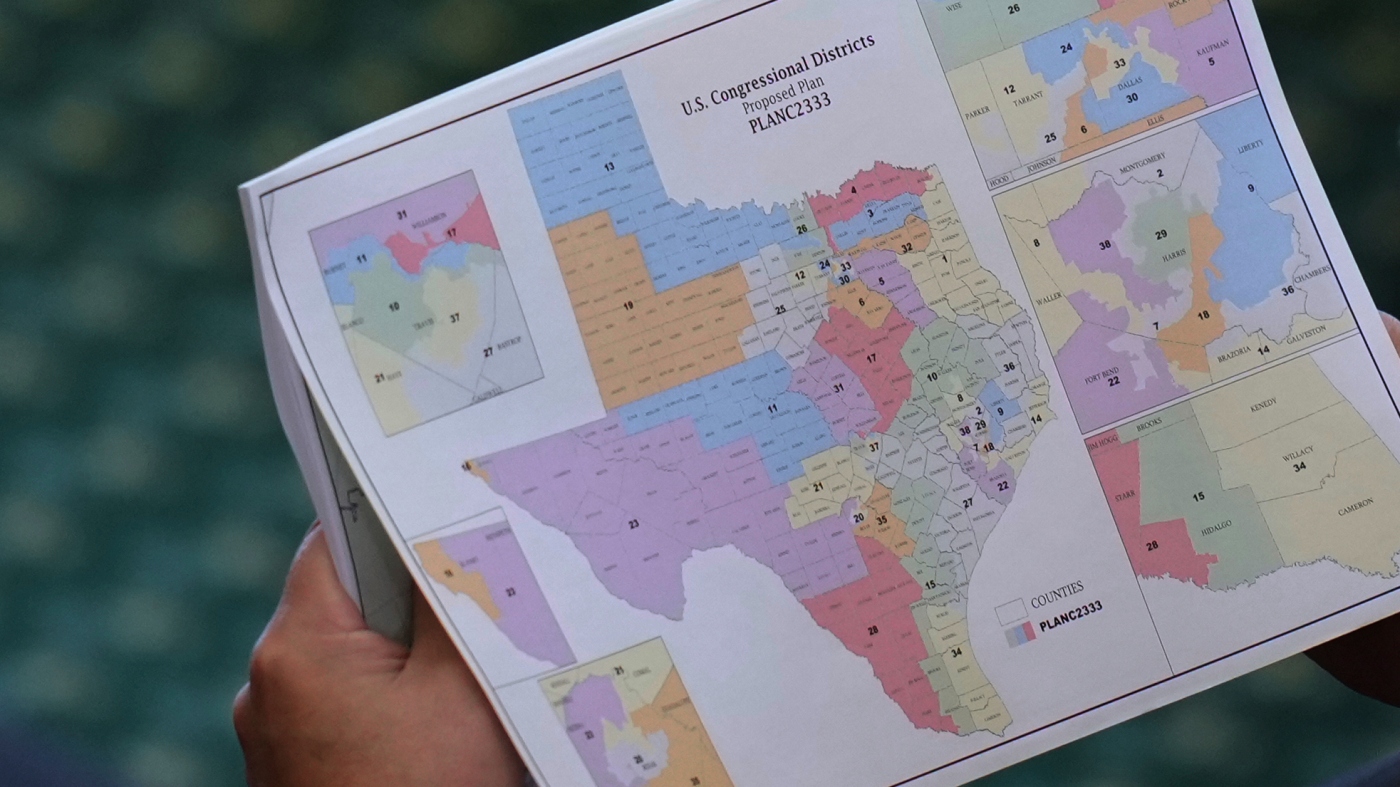
In a significant judicial development, Texas Governor Greg Abbott has swiftly escalated a legal challenge to the U.S. Supreme Court following a decision that declared the state’s newly drawn congressional map discriminatory. This map, which was a product of legislation encouraged by former President Donald Trump, was found to infringe upon the voting rights of minority groups.
“Any claim that these maps are discriminatory is absurd and unsupported by the testimony offered during ten days of hearings,” Abbott, a Republican, stated, emphasizing his disagreement with the court’s decision. He argued that the ruling undermines the legislative authority granted to Texas under the U.S. Constitution by imposing an alternative map through judicial intervention.
Previously, a three-judge panel had temporarily blocked the new map, mandating the use of district maps from the previous two elections. The contested map was designed to enhance Republican chances by potentially flipping five Democrat-held House seats, an action deemed to intentionally weaken Black and Latino voters’ influence, thus breaching the federal Voting Rights Act.
In their opinion, the majority of the panel wrote, “To be sure, politics played a role in drawing the 2025 Map. But it was much more than just politics. Substantial evidence shows that Texas racially gerrymandered the 2025 Map.” The panel’s ruling followed a trial in October where the case was intensely scrutinized.
Amidst this nationwide redistricting race, Texas Attorney General Ken Paxton, who is running for the U.S. Senate, has also vowed to appeal the ruling on what he describes as the “Big Beautiful Map,” which he insists is “entirely legal.”
Democrats have welcomed the court’s decision. Texas Congresswoman Lizzie Fletcher commented, “Race was always a driving factor and a driving factor to make it harder for minority Texans,” asserting that the map was crafted to diminish minority electoral impact.
This ruling, decided by a 2-1 vote, comes at a crucial time as former President Trump encourages Republican lawmakers to redraw congressional maps favoring their party. Texas legislators had utilized their significant majority to pass a map in August aimed at bolstering Republican representation in the upcoming 2026 U.S. House elections.
The redistricting process in Texas drew national focus when Democratic legislators left the state for over two weeks to delay a vote, while Republican leaders threatened their arrest. Democrats contended the map diluted the voting power of Latino and Black communities.
This Texas controversy echoes in California, where Democrats have passed a redistricting initiative potentially enabling them to gain five seats. The question of whether the Texas map constituted partisan or racial gerrymandering remains pivotal. Republican lawmakers argued the map aimed to enhance partisan advantages, a practice not prohibited by Texas law. However, opponents highlighted its racial implications, a perspective upheld by the court.
The 160-page ruling by District Judge Jeffrey V. Brown, a Trump appointee, scrutinized Republican lawmakers’ statements, using a Justice Department letter as a basis for blocking the map. The letter, which criticized districts with majority non-white populations as “racial gerrymanders,” was originally cited by Gov. Abbott to justify the map.
Judge Brown criticized the letter’s construction, describing it as fraught with errors. Political scientist Brandon Rottinghaus noted the decision as a rebuke to Trump and Texas lawmakers, questioning the credibility of their legal arguments.
Rep. Gene Wu, a Democratic leader, praised the ruling, stating it reinforces fundamental American principles of electoral fairness. As the redistricting battle unfolds, Republicans leverage their control over more state legislatures to shape favorable maps, while Democrats explore opportunities to counterbalance these efforts through strategic redistricting in states like California and Virginia.
This article was originally written by www.npr.org