Trump’s Federal Intervention in D.C.: Assessing the Impacts and Future
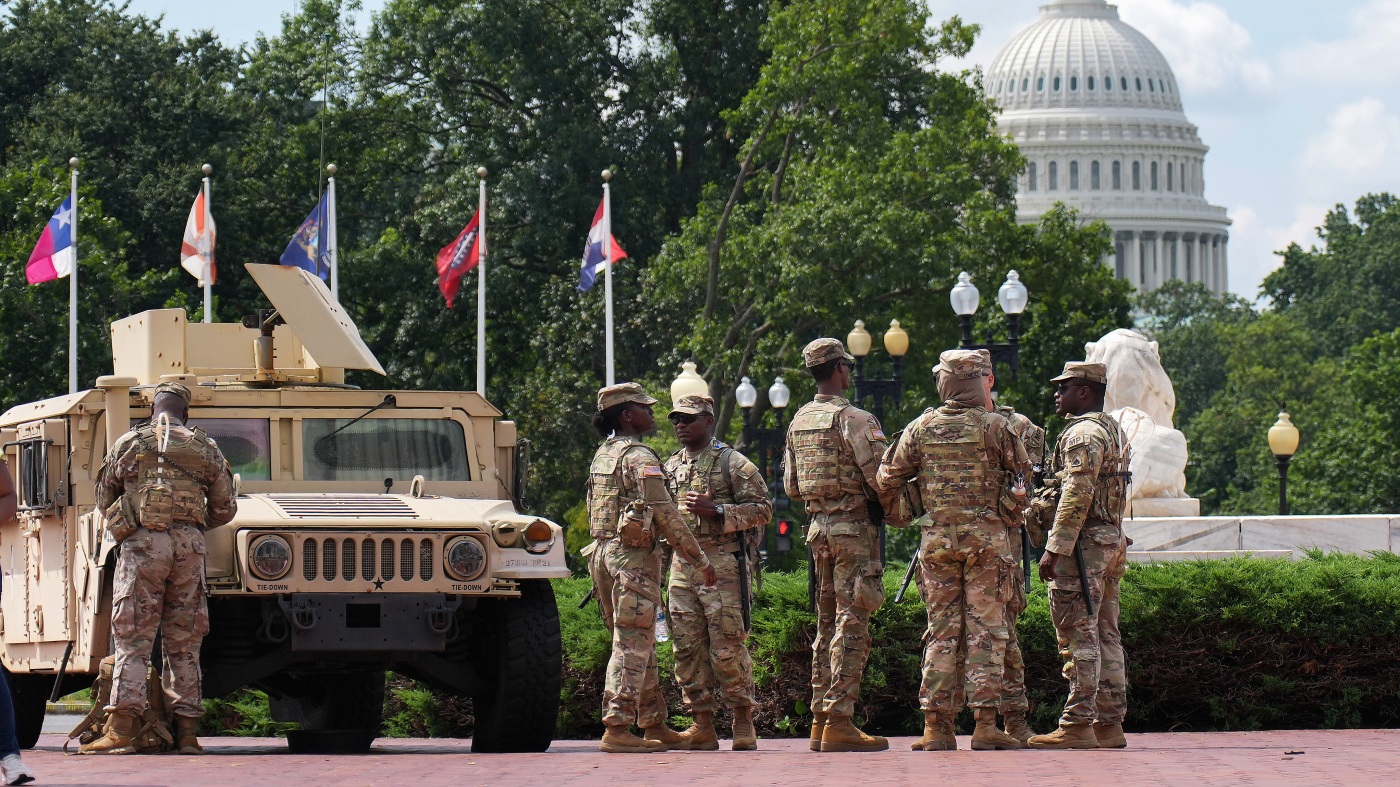
Amidst growing tensions in Washington, D.C., President Trump has declared a “crime emergency“, taking control of the Metropolitan Police Department and deploying the National Guard. This move follows an incident involving a former DOGE staffer and raises questions about the president’s authority and the implications for the city.
While Trump cites a rise in crime as the reason, statistics indicate violent crime is at a 30-year low. The 1973 Home Rule Act grants the president command over D.C.’s National Guard and allows limited use of local police for federal purposes. However, this authority is currently contested as Congress is in recess until September.
“We’re going to do this very quickly, but we’re going to want extensions,” Trump told reporters, raising concerns over the duration of this federal intervention.
Legal and Political Challenges
Elizabeth Goitein from the Brennan Center for Justice states, “That is actually a question that we don’t really have an answer to,” considering the novelty of such a takeover since the Home Rule Act’s passage. Trump’s actions have sparked legal challenges and protests, with a federal judge recently halting the administration’s attempt to replace D.C.’s police chief.
Despite the legal pushback, National Guard members continue patrolling the city, with additional troops expected from five other states. This deployment raises questions about the mission’s duration, especially given the armed presence of some troops.
Political Reactions and Future Prospects
While the president argues for longer-term control, citing support from Republican leaders, his actions face significant opposition. House Democrats have introduced legislation to counter the federalization of D.C.’s police, though its success in a Republican-controlled Congress seems unlikely.
The ongoing federal presence also encounters scrutiny under the Posse Comitatus Act, which limits military involvement in domestic law enforcement. Goitein mentions potential legal challenges exploiting act loopholes, as the administration might argue the National Guard’s non-federal status.
Public Opinion and Potential Outcomes
Public sentiment could play a pivotal role in shaping the future of Trump’s intervention in D.C. Videos of operations by federal agents have sparked public outcry, with notable impacts on local businesses, evidenced by a 25% drop in restaurant reservations.
As protests continue, the administration may be forced to reconsider its stance. Goitein emphasizes, “Public opinion can move the president,” especially if perceptions of a militarized D.C. sway national sentiment.
This article was originally written by www.npr.org