U.S. Military Action in Venezuela: A Repeated Strategy with New Challenges
The geopolitical stage sees a familiar act as U.S. forces once again capture a controversial Latin American leader. On January 3, 2026, U.S. troops detained Venezuelan President Nicolás Maduro, echoing a similar operation thirty-six years ago when Panamanian President Manuel Noriega was arrested under the directive of President George H.W. Bush.

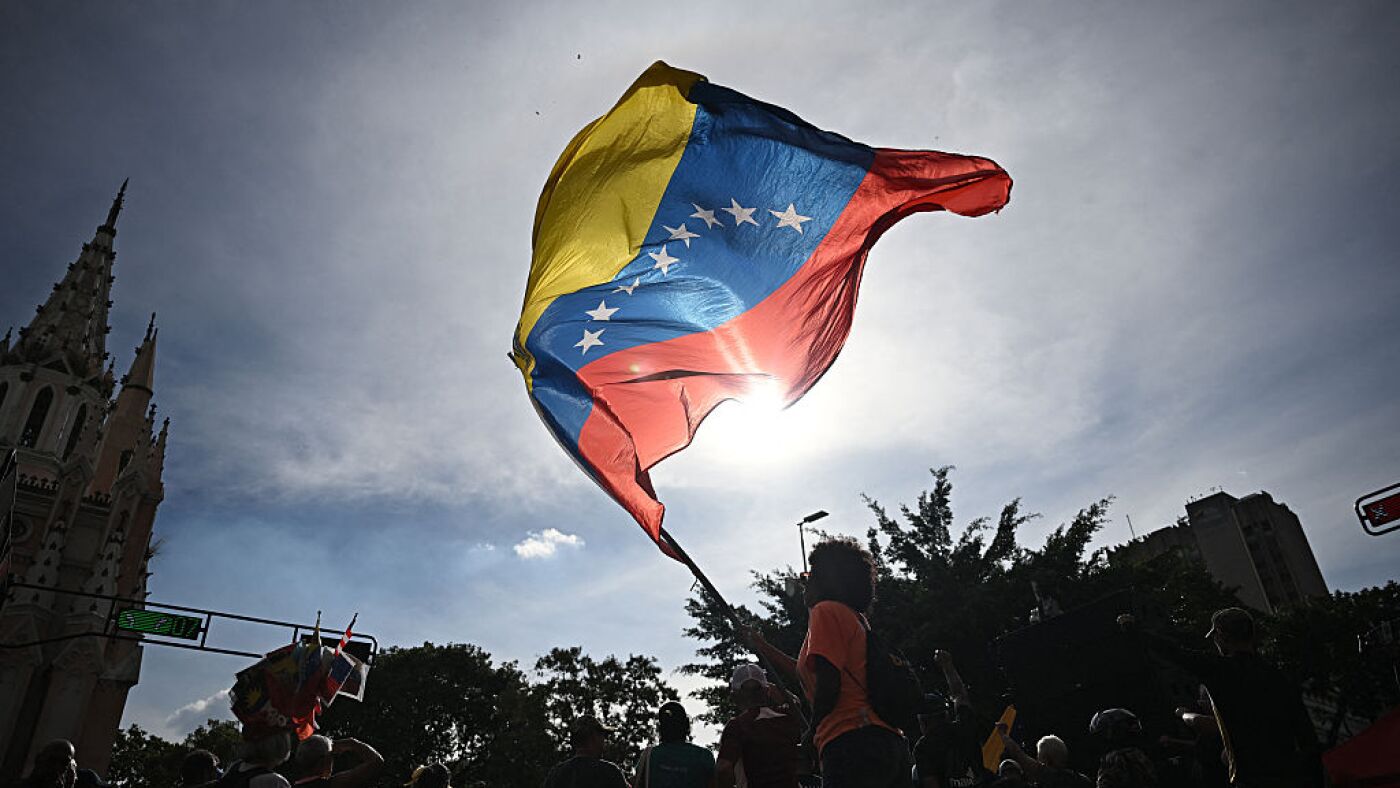
A person flutters a national flag in Caracas on January 3, 2026, after US forces captured Venezuelan leader Nicolas Maduro. Federico Parra/AFP via Getty Images
Both operations reflect the U.S. strategy of leveraging military force to secure critical interests within the Western Hemisphere. Analysts suggest that the Panama Canal and Venezuela’s oil fields are key assets justifying such actions.
In a recent press conference, President Trump remarked, “We’ll be selling oil, probably in much larger doses because they couldn’t produce very much because their infrastructure was so bad.”
However, despite the parallels, experts highlight distinct differences between the Panama and Venezuela interventions, raising concerns about the future trajectory in Venezuela.
John Feeley, a former U.S. ambassador to Panama, emphasized the positive outcome of the Panama invasion, noting it led to a “democratic system with self-determination, peaceful transfer of governance, and an economy that actually took off and did very, very well.”
Panama’s success was attributed to the presence of a political opposition ready to assume power and the swift withdrawal of U.S. troops already stationed in the region. In stark contrast, President Trump announced that the United States would temporarily “run” Venezuela, with Vice-President Delcy Rodríguez positioned as the new president.
Rodríguez, addressing Venezuelans, criticized the U.S. actions as “a barbarity,” while Trump dismissed the potential leadership of opposition figure María Corina Machado, citing a lack of domestic support.
Feeley expressed his disappointment, stating, “Maduro is not even remotely popular, and he stole the (2024) election, so there seems to be popular will to get rid of him. What there does not seem to be, in my view so far, is any kind of transition plan.”

People demonstrate against US military action in Venezuela in Boston Common on January 3, 2026, in Boston, Massachusetts. Joseph Prezioso/AFP via Getty Images
Douglas Farah, president of IBI Consultants, voiced concerns over the absence of a clear transition plan. Farah warned of potential chaos and violence unless a managed transition from the Maduro regime to a democratic system is established.
President Trump has not ruled out deploying American troops to Venezuela, stating, “We’re not afraid of boots on the ground.” However, Farah pointed out the challenges of occupying Venezuela, a nation with diverse geography and significantly larger than Panama.
“In Venezuela, you have mountains, you have jungles, you have ocean fronts,” Farah noted. “How do we talk about taking over a country when we have no functional presence there?”
This article was originally written by www.npr.org